
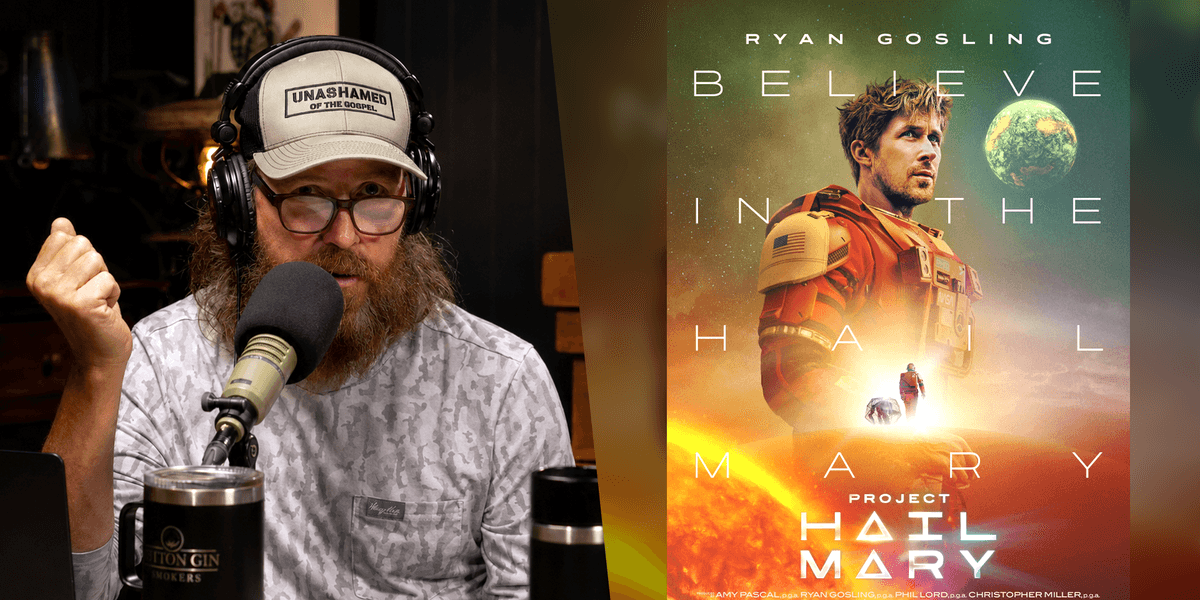
Jase Robertson walked into Project Hail Mary expecting something totally different and left surprised by how boldly the film nudged at spiritual themes, even spotting a nod to Phil Robertson. This piece follows his reaction, the odd discovery he pursued afterward, and why he thinks Hollywood slipped a familiar line into a big-budget script.
He admits his expectations were wrong from the start — he thought he was about to watch a football movie or something about the Virgin Mary. “The reason I was shocked is there was so many spiritual vibes to this movie,” he told listeners on a recent episode of Unashamed, clearly taken aback by how faith-infused the storytelling felt. Small touches, character names, and themes of sacrifice kept pulling him in a direction he didn’t expect.
The film’s characters and moments leaned hard into redemption and service, and that struck Jase as unusual coming from a major studio. He noticed names like Grace and Rock and a consistent echo of the savior motif running through several key scenes. For him, those choices made the movie feel like it was willing to engage both the skeptic and the believer without leaning on clichés.
Then he noticed something else that stopped him cold. “There is a Phil Robertson quote in the movie,” Jase exclaims.
After the credits rolled, curiosity turned into a mission to figure out how that quote ended up in the script. Artificial intelligence gave him a flat answer: the line wasn’t a Phil Robertson quote, even though it is “a universal accepted fact” that he coined the phrase. That kind of dismissal only pushed Jase to trust his gut and dig a little deeper, because to him the line fit the film’s tone too neatly to be random.
Jase is clear about what he believes. “There is a Phil Robertson quote in there, and I didn’t think that was an accident based on everything else I had seen.” He doesn’t lean on the AI conclusion; he leans on pattern and instinct. For him, the presence of that phrase acts like a fingerprint left by someone who wanted a particular spiritual resonance to land.
He complimented the filmmakers for letting the movie play both sides of the spiritual argument and not forcing a single reading on audiences. One scene he highlights has Ryland Grace, played by Ryan Gosling, in a disarmingly human conversation with Eva Stratt, the pragmatic administrator shepherding Project Hail Mary. When Grace asks if she believes in God, she answers, “It’s better than the alternative.” That line, to Jase, made the film feel honest rather than preachy.
Jase says the moment felt intentional. “It was just like, well, I know which side of the production that line came from,” says Jase, calling the film “a wonderful experience.” He appreciated the craft, the moral questions, and how the movie left room for viewers to wrestle with faith without shoving an answer down their throat. That balance is rare enough that he left the theater still thinking about it days later.
If you want to hear the full conversation and the back-and-forth about how he investigated the quote, you can watch the episode above. For more from the Robertsons on God, guns, ducks, and stories of family and faith, subscribe to BlazeTV — the largest multi-platform network of voices who love America, defend the Constitution, and live the American dream.
