
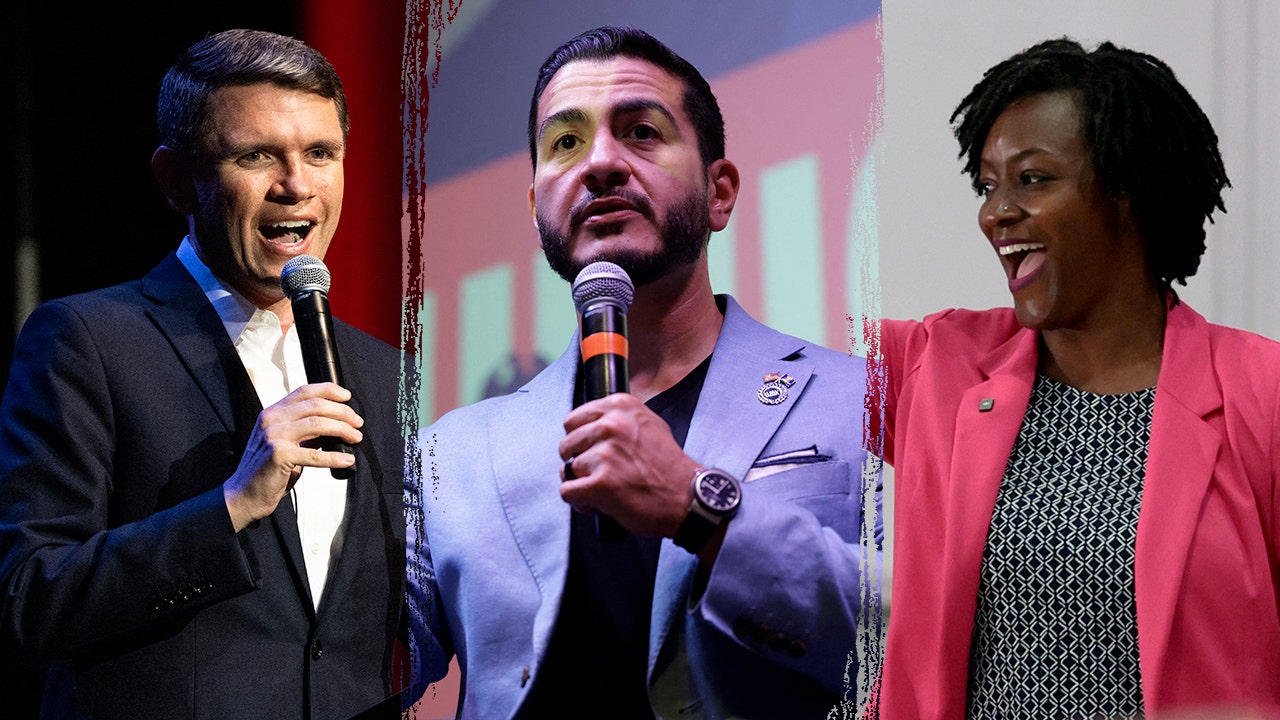
Progressive Senate candidates are making faith a centerpiece of their political pitch, and the move is stirring up plenty of attention on both sides of the aisle. Angie Nixon, Abdul El-Sayed, and James Talarico have all leaned into religious language while defending policy positions that conservatives see as far outside the mainstream.
The pattern is hard to miss. These candidates are not just talking about their personal beliefs, they are wrapping campaign messages in scripture, moral language, and big promises about justice, rights, and public life. That strategy has a familiar ring to it, especially for voters who remember how Republicans once used faith to energize a broad coalition of churchgoers and social conservatives.
Nixon has become one of the clearest examples. During a recent sermon at Saint Paul AME Church in Jacksonville, she pushed back against criticism of her politics by comparing herself to Jesus, saying, “They are trying, y’all. They are trying … to label me as this extremist, this radical. But, you know, Jesus was a radical,” Nixon said.
She did not stop there. Nixon added, “And Jesus fought for — I mean, he pushed for the same things that I’m fighting for today, right? Right now, we’re literally in a civil rights moment,” she continued. “Whether or not people wanna believe it or not, but we are.”
That kind of rhetoric has become a political weapon as much as a personal statement. Nixon recently joined the Democratic Socialists of America, and that drew a fast blast of criticism from Republicans, who have used the association to paint her as part of a far-left movement trying to dress itself up in moral language.
El-Sayed has made a similar comparison, though from a different angle. On the Progressive Christians Podcast, he was asked about how his views fit with religious themes and whether they were being labeled radical, and he responded with a familiar line: “Well, you know, Jesus, peace and blessings be upon him, was considered radical in his time, too,” El-Sayed said.
That message fits the style of his campaign, which has tried to position him as a challenger to the Democratic establishment while speaking directly to voters who want something more fiery than the usual talking points. In a race as tight as Michigan’s, faith-based framing gives him another way to connect with audiences who might not be swayed by standard party language alone.
Talarico has taken the same lane even more aggressively. The Texas lawmaker has blended his Christian beliefs with policy arguments since entering the race, and he has repeatedly used religious language to defend positions on social issues that have made him a favorite target for Republicans.
His comments on gender have drawn some of the loudest pushback. When discussing biblical interpretation, Talarico said, “The first two lines of the Bible, the first two lines in Genesis, use two different Hebrew words to describe God. One is the masculine Hebrew noun for divinity,” Talarico said. “The second is the feminine Hebrew noun for spirit. God is both masculine and feminine, and everything in between.”
“God is non-binary,” he said.
That is the kind of line that sticks, especially in a campaign season where culture fights and faith language are colliding at full volume. Talarico has also argued that corruption and political hardball are the real threats, casting himself as someone willing to stand firm when others prefer safe slogans and polished spin.
What makes all three candidates notable is not just their willingness to talk about faith, but how closely their messaging mirrors a playbook Republicans helped popularize decades ago. The old formula was simple: connect policy to moral conviction, speak in the language of values, and make voters feel the stakes are bigger than one election.
Now Democrats on the left are trying to use the same energy for their own causes. The result is a strange sort of political echo, where scripture, civil rights talk, and campaign attacks all get mixed together in the same noisy conversation, and each candidate keeps pressing the argument that their agenda is not just political, but righteous.
