
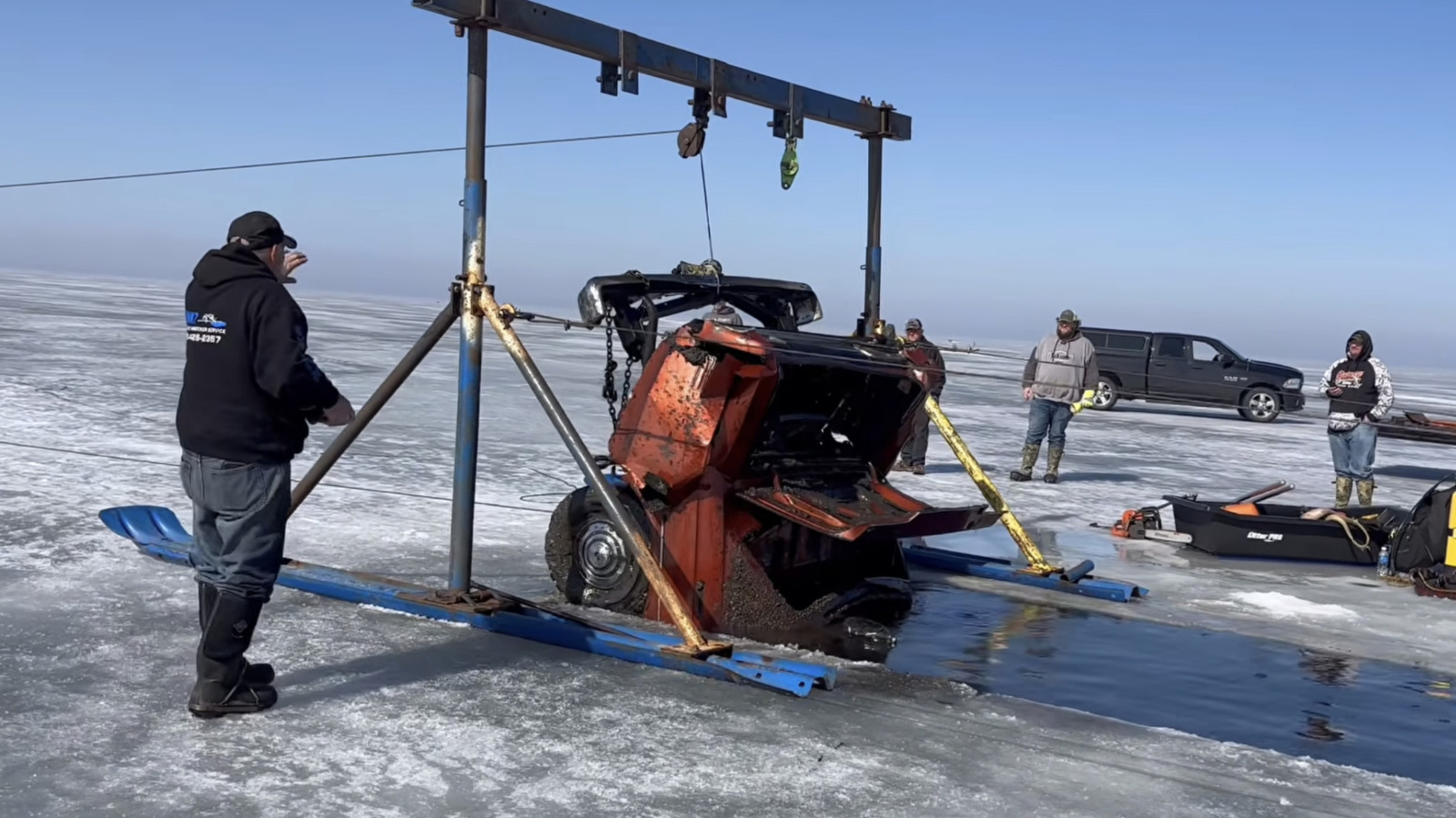
After spending decades trapped beneath an icebound lake, a vintage car surfaced with its sheet metal and finish in rough shape, and this article walks through what that damage looks like, why it happens, the challenges of raising a long-submerged vehicle, the restoration realities, and what owners should expect when deciding whether to save or scrap a recovered classic.
When a vehicle spends years underwater, corrosion is the headline problem and it moves in from the inside out, attacking seams, mounting points, and hidden cavities that most inspections miss until work begins. Paint that once gleamed becomes a flaky, compromised layer full of trapped moisture and contaminants, while chrome and trim often pit so badly they need total replacement. Even components that look intact can hide galvanic corrosion and weakened steel, so a good assessment starts with assuming the worst. That mindset helps owners avoid surprise costs once the car is back on dry land.
Extraction itself is a delicate operation that mixes engineering with sharp decision making, because lifting a rusted frame from a silt-bottom lake can do more damage if handled poorly. Divers and recovery crews usually secure the chassis at structurally sound points, but decades under water frequently mean those points are no longer reliable, so creative rigging and underwater assessment are essential. Once the car is out, immediate stabilization to halt further degradation becomes the top priority, with fresh water rinses followed by controlled drying and corrosion inhibitors. Fast action prevents salt and mineral deposits from etching deeper into metal and electronics.
What restoration crews face after recovery is often a triage situation rather than a simple makeover, because many systems are more than surface-affected and may be beyond economical repair. Wiring looms, fuel systems, brake hydraulics, and bearings typically need full replacement due to contamination and the breakdown of rubber and plastics. Structural repairs are often extensive, with rusted body panels, chassis sections, and floor pans requiring cut-out and weld-in replacements to meet safety and alignment standards. That level of work pushes the project from cosmetic restoration into full mechanical and structural rebuild territory.
Paint and trim restoration after long submersion is more than a cosmetic exercise, it is a matter of compatibility and patience, because any trapped moisture or remaining salts can ruin fresh finishes. Stripping to bare metal and treating with rust converters, primers, and modern sealants is a common path, but it is time consuming and adds cost that surprises many first-time recoverers. Reproducing original trim pieces can be expensive or impossible, forcing owners to choose between aftermarket parts, custom fabrication, or a sympathetic adaptation. Those choices influence both the final look and the car’s potential market value.
Value assessment after recovery is rarely straightforward, because rarity and historical significance can make even heavily damaged cars worth preserving, while more common models may not justify the expense of a full rebuild. Collectors weigh provenance and originality against the realities of replacement parts and restoration hours, and sometimes a car serves better as a donor for a more complete project. Insurance and legal questions also come into play when recovery involves public waters or disputes over ownership, so clear documentation through the process helps protect both the vehicle and the person funding its resurrection.
For anyone considering rescuing a long-submerged classic, the practical advice starts with a thorough professional inspection and a realistic budget that includes unexpected discoveries. Expect to replace many systems rather than repair them, plan for extensive metalwork and paint preparation, and factor in the time it takes for treated metal to stabilize before final assembly and finishing. Restoration from an icebound lake recovery is a labor of patience more than a quick win, and the decisions made early determine whether the car becomes a revived treasure or a cautionary tale about sunk costs.
