
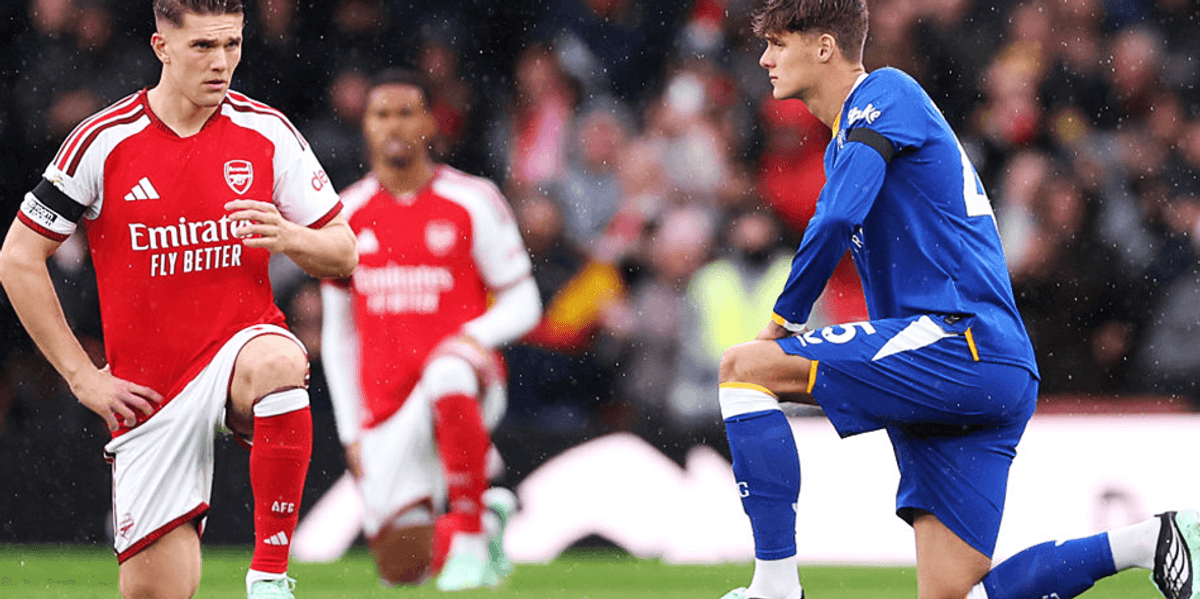
English soccer’s ongoing kneeling ritual has become less a statement and more a habit, and that’s exactly why it keeps drawing heat. What once arrived with the force of a major cultural moment now feels stuck in place, repeated on cue and stripped of any real impact. The backlash is not just about the gesture itself, but about how long the sport has kept clinging to it while pretending it still carries fresh meaning.
The debate around this has been simmering for years, and the frustration has only grown louder as the Premier League and other English sides continue the practice. For plenty of fans, the gesture no longer reads as a bold stand against racism, but as a scripted performance that the sport refuses to let go. That disconnect is where the embarrassment comes in, because the message is supposedly about unity, yet the ritual often lands like a tired lecture nobody asked for.
At the center of the issue is the way modern soccer has wrapped itself in big social messaging while leaving regular supporters to sort through the fallout. The kneeling began as part of the wave of public reaction after George Floyd’s death, but what was meant to signal urgency has slowly hardened into routine. Once a symbol becomes automatic, it starts looking less like conviction and more like branding.
That shift matters because sports are supposed to feel alive, not prepackaged. Fans show up for competition, pressure, drama, and loyalty, not for a weekly moral performance that feels detached from the game itself. The more clubs lean into this kind of ritual, the more they invite suspicion that they care more about appearances than actual progress.
Some supporters are tired of being told they have to applaud the gesture or keep quiet. They see the same elite voices, the same polished messaging, and the same smug assumption that everyone in the stands shares the same worldview. That kind of top-down preaching tends to backfire, especially when it comes wrapped in the language of compassion while ignoring how ordinary fans actually feel.
There is also a deeper irritation brewing around the broader DEI culture that has seeped into sports institutions. What begins as a call for fairness often turns into a rigid script where symbolism matters more than results, and where dissent is treated like a problem instead of a normal part of public life. When that mentality takes hold, even a simple pregame gesture stops feeling sincere and starts feeling compulsory.
In England, soccer has always had room for passion, identity, and tribal loyalty, which makes this kind of manufactured unity stand out even more. The game does not need constant moral theater to prove it belongs to everyone. It needs honesty, competitive fire, and the confidence to let the sport speak for itself without turning every match into a seminar.
That is why the continuing kneeling has become such an awkward symbol. It is not that people object to condemning racism, since most reasonable fans have no patience for it at all. The problem is that repetition without freshness, urgency, or visible effect turns a serious message into background noise, and background noise rarely inspires respect.
The whole spectacle leaves English soccer in a strange place, caught between the activists who want more display and the fans who want less sermonizing. As long as the ritual continues without any sign of evolution, it will keep inviting ridicule instead of reflection. And that tension is not going anywhere, because every fresh round of kneeling reminds people that the sport still has not figured out when a statement has outlived its moment.
