
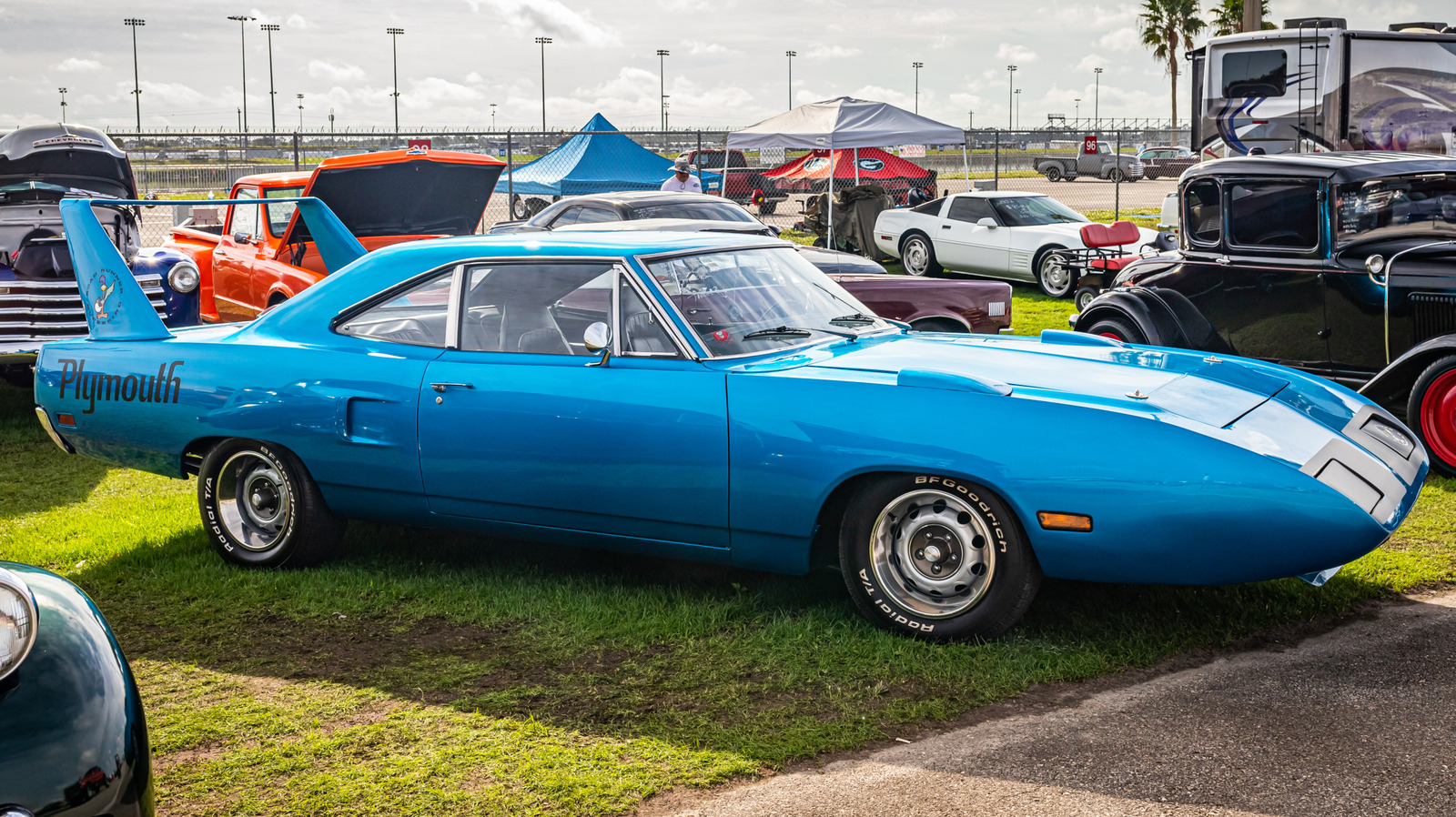
The Plymouth Superbird still turns heads and bankrolls at auctions, and this article walks through what drives its price, what buyers should expect to spend, and the practical costs of owning one today.
Ask any car nut about the Superbird and you get the same reaction: wow. Its tall wing and long nose made it a legend on the racetrack and in popular culture. That legacy is a big part of the price tag, because buyers pay for story as much as steel.
Scarcity is the main headline for pricing. These were not mass-market cars, and surviving examples in good shape are few. When a matching-numbers, unrestored Superbird appears at auction, competitive bidding pushes the value into very high figures.
Engine and drivetrain choices matter a lot for collectors. A car ordered with a 426 Hemi or a documented race history will command a premium compared with base-spec V8s. Buyers chasing authenticity look for original engines, transmissions, and build sheets, and those items already in place translate into much higher sale prices.
Condition naturally divides the market into tiers. Project cars and high-mileage survivors sell for a fraction of fully restored, concours-ready machines. Full restorations can cost as much as a modest car, so those tempted by a low-price barn find should budget for significant work before the car reaches show quality.
Documentation and provenance tighten values further. Complete ownership records, receipts, and factory paperwork add confidence and create bidding wars. A Superbird tied to a known racing team or a notable owner generally clears the room when it hits the block.
Beyond purchase price there are predictable ongoing costs. Parts for the specific nose cone, wing mounts, and period-correct trim are rarer and costlier than for common muscle cars. Insurance, climate-controlled storage, and careful maintenance are essential if you want to protect a high-value collector car long term.
Market trends swing with nostalgia, the broader classic car economy, and high-profile auction results. When a top Superbird sells for a headline number, comparables climb and private sellers adjust expectations. Conversely, economic uncertainty can narrow the pool of serious buyers and affect final sale prices.
For buyers thinking practically, set clear priorities before committing. Decide whether you want a driver-quality Superbird to enjoy on weekends, a restoration project you can refine over time, or an investment-grade example that will sit in a climate-controlled collection. Each path means different upfront costs and maintenance strategies.
Ultimately owning a Superbird is part automotive hobby and part cultural statement. If you want the look and soundtrack without the collector premium, consider less rare Mopar cousins. But if the goal is that high-profile, head-turning presence at shows and auctions, expect to pay a premium for authenticity, condition, and the story each car carries.
