
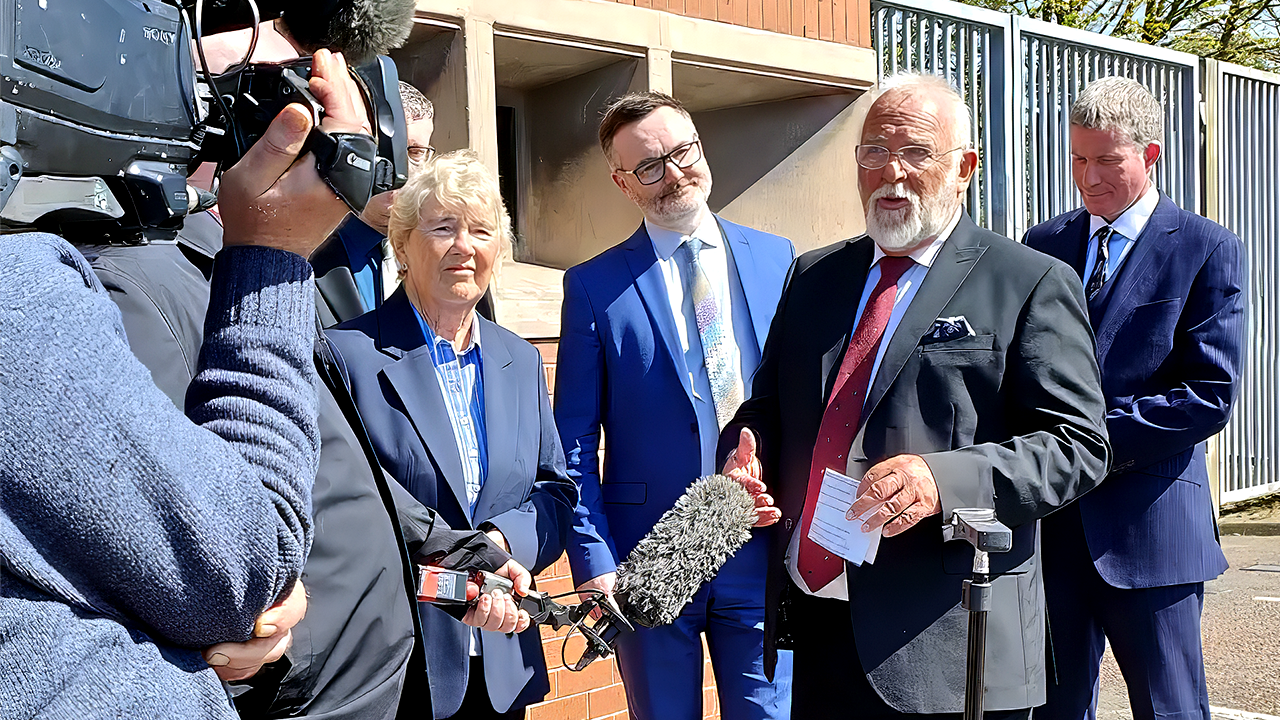
A retired pastor in Northern Ireland faces criminal charges after quoting a familiar Bible verse outside a hospital, and the case raises serious questions about free speech, religious liberty, and how Western allies handle public expressions of faith.
Clive Johnston stood near a hospital where abortions occur and spoke a short message that included the line “For God so loved the world…”. He did not confront patients, he did not approach anyone, and he did not mention abortion in his brief sermon. Yet prosecutors say his words fell inside a legally defined buffer zone and could have “influenced” people entering the facility.
That word influence changes the whole debate. It shifts focus from what a person actually did to what someone else might have inferred, turning passive speech into potential criminal conduct. If authorities can punish speech because it might inspire a conclusion in a passerby, the state moves from regulating actions to policing beliefs by proxy.
This is not an abstract legal wrinkle. When quoting Scripture becomes risky because someone might imagine a speaker’s views on unrelated issues, ordinary religious practice is chilled. Preaching, singing hymns, or quoting familiar verses in public can be recast as suspicious simply because faith often implies certain moral positions. The result is a legal environment where faith is treated as a suspect category rather than a legitimate voice in public life.
Across parts of Europe, recent cases show a pattern where expressions of Christian belief attract criminal penalties. In one instance a former minister faced prosecution over a pamphlet reflecting church teaching, and in other cases people have been penalized for silent prayer in public spaces. These outcomes are not isolated anomalies; they reflect a broader willingness to label religious speech as harmful in itself.
For Americans watching this unfold, the contrast with the United States is stark. Our Constitution enshrines religious liberty and robust free expression, especially for unpopular or uncomfortable speech. That tradition assumes citizens can encounter differing views without the state stepping in to shield people from offense, and it trusts the public marketplace of ideas rather than administrative censorship.
That trust is not inevitable. Even here, calls for “safe spaces” and expansive hate speech rules can corrode the yardsticks that protect bold, faith-based speech. A society that prefers to neuter provocative ideas rather than debate them sacrifices resilience and the capacity to test beliefs honestly. The lesson from cases like Johnston’s is that liberty requires active defense, not passive assumption.
The diplomatic angle matters too. The United States and the United Kingdom long claimed a shared commitment to freedoms that underpin their alliance. When one partner treats public expressions of faith as a legal hazard, it strains that bond and raises practical questions about mutual values. Official U.S. concern has been voiced, but words without consistent policy or public resolve only go so far.
We must also guard against guilt by association becoming a legal standard. If saying a Bible verse can be criminalized because someone might connect it to another topic, then speech restrictions will spread by inference. That slippery slope is dangerous precisely because it looks reasonable in the moment: who would want to “influence” someone seeking medical care? But protecting individuals from ideas is a tempting form of paternalism that erodes a free society.
The question at hand is simple and immediate: can a man speak a line of Scripture in public without fear of prosecution? This case tests whether centuries-old freedoms survive casual redefinition by statute and enforcement. Our politics should defend the right to speak truthfully and peacefully, even when that speech makes others uncomfortable, because tolerating discomfort is part of what keeps liberty alive.
