
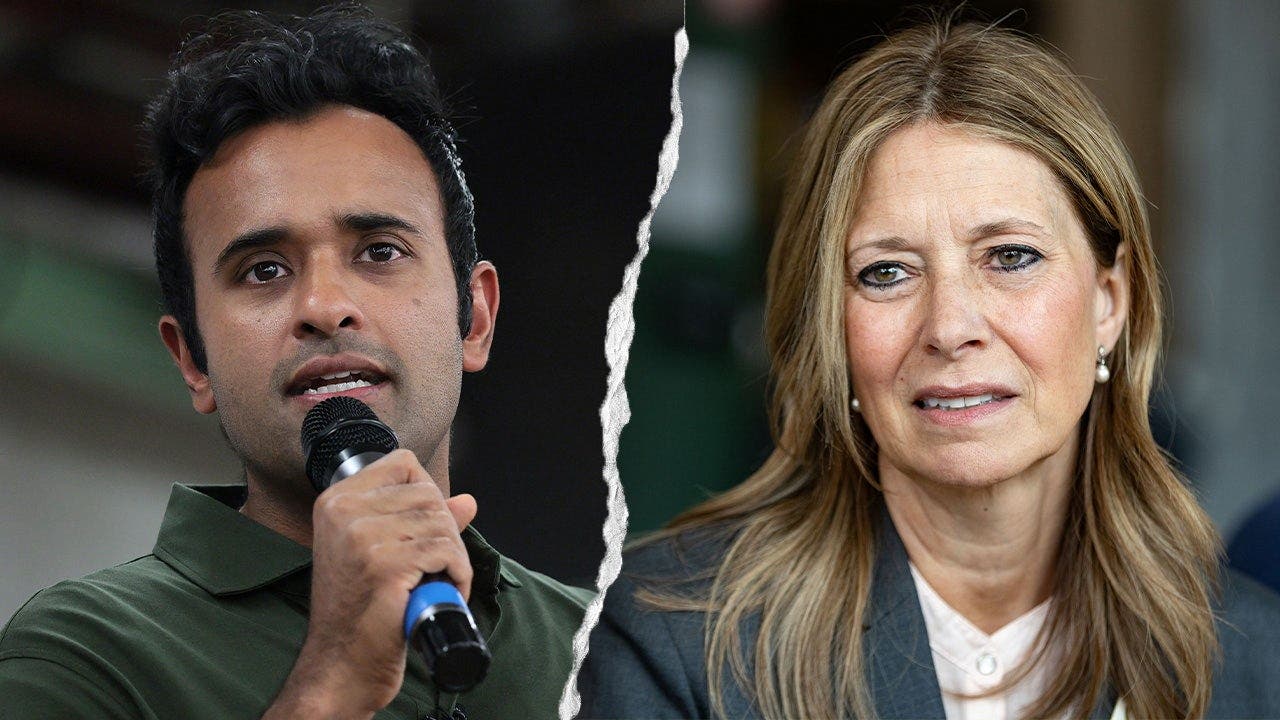
• Ohio governor’s race and the viral ad controversy
• Amy Acton’s role during the COVID-19 lockdown era
• Nursing-home restrictions, school closures, and business shutdowns
• Questions about trust, transparency, and leadership style
• Debates over law enforcement, personal conduct, and campaign strategy
The Ohio governor’s race has taken a sharp, personal turn, with a controversial ad drawing plenty of attention while the bigger fight keeps circling back to Amy Acton’s record. Republican strategist Mehek Cooke says the real issue is not the noise around the ad, but whether voters trust Acton to run the state after her time as Ohio’s health director during the pandemic.
The ad, which features Acton’s estranged mother, triggered blowback across the political spectrum and lit up social media almost immediately. Acton pushed back by saying she and her brother were removed from their mother’s custody after her stepfather was accused of abusing her, while Ramaswamy stood by the spot and kept the pressure on his opponent.
Cooke argued that the outrage has crowded out the more important question for voters. “I think that we have to really shift from Vivek’s recent ad into the most important question for Ohioans is, who do you want governing the state of Ohio? We clearly can’t trust Amy Acton, and she has a record of that,” she said.
That record starts with the early COVID-19 months, when Acton served under Gov. Mike DeWine and helped steer a wave of restrictions that touched nearly every corner of daily life. Schools closed, bars and restaurants shut down, businesses were limited, and the state ordered residents to stay home as officials tried to slow the virus.
She also backed rules that kept visitors out of nursing homes, closed senior centers and adult daycare facilities, and restricted gyms and personal-service businesses. Those decisions may have been defended at the time as emergency public health measures, but for many Ohioans they still land as the kind of overreach that changed family life and small business life overnight.
Cooke did not mince words when describing that period. “She worked as a health director for Mike DeWine and left after masking our children, shutting down our state, and yes, Mike DeWine’s name is on those orders, but at the end of the day, it was Amy Acton’s signature,” she said.
The criticism does not stop with shutdowns. Acton’s handling of nursing homes has also stayed in the spotlight, especially after Ohio barred visitors from those facilities in the spring of 2020 and left many families cut off from loved ones during the hardest part of the pandemic.
Later, the Ohio Department of Health faced a legal challenge over refusal to release facility-level death data, and an appeals court found the department had violated the state’s public-records law. The ruling did not say Acton personally ordered the records withheld, but the episode added another layer to the transparency questions hanging over her tenure.
There was also the fight over gym closures, which became a flashpoint for people who believed the state had gone too far. In the Rock House Fitness case, a court described the state’s approach as “arbitrary, unreasonable, and oppressive,” a line that continues to resonate with critics who see Acton as part of a heavy-handed response.
More recent reports have only added fuel to the argument that Acton brings baggage into the race. Cooke pointed to accounts from former state workers describing her as emotionally volatile during the pandemic, while another campaign issue resurfaced from a 2019 police call at her home tied to a domestic dispute involving her husband.
According to the reporting built around that police report, Acton’s daughter told police that Acton had been drinking, throwing things and breaking glass, and that a mirror was pulled from a wall and shattered. No charges were filed, no one was injured, and her campaign said it was a normal marital argument, while Acton has called broader claims about substance abuse “lies” and “a complete fabrication.”
Cooke also argued that voters will care about how a governor handles public safety and law enforcement, especially in a state where trust in institutions is already shaky. She pointed to comments Acton made that compared ICE agents to the KKK, arguing that the remark fits a broader pattern that raises red flags for conservatives and independents alike.
That Cleveland forum quote kept getting attention for a reason. “There are people coming out there wearing masks, with all the gear on,” Acton said earlier this year. “We don’t even know who they are. They’re just showing up. Does this not feel like the Ku Klux Klan to anyone?”
For Cooke, the campaign has also become a test of willingness to show up and answer tough questions. She said Ramaswamy keeps engaging while Acton avoids the spotlight, and with the debate stage still in play, that contrast could end up mattering as much as the ads themselves.
“They’re trying this Joe Biden strategy of hide in the basement, play the victim card, and it’s not going to work,” Cooke said. She added that Acton “doesn’t know what she stands for,” while Ramaswamy continues to talk about his businesses, his economic ideas, and what he says he wants to deliver for Ohio.
Even with the race tightening, the tension around Acton’s past keeps following her from one campaign stop to the next. Polling had shown a narrow edge for Acton before the latest ad fight, but the mood on the ground now feels like a lot more than a simple numbers game.
