
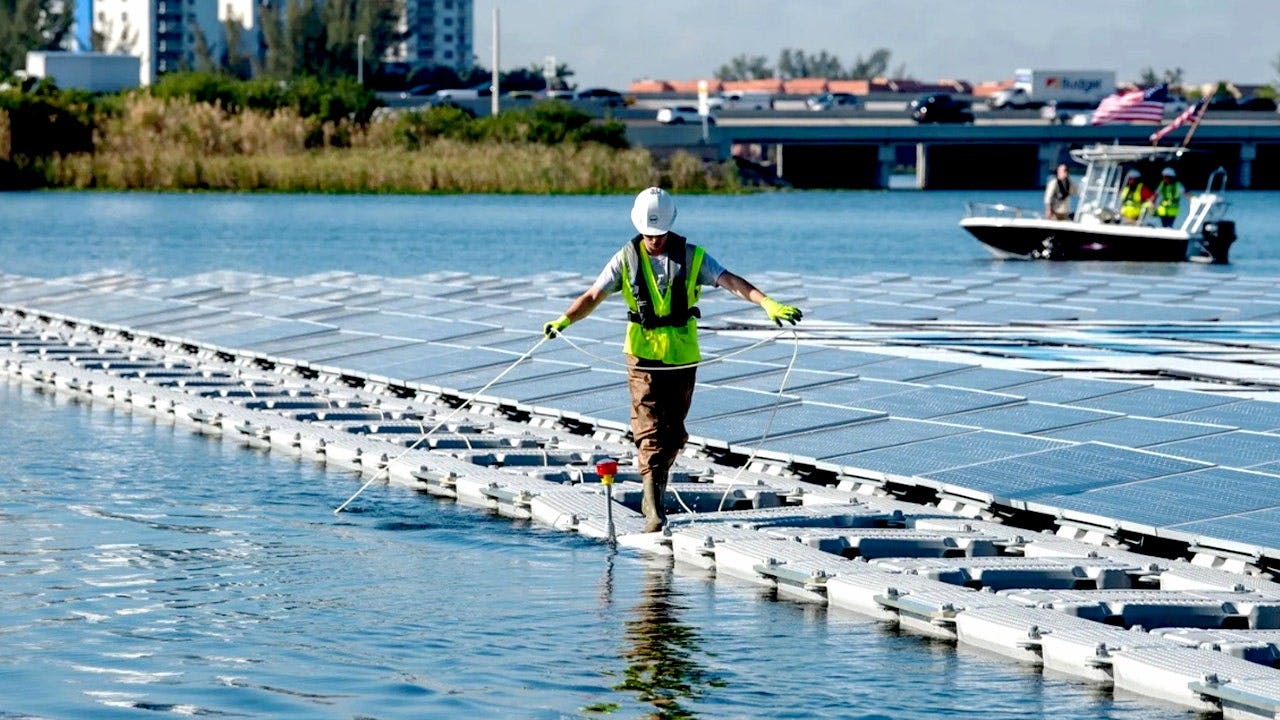
Lima, Ohio has turned a drinking water reservoir into a power source, and that simple move has sparked a bigger question for cities everywhere. With 3,120 solar panels floating on Twin Lakes Reservoir, the project aims to trim electricity costs, protect valuable land, and show that clean power does not always need a giant footprint.
The setup is built around the city’s own needs, which makes the whole thing feel sharp and practical. Instead of carving out acres for a ground-mounted solar farm, Lima placed a 2-megawatt array on the water that feeds the nearby treatment plant, where electricity use is heavy and constant.
That treatment plant handles roughly 14 million gallons each day, so every bit of efficiency matters. City officials project the floating system could save nearly $10 million over its lifespan, a number that grabs attention fast and explains why other communities are watching closely.
Floating solar is pretty straightforward once the concept clicks. Panels sit on buoyant platforms, anchors and mooring lines hold them in place, and the system can flex as water levels rise or fall. In Lima’s case, the design uses bifacial panels, which can catch sunlight from both sides and squeeze more output from the same patch of water.
The electricity then moves from the floating array to onshore inverters before heading into the water treatment plant. The whole arrangement is less flashy than it sounds and more clever than it looks, because it turns an existing reservoir into useful infrastructure without bulldozing new terrain.
That land issue is a huge part of the appeal. Cities are always fighting over space, and open ground can be expensive, politically messy, or already spoken for by homes, businesses, farms, and roads.
A reservoir already exists, which changes the math. If the same output from a ground-based solar project would require much more acreage, then floating panels start to look like a strong option for communities with tight boundaries and big utility bills.
There is also a quieter benefit that keeps popping up in research: shading the water can reduce evaporation. That is not a magic trick, and it will not work the same way everywhere, but in hot or dry places it could add another layer of value to the project.
Of course, reservoirs are not blank slates. Water depth, recreational use, changing conditions, and dam operations all shape whether a floating system makes sense, and each site needs its own serious review. A project that fits one reservoir perfectly might be a bad idea just a few miles away.
Water safety is the other big question, and it deserves real attention. Lima’s system uses floating components made from high-density polyethylene, and the manufacturer says the material meets standards for contact with drinking water, but communities are still right to ask for testing, monitoring, and clear accountability.
The money side is just as important as the engineering. The Lima project cost about $5.3 million, and the city leaned on federal support, including a Department of Energy grant and tax credits, to make the numbers work.
That matters because the promised savings do not appear out of thin air. Any city thinking about floating solar has to look hard at construction costs, financing, expected production, and the price of electricity over time, since those variables can make or break the final deal.
Lima is not alone in testing the waters. Other Ohio utilities have already tried floating solar, and more projects are moving forward, which suggests this is shifting from curiosity to a real option in the energy toolbox.
The larger national picture is even more striking. Researchers have estimated that federally owned or regulated reservoirs in the U.S. could support a massive amount of floating solar capacity, though that does not mean every lake or reservoir should suddenly be covered in panels.
Still, the potential is hard to ignore. Cities looking for cheaper power, less land conflict, and a way to make existing infrastructure work harder may keep coming back to the same idea, especially as energy demand keeps climbing and local budgets stay tight.
What makes Lima stand out is not just the technology but the fit. The city had a reservoir, a hungry treatment plant, and a clear reason to cut costs, so the project landed with a kind of common-sense force that is hard to dismiss.
That is why floating solar keeps pulling more attention. It is not just about panels on water, it is about whether local governments can use what they already own in smarter ways, and whether that kind of thinking can hold up when the bills, the weather, and the long-term maintenance all start showing up.
