
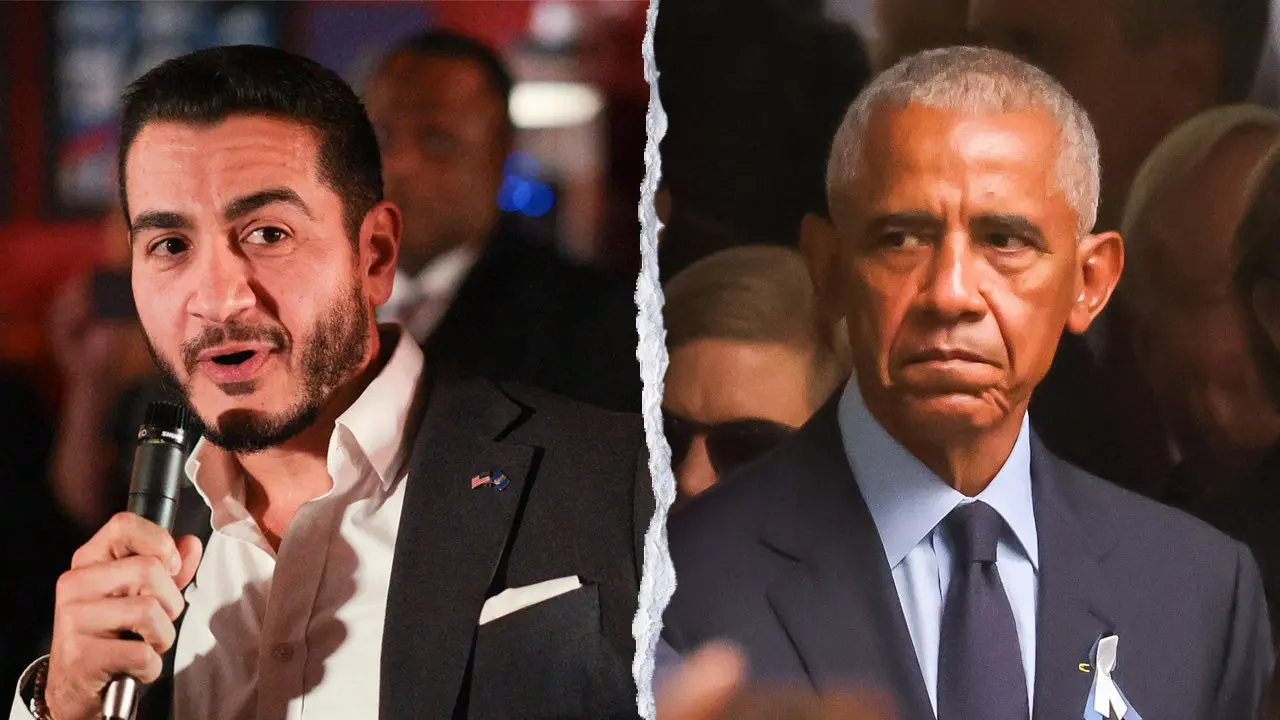
Barack Obama is heading to Michigan to campaign alongside Democratic Senate nominee Abdul El-Sayed, and the stop is already stirring up debate about whether the former president still carries real weight with Black voters. El-Sayed has tried to build a broader coalition around his candidacy, but his past criticism of Obama and the lukewarm reaction from some voters have turned the rally into more than just a normal campaign appearance.
Obama officially backed El-Sayed earlier this month and even recorded an ad urging supporters to get behind him for the Senate race. The upcoming rally is being treated like a big moment for a progressive candidate who wants to show he can work with the party’s establishment without losing his outsider edge.
Still, the endorsement has revived attention on a 2012 essay in which El-Sayed blasted Obama for not living up to the promises of his presidency. That old criticism is back in the spotlight at exactly the wrong time for a campaign trying to project unity, especially with Republicans arguing that the move looks more like a political rescue mission than a surge of momentum.
The concern runs deeper because Black voters are a key part of the Democratic coalition in Michigan. If enthusiasm is soft or turnout slips, Democrats could find the road to holding the state and protecting their Senate hopes a lot rougher than they planned.
A Fox News Digital poll found just 77% of African American voters backing El-Sayed, which is below the usual level Democrats count on. That number has fueled the idea that Obama’s star power may not be enough to paper over lingering doubts about the candidate.
Interviews with Black voters in Detroit showed a mix of shrugging, skepticism, and a little support from those already on board. Some said they respect Obama, but not enough to let his endorsement decide how they vote, and others said they are tired of politicians leaning on famous names to do the heavy lifting.
“Honestly, it’s a turn-off just because I’ve seen too many candidates use him just to manipulate the Democratic vote,” Mercedes, one undecided Black voter, told Fox News Digital about Obama’s endorsement.
Another voter said Obama’s appeal was real in terms of image, but not enough to win trust on the issues that matter day to day. The feeling was simple and blunt, that inspiration is one thing, but proving results for communities is something else entirely.
“What he’s been able to do is from an image standpoint, as far as ‘hope,’ he drove the point there,” another undecided African American voter told Fox News Digital. “But as far as really giving back to the community, minority owned businesses, and everyone across the board, I don’t really think he really got there for me … he really hasn’t swayed me one way or another.”
Rita, who said she had recently been homeless, said she would rather study the candidates herself than let a celebrity endorsement make up her mind. Juanita had a similar reaction, saying she did not want to be pushed toward a vote because someone else was vouching for him.
Even some early voters who already supported El-Sayed said Obama’s backing did not change anything for them. One voter brushed off the endorsement and said character and actions mattered more than who was standing on stage beside the candidate.
The awkward part for El-Sayed is that the Obama issue is not new, and neither is the criticism that he has shifted his tone when it became politically useful. Some see that as a normal part of politics, while others see it as a sign that he is trying to soften his image as the race tightens.
“Yeah, I don’t understand how you can endorse somebody that was kind of the opposition when you were in office,” Juanita told Fox News Digital. “I mean, that doesn’t make sense.”
El-Sayed’s old essay was sharp and direct, accusing Obama of failing to deliver on the change he promised and criticizing his record on war, civil liberties, and deportations. He has since tried to walk some of that back, saying it is possible to disagree with someone while still respecting them and acknowledging the circumstances they faced.
That explanation has not convinced everyone. Conservative commentator Jason Rantz argued on a CNN panel that the candidate was simply trying to line up Black voters because he knew the race demanded it, while allies of El-Sayed insisted the complaints about his standing in the community miss what Detroit voters actually care about.
Kandia Milton, a government affairs professional with ties to Detroit’s African American community, pushed back on the idea that El-Sayed is failing with Black voters. He said many Detroiters know him, understand his background, and are more enthusiastic once they hear what he has actually been doing in the city.
The rally itself is scheduled to include Michigan Democrats such as gubernatorial nominee Jocelyn Benson, and attendees will be encouraged to vote early. For a campaign trying to lock in trust, the bigger test may be whether the crowd shows excitement, indifference, or something in between when Obama and El-Sayed take the stage together.
