
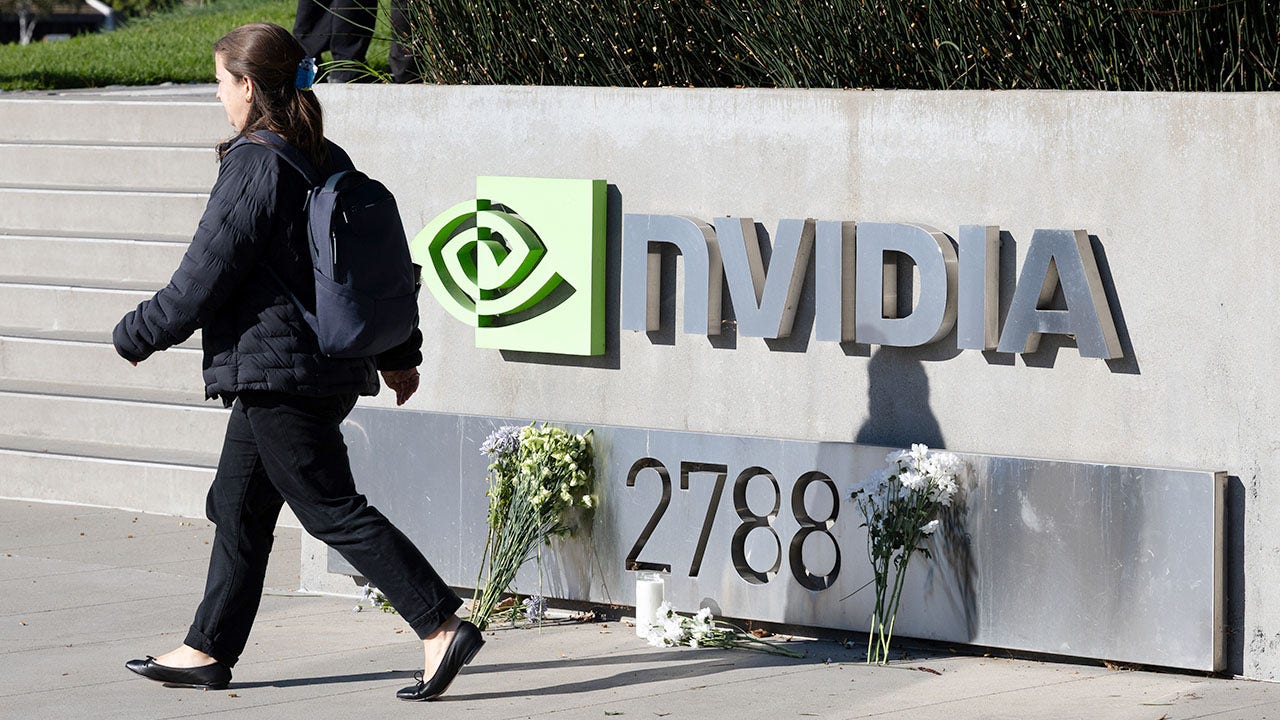
Nvidia’s latest quarter landed with real force, showing the chip giant can still post huge numbers even as its leadership story takes a sharp turn. The company beat Wall Street’s expectations, laid out a bullish outlook, and made clear that the business machine is still humming while a permanent CEO search gets underway.
On Tuesday, Nvidia reported revenue of $115.8 billion for the quarter ended Oct. 25, along with diluted earnings per share of $2.68. Both figures came in above analyst estimates, which had called for $109.1 billion in revenue and $2.48 per share, based on LSEG data.
The company’s growth remains eye-popping by any normal standard. Revenue climbed 20% from the prior quarter and jumped 103% from a year earlier, while earnings per share rose 10% sequentially and 108% year over year.
Net income reached $65.3 billion for the period, up 9% from the previous quarter and 105% from the same stretch last year. That kind of profit growth keeps Nvidia in rare company, especially with investors watching every move tied to the artificial intelligence boom.
The earnings report arrived just days after co-founder Jensen Huang resigned as CEO, a sudden leadership change that has put fresh attention on the company’s future. The board said Huang stepped down after the disclosure of personal behavior that conflicted with the company’s code of conduct, standards and cultural norms.
Harvey Jones, chairman of the board, told investors that the board unanimously accepted the resignation and does not intend to bring Huang back as CEO. He said the move was handled deliberately and with the interests of employees, customers, partners and shareholders in mind.
Jones also signaled that the company is not eager to linger on the controversy. He said questions about Huang’s departure would not be addressed during the call, and that the board would speak further when appropriate as it focuses on immediate concerns and stronger oversight.
Interim CEO Colette Kress, Nvidia’s longtime chief financial officer, stepped into the spotlight to reassure investors that the company’s core momentum has not faded. She said Nvidia remains well positioned and stressed that its appetite for innovation, customers and shareholders has not changed.
Kress pointed to the company’s Vera Rubin AI data center platform, saying it generated nearly $20 billion in revenue and delivered the fastest product ramp in Nvidia history. She also said demand from agentic AI tools is creating extraordinary pressure on CPU supply, which tells its own story about how intense the market has become.
Forward guidance stayed aggressive. Nvidia said it expects fourth-quarter fiscal 2027 revenue of about $130 billion, plus or minus 3%, and noted that it is not assuming any data center compute revenue from China in that outlook.
The company also raised its fiscal 2028 revenue growth forecast to 75% year over year, up from 70%. Kress said that outlook reflects strong end-customer demand, access to capital and data center readiness, all of which remain key pieces of the broader AI expansion.
Jones used the call to sketch out what comes next for the chief executive search. He said both internal and external candidates will be considered, and he framed the job as one that will require steady judgment in a market shaped by advanced silicon and national security pressures.
That last point matters more every quarter. Nvidia is no longer just selling chips, it is sitting at the center of a bigger fight over technology, power and where the next wave of computing goes from here.
