
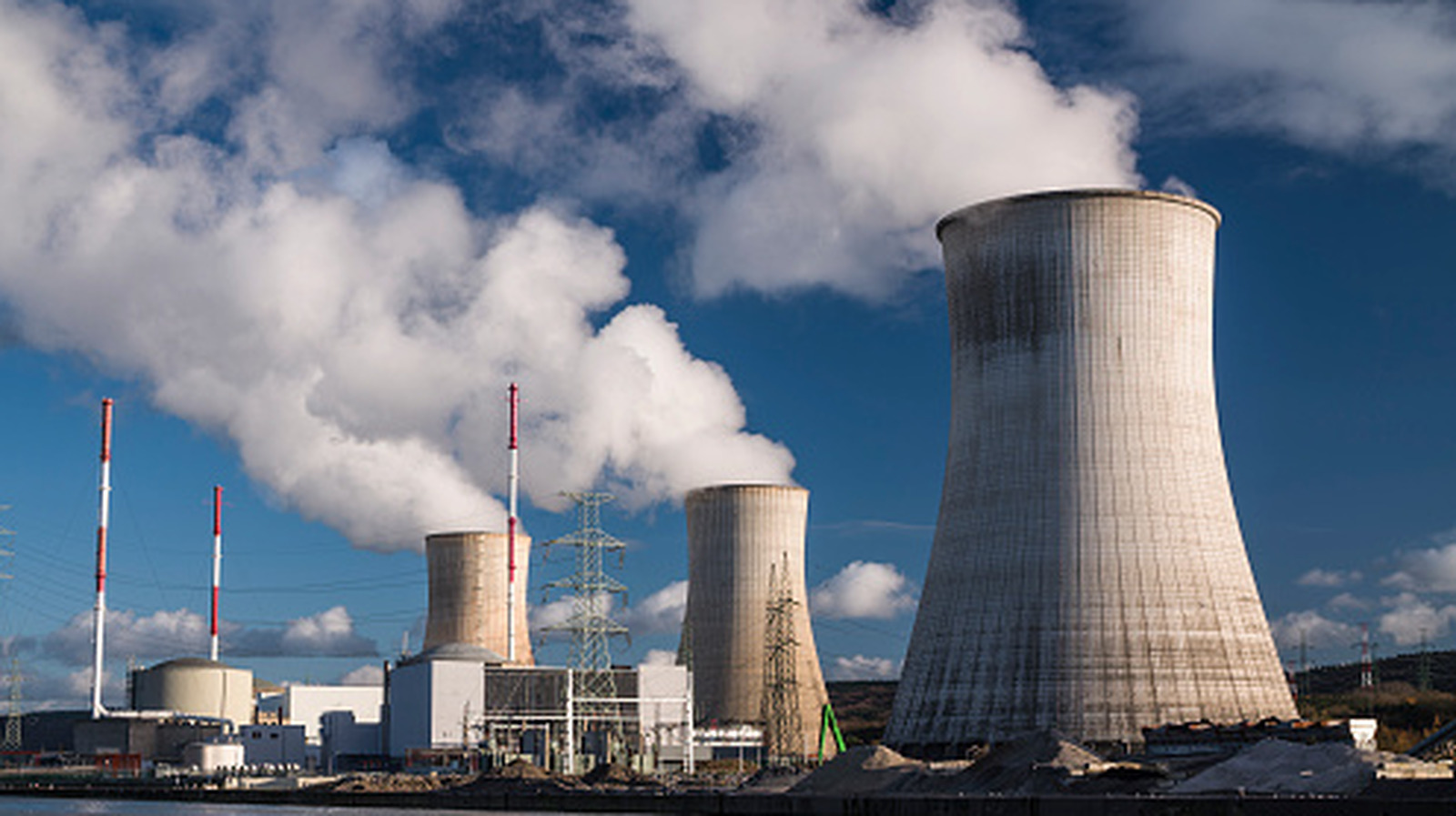
Nuclear power is often floated as the obvious way to feed hungry data centers, so this piece breaks down what that really means: how much electricity data centers consume, what different reactor sizes deliver, and the practical trade-offs of pairing reactors and server farms. Read on for a straightforward look at how many reactors you might need and why the answer is more about grid design and policy than raw math.
Data centers are power gluttons by design, but not uniform ones. A single hyperscale facility can draw tens to hundreds of megawatts continuously, while smaller edge sites sip a few megawatts or less. That spread matters because the size of the reactor you pair with a center determines flexibility, cost, and feasibility.
On the supply side, nuclear plants come in a few flavors. Traditional large reactors often produce 800 to 1,200 megawatts of electricity, while small modular reactors, or SMRs, aim for outputs in the tens to a few hundred megawatts. Capacity factor matters too: nuclear typically runs close to full output most of the time, which is great for baseload but not always ideal for loads that spike or drop quickly.
Matchmaking a single data center to a single large reactor is rarely efficient. If a data center needs 100 megawatts, a 1,000 megawatt reactor could power it, but it would leave most of the reactor’s output to go elsewhere. That’s fine on a grid-wide basis, but for a company wanting dedicated clean power for one site, SMRs or shared grid arrangements are often a smarter fit.
For companies dreaming of dedicating nuclear units to their cloud regions, SMRs offer a headline-friendly promise: build a 100 megawatt reactor next to a 100 megawatt data campus and you’ve got a neat one-to-one. In reality, construction timelines, licensing, and cost per megawatt keep that neat idea from being plug-and-play. Also, data center load profiles and maintenance windows require operational flexibility that traditional nuclear plants weren’t designed to provide.
Doing the math at scale helps clarify the picture. Powering one 100 megawatt data center continuously would require roughly a tenth of a large 1,000 megawatt reactor’s capacity, factoring real-world capacity factors. To power ten such centers full-time you’d need about one large reactor, or a handful of SMRs sized to match growth and resiliency goals.
When you scale up to an entire company’s global footprint, the reactor count climbs fast. Hundreds of megawatts in each major region translate to several large reactors or dozens of SMRs, depending on whether the strategy is centralized baseload or distributed local generation. That’s before you factor in redundancy, disaster recovery sites, and the extra capacity operators keep on hand for peak demand.
There are broader system-level considerations too. Nuclear plants offer stable, low-carbon baseload, but they can’t ramp down quickly to follow fast swings in cloud demand like gas turbines or batteries. Integrating storage, demand-response, or hybrid systems becomes essential if a data center wants both the clean credentials of nuclear and the rapid flexibility of modern cloud operations.
Costs and timelines are the other big brakes on simply building reactors for data centers. Nuclear projects require heavy upfront capital, long permitting processes, and specialized workforce skills. SMRs promise faster build times and smaller capital footprints, but they are still maturing commercially and face regulatory hurdles in many places.
Waste heat reuse is an angle that gets less attention but can shift the economics. Data centers generate heat too, and pairing heat-hungry processes or district heating with nuclear units can create efficiencies that improve the overall case. Both heat and power integration need local planning, though, and they change siting rules and community negotiations.
Regulatory and social acceptance are the wildcards. Local permitting, public opinion, and emergency planning zones influence where reactors can go and how close they can be to critical infrastructure. For companies and utilities, that means energy strategy is as much about politics and community engagement as about turbines and transformers.
In short, the pure number of reactors is a simple calculation but not the full story. You can estimate reactors by dividing required megawatts by typical reactor output, but the practical path depends on mix, flexibility, cost, timelines, and community factors. Nuclear can be a major piece of the puzzle, yet the smartest deployments blend reactors with storage, demand shaping, and grid partnerships to match the real rhythms of data center demand.
