
Parents in Wake County are locked in a tense fight over a music class at Middle Creek Elementary School, where some families say they want their children to stay in public school but still have a way out of a class taught by a transgender teacher. The issue has stirred frustration because, according to parents, they were not given advance notice and were left scrambling once the situation became public.
What makes the clash especially raw is the feeling among some families that they are being cornered into a take-it-or-leave-it choice. Parents speaking at the school board said their children came home upset, confused and uncomfortable, and they argued that an alternative should be available for families with religious or personal objections.
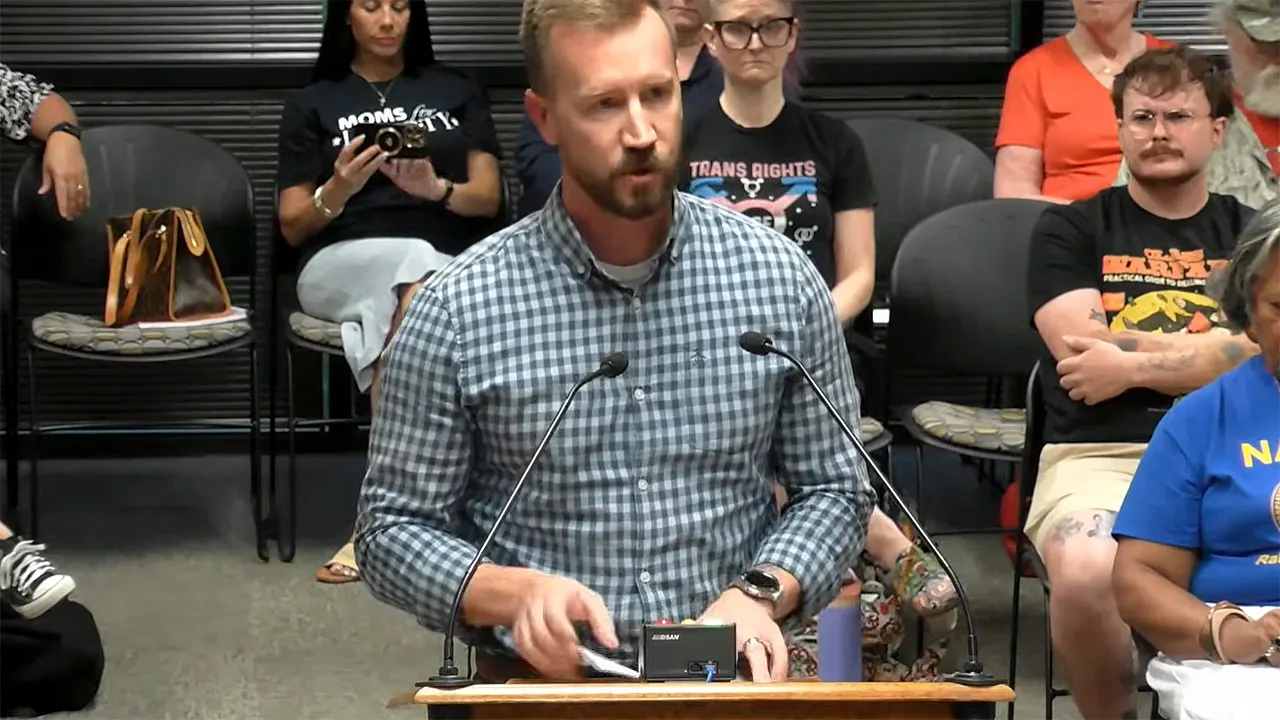
That frustration spilled into a charged Wake County Board of Education meeting on Tuesday, where the conversation quickly turned into a broader argument about fairness, identity and the limits of public education. Some speakers said the district should not be asked to single out a teacher because of gender identity, while others pushed back hard and said public schools should not require families to accept every classroom arrangement without question.
Aaron Driver, a father of three at Middle Creek Elementary and a member of Middle Creek Parental Rights, delivered one of the most pointed remarks of the night. He said parents “shouldn’t have to pass an ideological test to participate in public education.”
Driver also described what he said critics were telling families who objected to the arrangement: “You don’t support school hiring a trans teacher. Maybe public school isn’t for you or your family. Maybe homeschool. Maybe private school.” He followed that by saying, “That’s right,” and then added, “Maybe pay taxes into the school system and then pay again to escape from it.”
Not everyone in the room saw the situation the same way, and the response from the other side was just as blunt. One public commenter, Katrina Day, suggested a homeschooling curriculum and said it would “keep the bigots away from my grandchildren.” She also said the district should “relocate the children of bigots if needed” or “expel the children of bigots if needed.”
Those comments pushed the meeting into even hotter territory, because the argument was no longer just about one teacher or one class. It became a showdown over who gets to define tolerance, and whether parents asking for an opt-out are seeking a modest accommodation or trying to pressure a teacher out of the school.
The issue did not appear out of nowhere. The dispute had already been building before the board meeting, with state Rep. Erin Paré, R-Wake, raising concerns in late July after hearing from parents in southern Wake County. According to WRAL, she floated the idea of a state law that would require sex-based professional attire for public-school employees.
Parents who oppose the current setup say they are not trying to attack anyone personally. They say they want advance notice and a reasonable alternative when a class conflicts with their religious or personal beliefs, and they argue that public schools should make room for that without forcing families to walk away from the system entirely.
That demand has kept the issue alive because it cuts straight to a larger pressure point in public education. Families want their children in the classroom, but they also want some say over what crosses the line for them, and Wake County has become the latest place where that balance is turning into a full-blown fight.
