
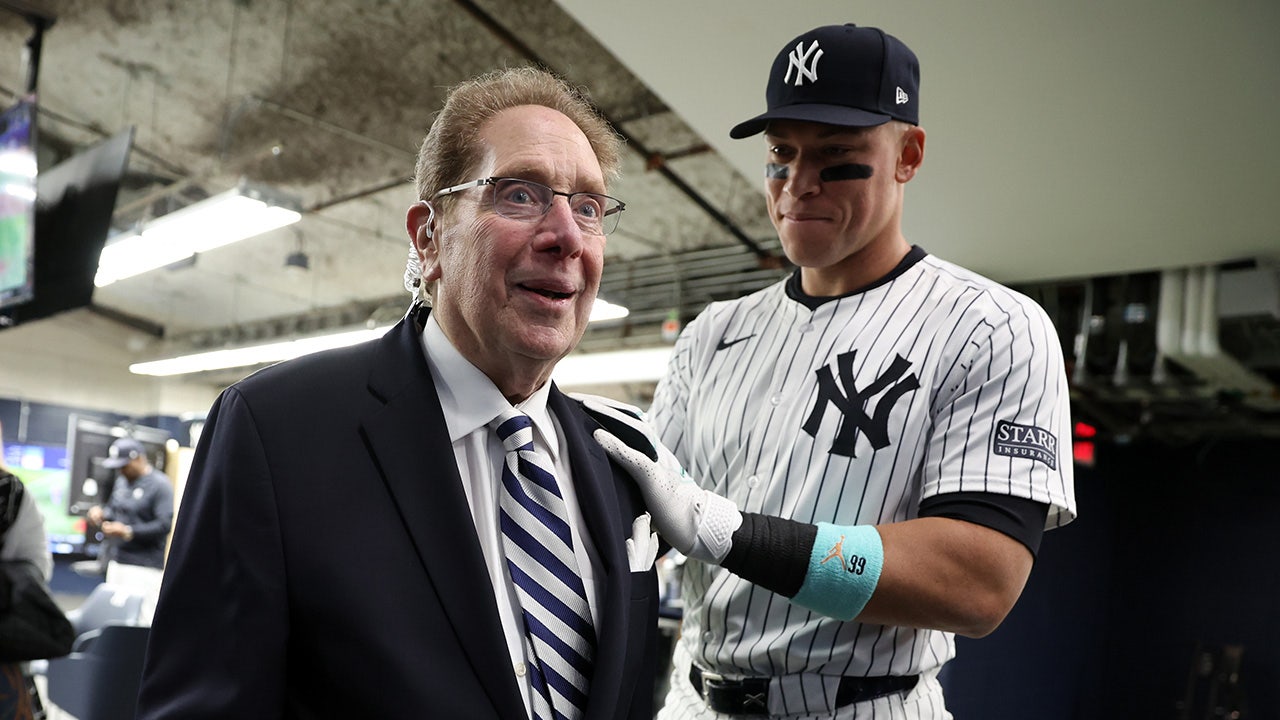
Veteran New York Yankees radio voice John Sterling has died at 87, WFAN confirmed. Sterling spent decades behind the mic for the Yankees, becoming known for his unmistakable home run calls and long tenure with the team since 1989.
For more than three decades Sterling was a constant companion to Yankees fans, guiding them through countless late innings, pennant chases and postseason runs. His delivery was unmistakable and his presence on the radio dial became part of the rhythm of New York baseball. Stations and listeners came to associate his voice with the drama and ritual of following the Yankees game by game.
WFAN announced the news, ending a career that put Sterling in the living rooms and cars of generations of fans. He wasn’t simply a play-by-play man; he was a storyteller who turned every long ball into a tiny event all its own. Listeners learned the cadence of his calls and the little idiosyncrasies that made him a personality as much as a professional.
The arc of Sterling’s time with the Yankees began in 1989, and from that point forward he became one of the most familiar figures in baseball broadcasting. His tenure outlasted many teammates, managers and even rival broadcasters, giving him a unique claim on continuity. Baseball is a game of memory and repeat moments, and Sterling’s voice was woven into that fabric.
Critics and fans often debated his style, which could be as colorful as the city he covered. Admirers pointed to his knack for making big plays feel cinematic, while detractors sometimes focused on his eccentricities behind the microphone. That tension only made him a more compelling figure; people who follow the Yankees tend to develop strong feelings about the people who narrate their summers.
Beyond the home run exclamations, Sterling’s role was to translate a stadium’s live energy into something intimate for radio listeners. He managed to do that for years, shaping how people experienced the game when they could not be at the ballpark. The craft of radio play-by-play is quiet work in a loud profession, and Sterling’s longevity showed an ability to meet the unique demands of that medium.
News outlets and long-time listeners paused to remember what his broadcasts meant to them. To many, his voice signaled the start of hope in an inning or the comfort of a ritual after a long day. Those memories are personal and widespread at once, the kind that turn a broadcaster into a cultural figure beyond the technical job description.
As tributes and reflections circulate, the focus falls on what Sterling represented: a durable link between a franchise and its fan base. He left an imprint on the way Yankees baseball was heard across radio waves for a generation. That imprint is what people will recall as they look back on his career and the moments he helped make eternal.
