
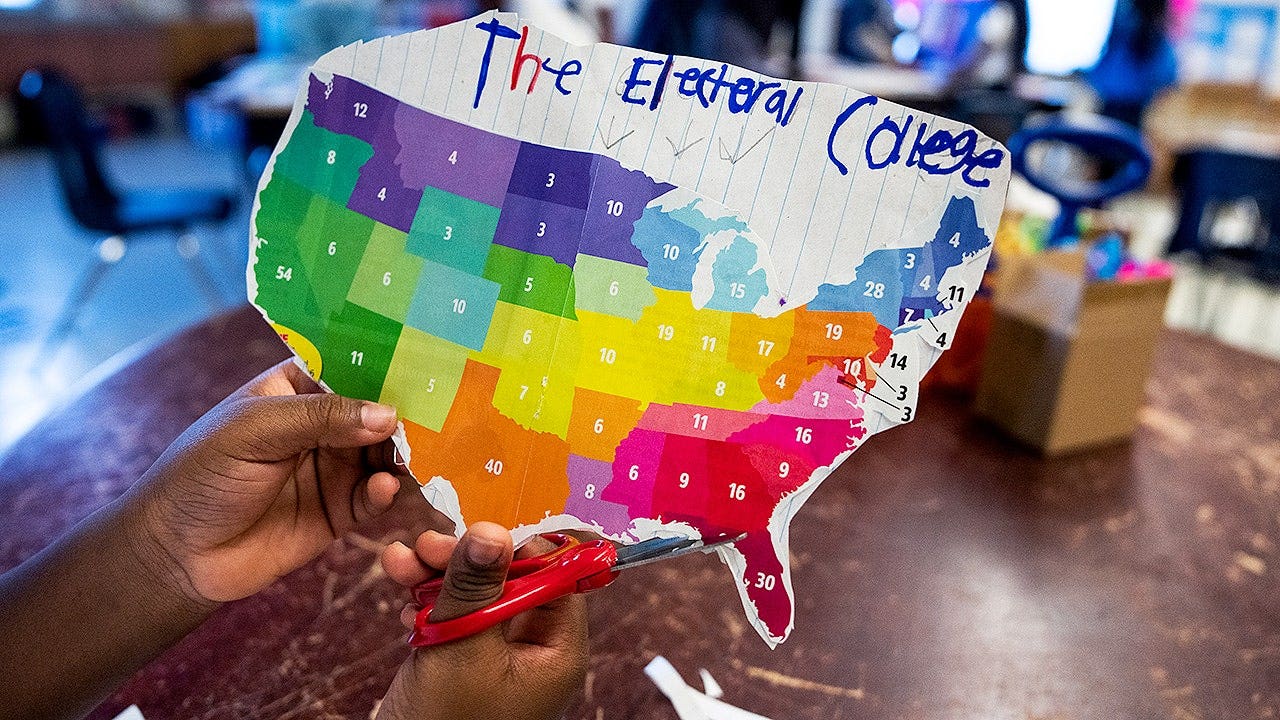
Democrats’ recent gains in key states have given the National Popular Vote movement a fresh burst of momentum, putting the 2028 presidential race in the middle of a bigger fight over how the country picks its president. With control of more state governments now in play, supporters see a narrow but real path to reaching the 270 electoral votes needed to trigger the compact, while critics warn the whole idea is headed for a courtroom brawl.
The compact already has backing from 18 states and Washington, D.C., which adds up to 222 electoral votes. That leaves it 48 short of activation, but the map looks better for supporters after Michigan, Pennsylvania, Wisconsin and Nevada shifted into Democratic hands. If those four states signed on, the total would jump to 272, and Arizona could raise it further if Democrats gain full control there too.
National Popular Vote says it has sponsors lined up in several of the states that could push the deal over the line. The group expects legislation to surface before, or early in, the 2027 sessions, and it is betting that the new political terrain gives it a real shot. Patrick Rosenstiel, a senior consultant for the group, said, “I am confident we have multiple paths to secure the 48 electoral votes required to deliver what 63% of Americans want,”
Under the current system, nearly every state gives all of its electoral votes to the statewide winner. The compact would keep the Electoral College on paper, but participating states would agree to award their electors to the candidate who wins the most votes nationwide. That would make the popular vote the deciding factor without formally scrapping the constitutional structure.
Supporters frame that as a fairness fix, saying every ballot would carry the same weight no matter where it is cast. They argue the present system can leave voters in deep-blue or deep-red states feeling sidelined, since the outcome in those places is often a foregone conclusion long before Election Day ends. To them, a national tally feels cleaner, simpler, and more democratic.
Critics see something very different. Hans von Spakovsky, an election law expert with Advancing American Freedom, said the compact cannot be used to sidestep the Constitution, arguing, “They can’t use a compact to, in essence, change the Electoral College,”
He also called the plan unusual, saying state compacts have historically been used for practical matters like water sharing, not for changing the architecture of presidential elections. In his view, if states want to rewrite something this fundamental, they need to go through the amendment process, not patch together a workaround through state legislation.
Rosenstiel rejects that line of attack and says Article II gives states the power to decide how electors are appointed. The legal issue, in his view, is not whether states can do it, but whether Congress must consent under the compact clause. That question could end up mattering just as much as the political math.
Von Spakovsky argues that because the agreement is between states, Congress would need to approve it, and he says that could happen with simple majorities in both chambers. He added that a presidential signature might not even be required, which means a veto would not necessarily kill the effort. Still, he says states that stay out of the compact would likely have strong grounds to challenge it.
That kind of challenge could send the issue straight to the Supreme Court. Von Spakovsky said non-participating states would likely argue that the compact changes a basic structural feature of the Constitution without the proper amendment process, and that states cannot make deals among themselves that weaken the federal system. The fight is not just about election rules, but about who gets to redraw them.
For now, the timetable is tight and the stakes are high. National Popular Vote says the compact would need to clear the 270-vote mark before July 20, 2028, if it is to affect that year’s presidential election. That leaves lawmakers, Congress, and possibly the courts with a limited window to decide whether the country keeps the same old map or heads into a very different kind of presidential contest.
