
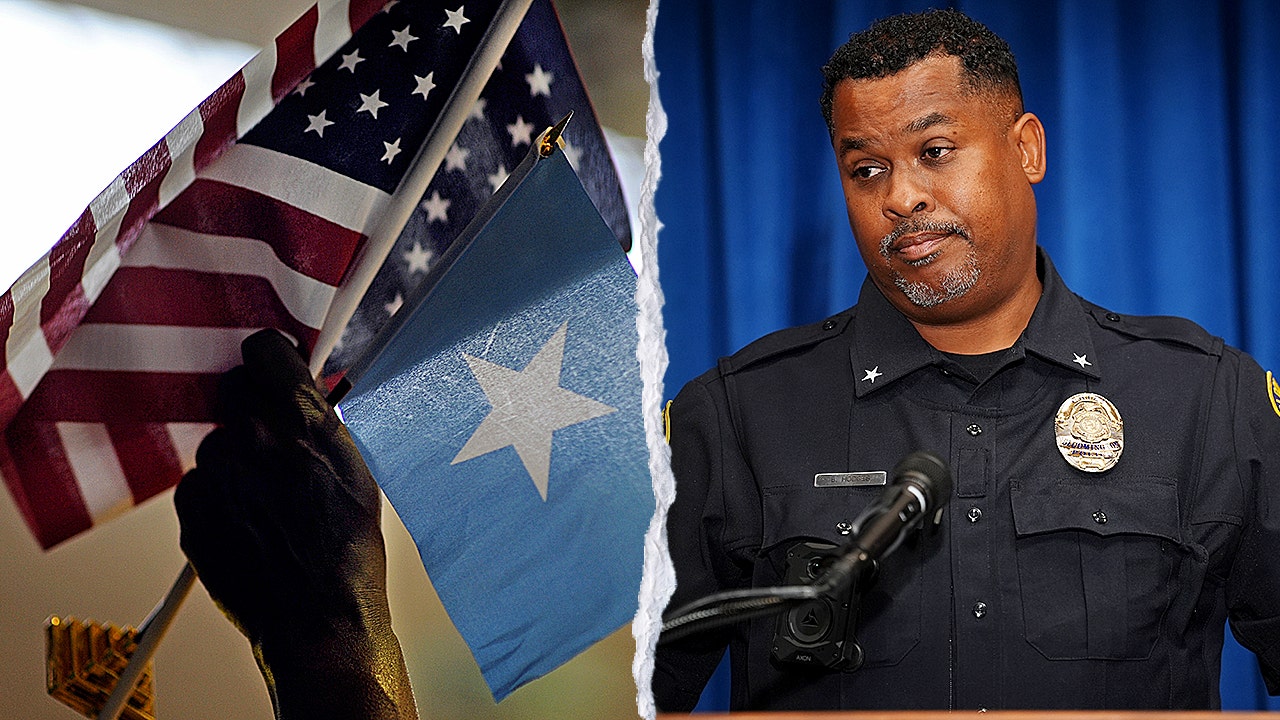
Minneapolis suburbs are wrestling with a violent pattern that has turned a local crime problem into a broader debate over assimilation, family breakdown, and the way immigrant communities settle in America. Police say the suspects involved do not look like the usual street gang recruits, and that has left investigators trying to understand how online feuds and neighborhood tensions are spilling into gunfire.
Bloomington Police Chief Booker Hodges has been blunt about what makes these cases unusual. He says the young suspects are often coming from homes with money and support, which does not fit the familiar picture of gangs built around poverty, desperation, or drug markets. That disconnect has only sharpened the sense that something deeper is at work.
One late-night shooting in Bloomington left a person injured and added to a string of suburban Minneapolis-St. Paul incidents that have rattled residents. Authorities have also described a blast of more than 100 rounds fired in one neighborhood, a level of violence that can shake up even a city used to crime reports. The worry is not just that shots were fired, but that the motives appear scattered, impulsive, and hard to pin down.
Hodges said investigators are still working through the basic question of why it is happening. Social media disputes seem to be fueling some of it, but that explanation feels far too small for the violence on the ground. As he put it, the usual gang playbook does not seem to fit.
The discussion has also turned toward the Somali American community in Minnesota, one of the largest in the country. Somalia’s long history of clan conflict, weak state power, and civil upheaval pushed many people to seek safety elsewhere, and Minnesota became a major landing spot for refugees over the years. That background matters, but it does not automatically explain why a small group of young people is now caught in criminal violence.
Some analysts argue that resettlement patterns may have made assimilation harder than it needed to be. Jessica Vaughan of the Center for Immigration Studies says refugee clusters can create a separate social world that reduces pressure to adapt to the larger culture. In that view, well-meaning policies can still backfire if they leave young people too insulated from the wider society.
That argument does not go unchallenged. Stanford sociologist Tomás Jiménez warns against treating gang activity among a small number of second-generation immigrants as proof that an entire community has failed. He points out that earlier immigrant groups, including Italians, Irish, Mexicans, and Salvadorans, also dealt with youth gang problems while the broader arc of integration continued.
There is a long memory behind that point. Italian and Irish neighborhoods in New York were famously tight-knit, with families following the same routes, living near relatives, and sticking close to familiar occupations. Even so, those communities changed over time through education, upward mobility, language shifts, and intermarriage, which is why assimilation is often more of a slow grind than a dramatic flip.
That slower timeline is part of what makes the current debate so messy. Some Somali American community leaders say the violence should be understood as an American problem, not a Somali one, while others point to overworked parents and young people drifting away from home values. Imam Yusuf Abdulle has pushed back hard on the idea that the violence reflects Somali identity itself, saying, “These kids are Americans. They’re born and raised here,” and “It is an American problem. It is not a Somali problem.”
Even with those competing explanations, local officials are focused on the immediate danger. Hodges has said police are shifting task force resources toward the gangs and has raised questions about whether prosecution policies in Hennepin County make it harder to intervene early. His concern is practical as much as political, because a shooting that happens after dark can still look very different when the same gunfire breaks out in daylight.
That warning hangs over neighborhoods where ordinary routines can be shattered in seconds. Parents, teachers, clergy, and police are now stuck with the same uneasy reality: a small number of young men are pulling whole communities into danger, and nobody sounds fully satisfied with the explanations being offered.
