
A lot of Christian voters are waking up to a hard truth: when faith gets treated like a private hobby instead of a public calling, politics gets ceded to people who are anything but shy about their convictions. That vacuum has been filling fast, and it is reshaping races, cities, and the basic tone of American life.
• Christian retreat and public silence
• Faith shaping political outcomes
• Rising influence of Islamist politics
• Michigan and Minnesota as warning signs
• The clash between biblical conviction and cultural drift
For years, a familiar pattern took hold. Christians were told to keep their beliefs tidy, quiet, and safely tucked away, while activists and ideologues marched straight into the public square with total confidence. The result is not neutrality. It is surrender dressed up as politeness.
That matters because elections are never just about personalities. They are about moral vision, and the side that is willing to say what it believes usually wins the room. When believers stop speaking plainly, others rush in to define the future for them.
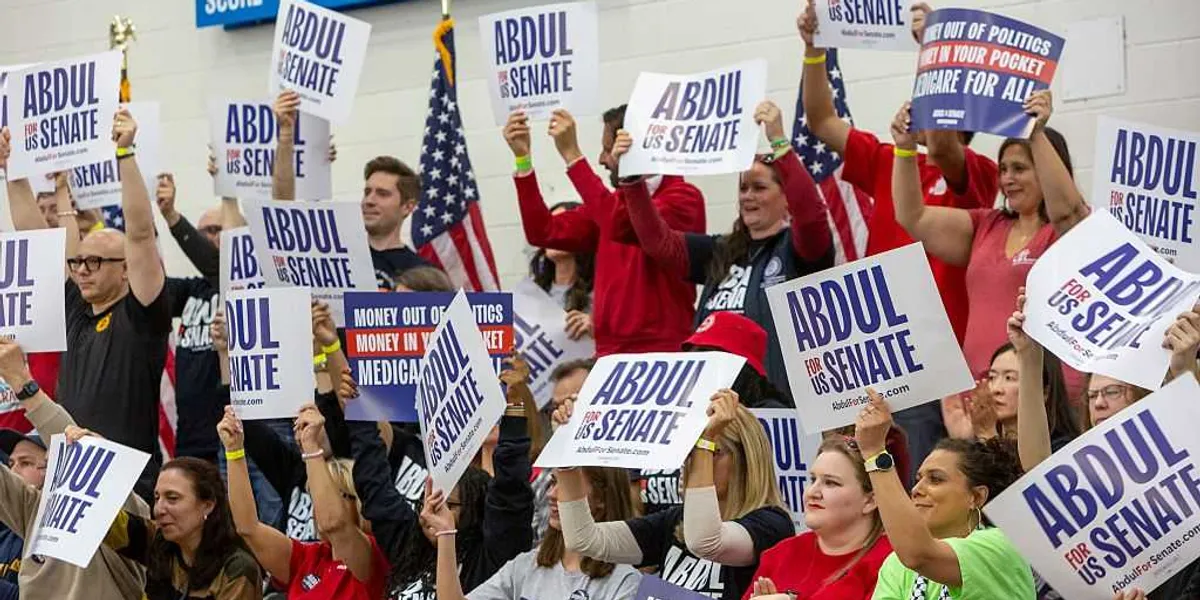
Michigan offers a sharp example of what happens when spiritual hesitation meets political ambition. In a state where religious voters still matter, the discussion around figures like Gretchen Whitmer, Abdul el-Sayed, and broader Senate primary battles shows how quickly the ground can shift when faith communities lose their nerve. The issue is not just policy, but whether the public square still has room for biblical conviction at all.
That same pressure shows up in urban politics across the country. Minneapolis and New York have become symbols of a deeper fight over what kind of culture is being normalized, and who gets to set the terms. Zohran Mamdani is part of that larger picture, where identity politics, ideological certainty, and religious language can mix into something far more strategic than many voters first realize.
The concern is not with ordinary believers of any background living peacefully in America. The concern is with political movements that use faith as a shield while pushing hard-edged power plays underneath. Islamist influence, Islamic extremism, and organized political activism are not abstract labels when they start shaping school boards, local races, and public language.
Christians do not need to panic, but they do need to wake up. The Great Commission was never meant to be reduced to private inspiration, and neither was the moral witness of the New Testament or the Old Testament meant to be locked inside church walls. A faith that never touches the public square eventually becomes a faith that is politely ignored by everyone else.
The old habit of assuming common ground will somehow preserve itself is wearing thin. It does not take long for a society to notice who actually shows up with conviction and who only shows up with concerns. In politics, silence is rarely respected for long, and hesitation usually gets mistaken for weakness.
That is why the current mood feels so charged. Many Christians are seeing that the choice is no longer between loudness and calm, but between influence and irrelevance. The stakes are not theoretical when candidates, activists, and religiously driven movements are all fighting to define what America should become next.
The cultural fight is already underway in churches, campuses, suburbs, and ballot boxes. Every time believers shrink from that reality, the space gets filled by someone else with a very different agenda. And once that space is gone, getting it back is a lot harder than holding it in the first place.
