
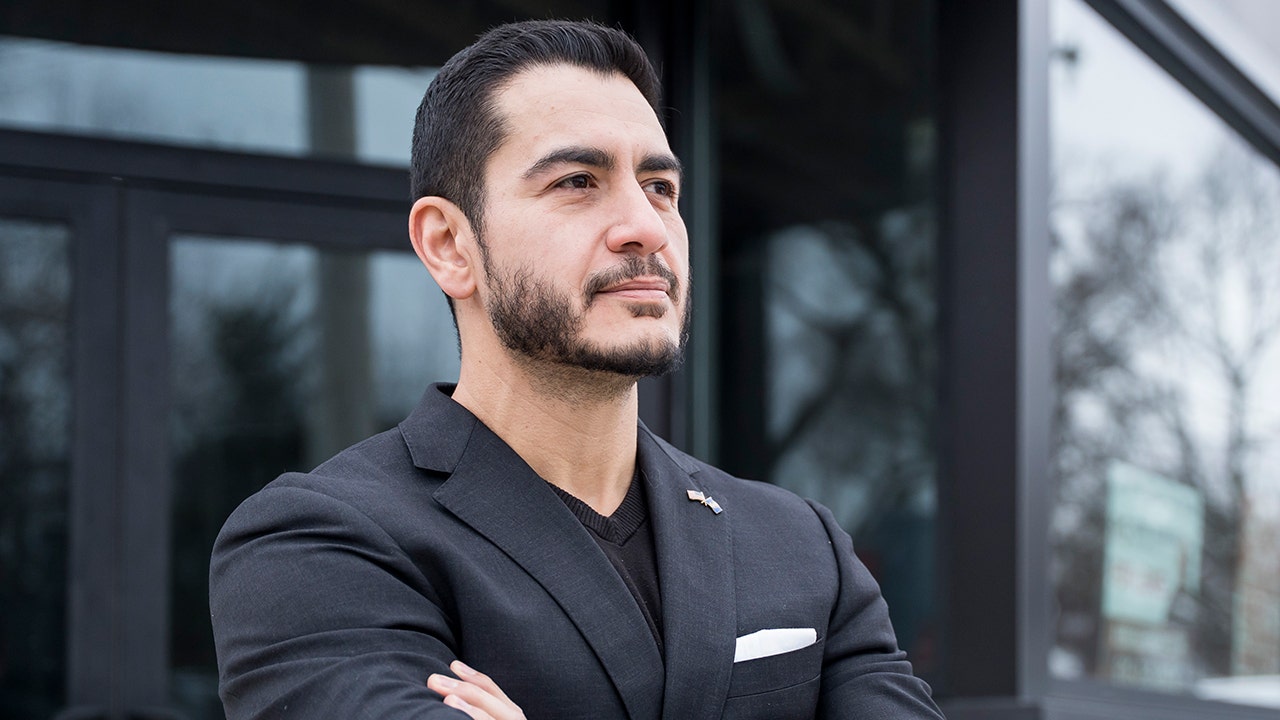
Michigan’s Senate race is already getting tense, and the latest numbers give Republicans a reason to grin. Abdul El-Sayed’s hard-left brand is testing just how much room Democrats have in a state where swing voters can turn the whole map upside down.
The fight started with a rough Democratic primary, and that fracture is still hanging over the race. El-Sayed beat a more moderate challenger, but the result did not exactly leave everyone singing from the same songbook, which matters a lot when every vote in a battleground state is precious.
A Fox News poll taken after the primary showed Republican Mike Rogers ahead 51% to 47%, a narrow lead but a meaningful one this early in the game. The bigger story is not just the margin, but how the split looks inside each party, with Republicans showing far tighter unity than Democrats.
Nearly all Republicans are locked in behind Rogers, including both MAGA voters and Republicans who are less closely tied to that wing of the party. That kind of discipline is gold in a race like this, because it means Rogers is not wasting energy patching over a messy internal fight while Democrats are still sorting themselves out.
El-Sayed, by contrast, is dealing with some friction inside his own coalition. He has strong support from Democratic Socialists of America backers, but that enthusiasm drops once the pool widens to Democrats who are less ideological and to independents who usually decide close races.
That split has real consequences because Michigan is not a place where a candidate can coast on base energy alone. Voters there are still grinding through the same everyday pressure points that dominate most elections now, especially inflation and high prices, and that tends to reward candidates who look steady instead of controversial.
Rogers has also been trying to pull in Democrats who are uneasy with El-Sayed’s record and policy positions. He has framed the race as a chance to offer a home to voters who do not feel represented by the Democrat who came out on top, and that message is aimed squarely at the middle of the electorate.
El-Sayed is no stranger to big, bold politics. A former health department director and an epidemiologist, he has leaned into Medicare-for-all, called for abolishing ICE, and taken a sharp line against Israel during the war with Hamas, all of which have helped define him as a candidate who is way out of step with mainstream swing-state politics.
That style may thrill the activist crowd, but it also gives Republicans a clean target. They are making the case that El-Sayed is simply too far left for Michigan, and the early polling suggests that argument is landing with at least some voters who might otherwise lean Democrat.
There is also a broader Democratic problem baked into the race. If the party cannot easily unify around a Senate nominee in a state this important, it raises ugly questions about whether the bench is built for a national majority push or just good at winning primaries with the loudest voices in the room.
At the same time, Democrats are trying to keep this from becoming a total collapse. Some party strategists still believe the environment is friendly enough for El-Sayed to recover, especially if voters settle into a familiar partisan choice and start thinking less about primary drama and more about which side they want controlling the seat.
That is the real tension now. Rogers has a unified party, a clear contrast, and a message aimed at disillusioned Democrats, while El-Sayed has to prove that his primary win was not the high point of his summer. In a state where small shifts can rewrite the whole night, that kind of pressure can get loud fast.
