
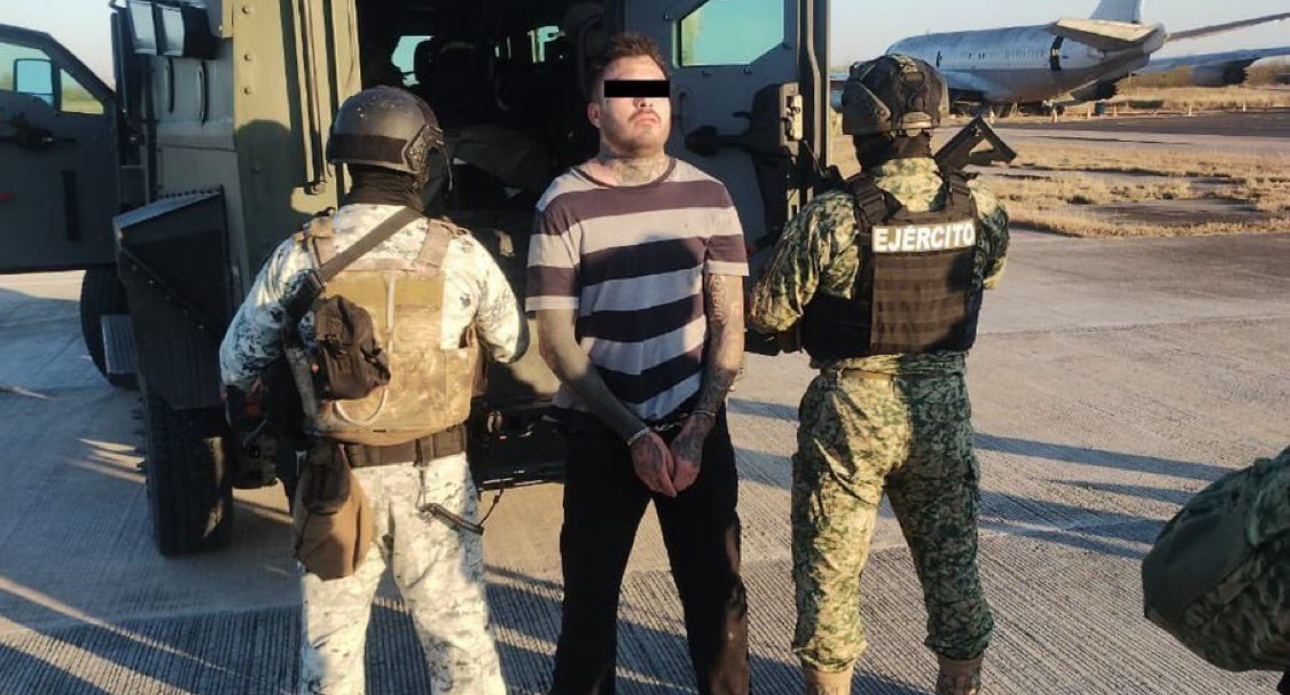
Ricardo González Sauceda, a prominent figure in the Mexican Cartel del Noreste, was apprehended in Nuevo Laredo, Mexico. The arrest came after Mexican President Claudia Sheinbaum agreed to collaborate with former President Donald Trump to strengthen border security. González Sauceda, who also uses the aliases “El Ricky” and “Mando R,” faces charges of attempted homicide and other serious offenses.
González Sauceda’s involvement extends to numerous criminal activities, including extortion and attacks on federal authorities. Reports connect him to the killing of two soldiers during an assault on the Mexican military in Nuevo Laredo. The operation to capture him was a joint effort involving Mexico’s Navy, National Guard, and the Attorney General’s Office.
Following his arrest, the city of Nuevo Laredo witnessed a surge in violence, with gunfights erupting and highways being shut down. Mayor Carmen Lilia Canturosas took to Facebook to alert the community about the dangers. “Please do not leave your homes at this moment,” she advised residents.
The U.S. Consulate in Nuevo Laredo also issued a warning due to the escalating violence. They received numerous reports of gunfights throughout the city. U.S. government personnel were instructed to remain sheltered in place for their safety.
In a significant political move, Mexican President Sheinbaum agreed to deploy 10,000 troops to the border. This decision was part of an agreement with Trump to pause tariffs temporarily. The Gateway Pundit highlighted this development as a major step in securing the border.
The cooperation between Mexico and the United States aimed to curb illegal activities across the border. President Trump’s tariffs had prompted swift action from Mexico. The Mexican government, eager to avoid economic repercussions, began arresting key figures linked to criminal organizations.
Simultaneously, Canadian Prime Minister Justin Trudeau committed to a $1.3 billion plan to enhance border security. This initiative included new helicopters, advanced technology, and increased resources to tackle the fentanyl crisis. Trudeau emphasized improved coordination with American partners.
President Trump agreed to a one-month pause on tariffs for Mexico and Canada. However, he warned that tariffs would be reinstated if a satisfactory agreement was not reached. The focus remained on halting the flow of fentanyl and illegal immigration into the United States.
The imposition of tariffs by the Trump administration led to immediate economic impacts. Within a day, the Canadian dollar fell to its lowest value since 2003. Similarly, Mexico’s peso experienced a significant drop.
Mexico’s proactive measures to arrest criminals were directly influenced by the potential economic consequences. The country’s efforts to crack down on terrorist activities were seen as a response to Trump’s firm stance on tariffs. The situation underscored the complex interplay between international politics and economic policies.
The collaboration between Mexico, Canada, and the United States marked a pivotal moment in border security efforts. The shared goal was to address the challenges posed by drug trafficking and illegal immigration. The developments highlighted the effectiveness of tough economic policies in prompting action.
As the situation unfolds, the international community watches closely. The actions taken by Mexico and Canada could set a precedent for future cooperation on border issues. The commitment to security and economic stability remains a priority for all involved nations.
The arrests and subsequent violence in Nuevo Laredo are a stark reminder of the ongoing battle against organized crime. The joint efforts of various agencies highlight the importance of collaboration in addressing such challenges. The global implications of these events cannot be understated.
While political leaders work towards a resolution, the impacts of tariffs continue to reverberate. The economic challenges faced by Canada and Mexico serve as a warning of the potential costs of inaction. The urgency to reach an agreement is evident as negotiations proceed.
With the world watching, the pressure on all parties to reach a viable solution is immense. The stakes are high, as the outcome will have lasting effects on international relations. The commitment to finding a path forward is crucial for maintaining stability and security.
