
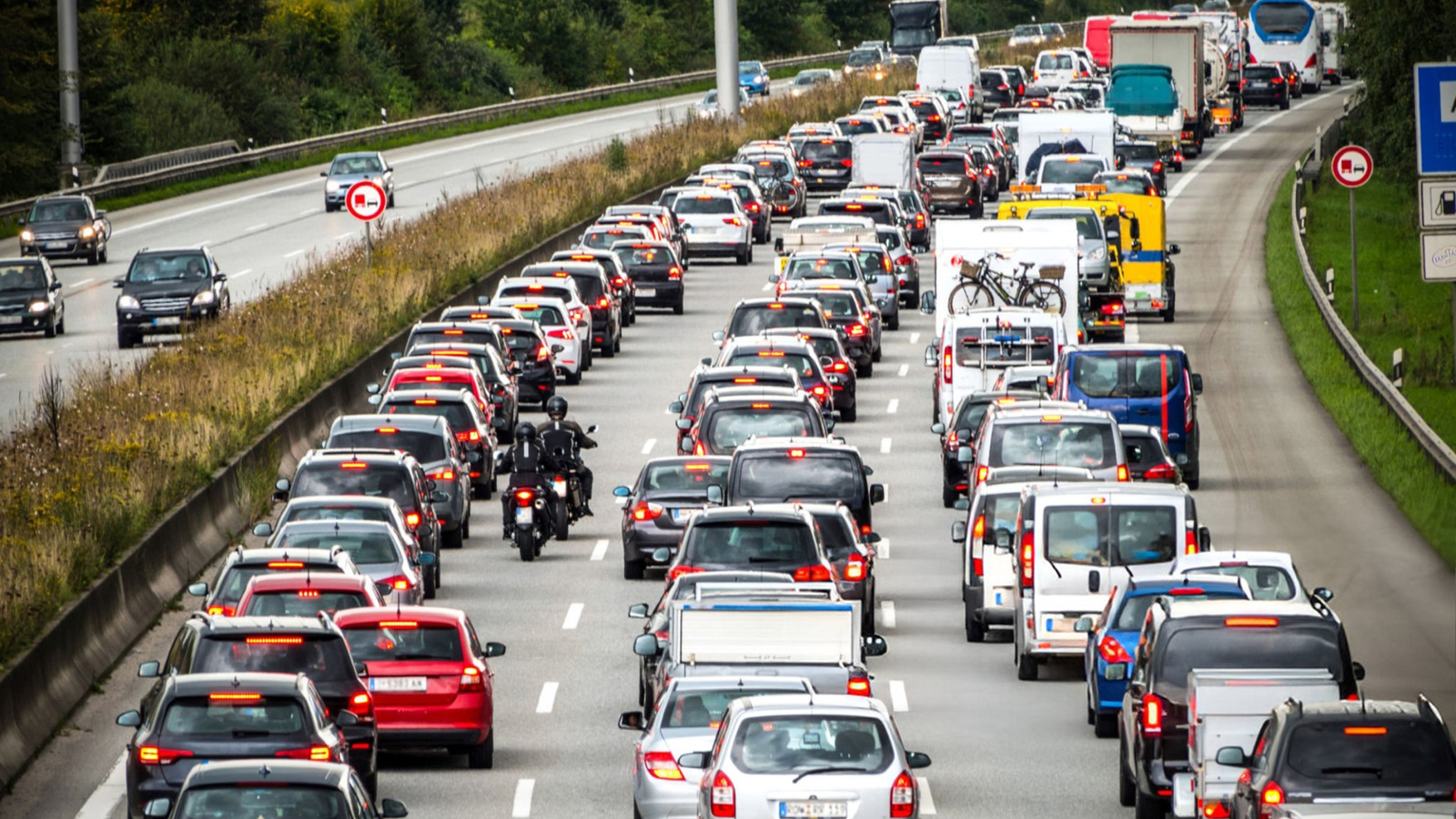
You probably learned this crucial safety habit in driver’s ed, but do you remember how to calculate it? This article lays out a clear way to judge safe following distance on highways, explains why it matters, and gives practical habits you can adopt right now to reduce your odds of a crash.
Following distance is the gap you keep between your car and the vehicle ahead, and it matters every time you drive. It’s the single simplest habit that reduces rear end collisions and gives you time to react to sudden stops. Keeping the right space feels simple, but many drivers underestimate how quickly stopping distances grow with speed.
The easiest rule you can use is the three-second rule, which measures time rather than feet. Pick a fixed point on the road like a sign or an overpass, start counting when the car ahead passes it, and if you reach it before three seconds have passed, you are following too closely. Convert that into a habit and you can judge space in real time without pulling out a tape measure.
When conditions change you modify the rule, not the principle. In rain, snow, fog, heavy traffic, or at night, add at least two seconds to your baseline, making it five seconds or more for safe stopping. Bigger vehicles and trailers need even more space because they take longer to slow down and can bully stopping distances on busy roads.
Two parts determine a safe gap: your reaction time and your braking distance. Reaction time is the delay between seeing a hazard and starting to brake, and that typically runs around one to two seconds for average drivers. Braking distance then depends on speed, road surface, tire condition, and vehicle weight, and those factors accelerate risk as speed rises.
To put it into practice, always pick a landmark and count seconds instead of estimating feet. If you are cruising at highway speeds and a three-second gap feels tight, expand it to four or five seconds until you get comfortable. Training your eye to spot when gaps are shrinking will keep you out of close-calls and let you anticipate chain-reaction stops.
Many drivers fall into predictable mistakes: following like a tailgate, assuming the car ahead won’t brake, or relying on brakes alone to prevent a crash. Tailgating cuts your margin of error to nearly zero and forces abrupt braking that can cascade through traffic. Cultivating patience and resisting the urge to close gaps for minor gains in position will save time and money in repairs and headaches.
Electronic aids can help but don’t replace judgment. Adaptive cruise control and forward collision warnings act as useful backups, but they are not perfect and won’t always account for debris, erratic drivers, or sudden lane changes. Treat advanced systems as a supplement and keep your hands and attention on driving, ready to adjust the gap as needed.
Practicing safe following distance is simple, measurable, and repeatable, and it pays off every time you hit the highway. Start by testing the three-second rule on low-traffic roads and then apply adjustments for weather and heavy vehicles as you gain confidence. A consistent, time-based approach to spacing makes driving calmer and gives you a real edge against avoidable crashes.
