
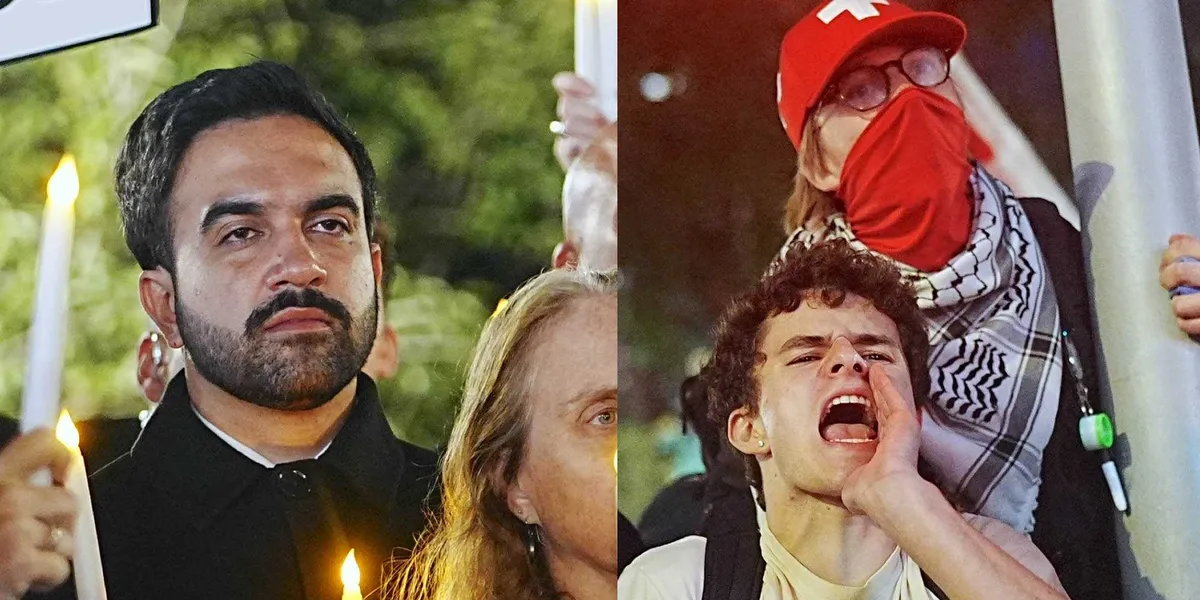
Zohran Mamdani found himself at the center of another rough public moment after a pair of videos showed Palestinian activists shouting at him in New York. The exchange turned sharp fast, with the anger focused on his political posture, his response to Gaza, and the larger frustration some activists have built up around elected officials who talk tough but rarely satisfy either side.
The clips landed in a city where every move on the Middle East gets magnified and every word can spark a fresh firestorm. Mamdani, already a flashpoint figure for critics and supporters alike, was confronted in a way that made the tension impossible to ignore.
One video showed activists unloading on him with raw fury, calling him an “Opportunist piece of s**t!” and making clear they felt betrayed. The outburst was not polished, not filtered, and not interested in diplomacy, which is exactly why it spread so quickly.
That kind of reaction reflects a deeper split in progressive politics, especially among people who want moral certainty on the war in Gaza and are tired of careful language. When activists believe a politician is using their cause for attention without taking a hard enough stand, the backlash can be instant and ugly.
Mamdani has spent much of his political rise appealing to young, outspoken voters who want blunt answers on foreign policy, policing, and power. But the same style that wins applause in one room can turn into a liability the moment those voters think the rhetoric is hollow.
Palestinian activists have grown more confrontational with politicians across the spectrum as frustration over the Oct. 7 terror attack, Israel’s response, and the broader war has intensified. In that climate, even officials who try to thread the needle often get hit from both directions, accused of either saying too much or not enough.
The confrontation also showed how quickly personal anger can swallow a political message. Instead of a structured debate about policy, the moment became a public release valve for pent-up resentment, and Mamdani became the target of that frustration in real time.
New York politics has always rewarded confidence, but it also punishes inconsistency. When activists sense a disconnect between the image a politician projects and the positions he actually takes, they tend to speak up loudly, and sometimes brutally.
For Mamdani, the episode adds another layer to a political brand that already draws strong reactions. He is not just being judged on votes and statements anymore, but on how he handles public hostility from people who once might have been expected to be allies.
That matters because modern politics is built as much on perception as on policy. A few seconds of shouting in a crowded setting can say more to voters than a long speech, especially when the words sound like a warning that trust has cracked and the people in the room are no longer willing to play nice.
