
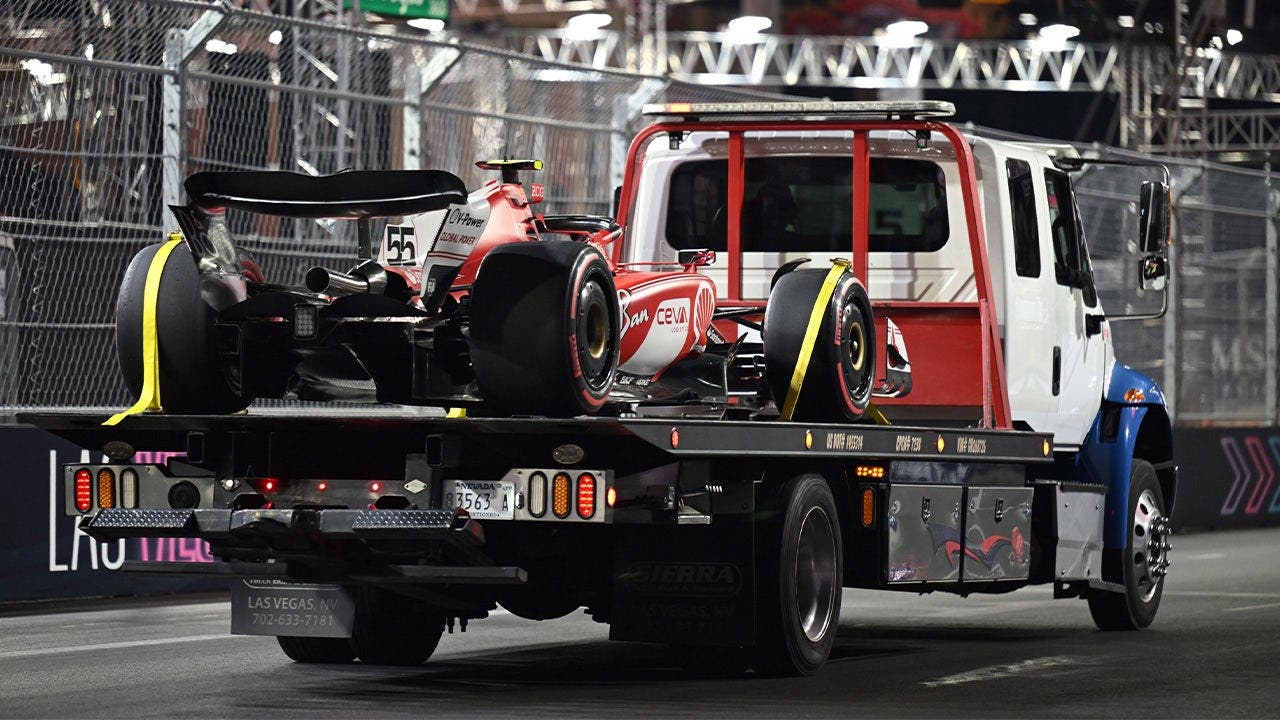
The Las Vegas Grand Prix is heading toward a major payout after the fallout from its ugly 2023 drain cover mess. A federal judge has given preliminary approval to a settlement that could send money back to thousands of fans who were caught up in the chaos, and the case is now moving toward final approval later this year.
What happened during that first practice session was the kind of moment nobody at a new Formula 1 event wants to see. Carlos Sainz hit a loose drain cover, and the impact tore up his Ferrari’s floor and energy store while also damaging Esteban Ocon’s car, turning a routine session into a full-blown headache for the series, the teams, and the fans in the stands.
The session was stopped with a red flag and then canceled, which pushed the next practice back by hours. That delay had a real ripple effect because plenty of ticket holders simply gave up and left before the track action resumed, not exactly the kind of first impression a high-end racing weekend wants to make.
That early exit became a big part of the legal fight. Attorney Steve Dimopoulos filed a class action, arguing that the response to the incident did not fully make up for what fans lost, especially after they paid for an event that was supposed to deliver a premium experience from start to finish.
Court documents now show that Las Vegas Grand Prix and its parent company, Liberty Media Corp., are preparing to pay out just over $3 million. The settlement is built around a common fund for roughly 32,000 eligible ticket holders, and a final approval hearing is expected in November.
The money sounds big until you break it down. Once the settlement is divided among thousands of people, and after attorney fees, costs, and administrative expenses are taken out, each individual payment may not be all that dramatic, depending on the ticket type and how many people actually file claims.
Still, the deal matters because it puts a number on a very public failure. Fans who bought into the excitement of the inaugural race ended up watching a weekend derail in real time, and the settlement is a direct acknowledgement that the event’s handling of the problem did not go unnoticed.
The drain cover incident also added another layer of drama for Ferrari and Sainz. The car damage forced a new engine and led to a ten-place grid penalty, which stung even more because the team was locked in a tight fight with Mercedes for second place in the championship standings.
That kind of setback can wreck a driver’s weekend before the race even begins. In Formula 1, every little piece matters, and a surprise hit from a loose track component can flip strategy, ruin qualifying momentum, and leave teams scrambling to recover lost ground.
For the Las Vegas event, the bigger concern was reputation. The race has now been held three times without a repeat of that chaos, and it is already locked into the F1 calendar through 2037, but that first-year incident still hangs over the event like a bad memory that refuses to fade.
The story is a reminder that a flashy new race can still get humbled by something as basic as a drain cover. Fans showed up expecting lights, speed, and spectacle, but what they got instead was a stalled session, a damaged car, and a lawsuit that is now turning into a multimillion-dollar check.
