
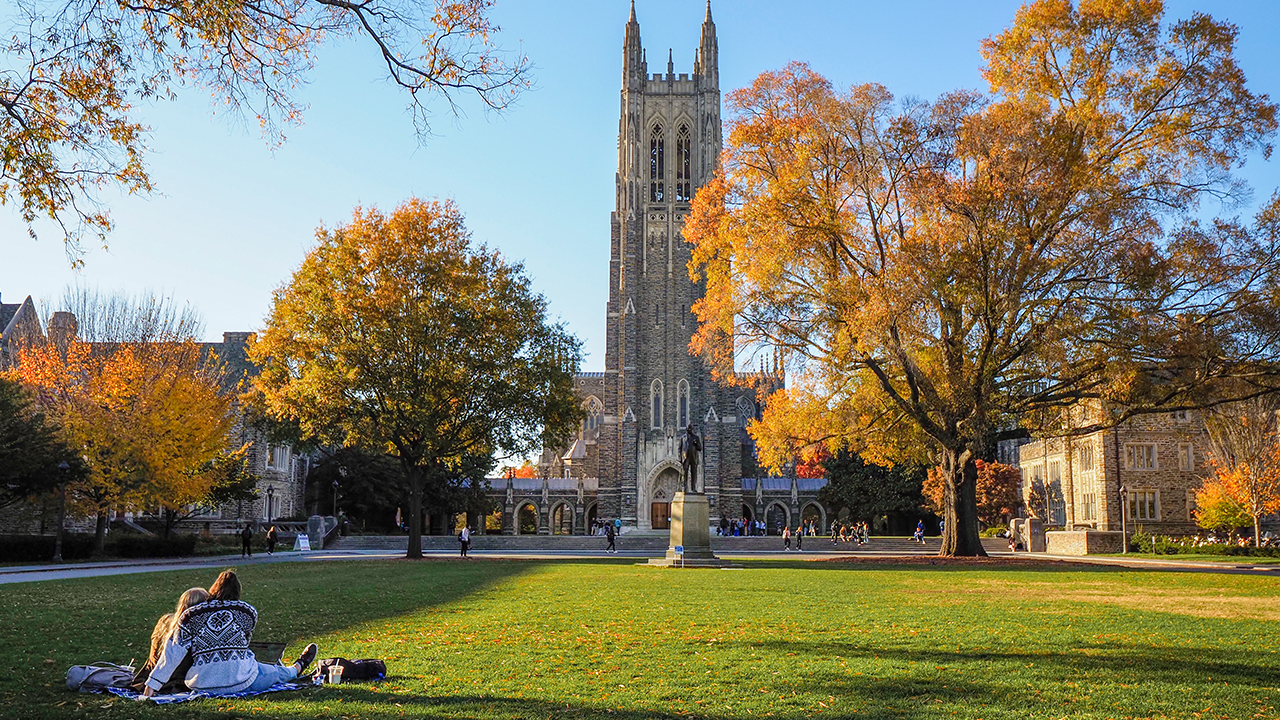
Duke Law is under a sharp spotlight after accusations that its admissions process may have ignored the Supreme Court’s ban on race-based preferences. That claim has kicked off a fresh round of scrutiny from federal officials, while campus critics say the issue goes far beyond one law school and taps into a bigger fight over how universities handle diversity, fairness, and the law.
The controversy lands in a moment when higher education is already on edge. Universities are being pressed on everything from admissions practices to classroom culture, and every new allegation seems to feed the same sense that campus leaders are still trying to stretch rules that are supposed to be settled.
At Duke, the argument centers on whether admissions decisions were shaped by race in a way that conflicts with the Supreme Court’s ruling. That is not a small technical dispute. If the accusations are accurate, it would suggest a major institution is working around a clear legal line instead of respecting it.
The Justice Department’s interest raises the stakes even more. When federal investigators start circling a university, the message is obvious: this is no longer just a campus dust-up or a heated debate among administrators. It becomes a test of whether elite schools think they can operate by their own rules while claiming to follow the law.
That same tension is showing up in other corners of academia too. One recent flashpoint involved a professor-led geology camp described as BIPOC-only, which drew attention from the Justice Department and fueled the broader argument about whether exclusion can be dressed up as inclusion. The backlash has been quick and loud because people can see the contradiction plain as day.
There is also a growing feeling that these controversies are not isolated accidents. They fit a pattern that has made plenty of Americans skeptical of campus leadership, especially when schools talk about fairness while sorting students by identity behind the scenes. For critics, the message from university elites feels less like education and more like ideology with a tuition bill attached.
Even outside admissions, the pressure on higher ed keeps building. A Mississippi professor recently described a hidden way he used to catch AI cheating in a viral video, underscoring how fast the classroom is changing and how much professors are improvising to keep up. The story hit because it showed a very different side of academic life, where discipline and basic honesty matter more than messaging.
Then there is the Cambridge University professor who resigned after major plagiarism accusations triggered an investigation. That story added another layer to the same uneasy picture, where credibility in academia is getting hammered from multiple directions. When plagiarism, cheating, and race-based admissions all land in the same news cycle, it is hard for universities to pretend the public’s trust is still intact.
What makes the Duke Law allegations especially explosive is that they touch the core of what a law school is supposed to defend. Institutions that train future lawyers are expected to respect legal boundaries with extra care, not test how far those boundaries can be pushed before someone notices. When that trust cracks, it does not stay contained inside one admissions office.
Campus culture has become a pressure cooker because the rules are getting clearer while some schools keep acting like the old playbook still works. That mismatch is exactly why the Duke case has struck such a nerve, and why every new detail is likely to keep the debate alive long after the first wave of headlines fades.
