
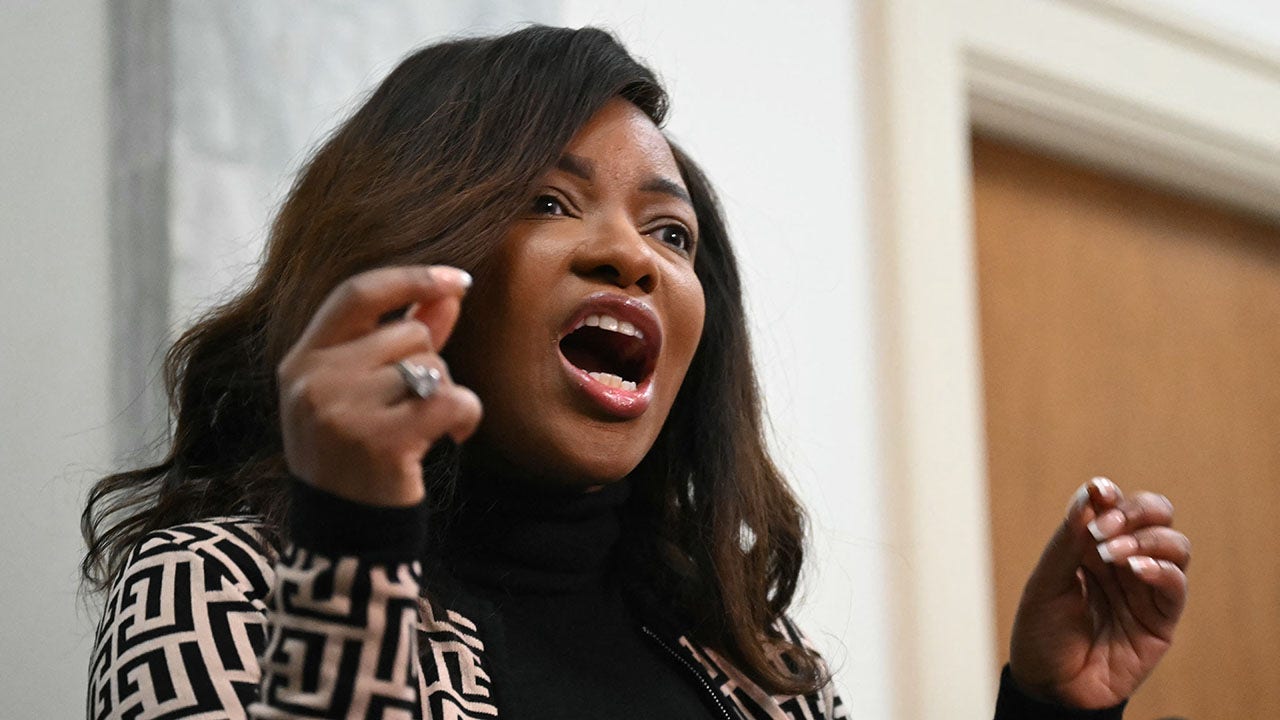
Jasmine Crockett’s refusal to bless James Talarico after their Senate primary clash has exposed a split that matters beyond Texas, touching on elite Democratic choices, race politics, and a growing socialist tilt that sidelines Black voices. This standoff is more than personal sour grapes; it illustrates how party factions and messaging losses can ripple through competitive Senate contests and local power structures. A lot of Democrats are watching to see whether principle or politics wins out before November.
When asked whether she would back Talarico, Crockett told a reporter she has “no idea,” and then she declined to speak at the state party convention and skipped the event entirely. That kind of public shrug from a sitting member of Congress is unusually blunt and it sends a signal that loyalty within the party is fraying. For voters and donors, silence from a defeated primary rival looks like division dressed up as dignity.
One immediate consequence is tactical: Crockett’s absence removes an endorsement that could blunt Republicans’ messaging about unity and electability. James Talarico wanted to paint his general election opponent as too extreme for the state and argue that even establishment figures won’t back him, but when Democrats are trading snubs, that line gets harder to sell. Candidates live and die by narratives of momentum, and intra-party cold shoulders stall momentum fast.
The split hints at a deeper worry among Black Democrats who feel their influence is shrinking as more progressive, often white, activists reshape the party’s priorities. In cities where Democratic Socialists have made inroads, traditional Black leaders are finding their base undercut by new coalitions that prize ideological purity over coalition-building. That tension isn’t abstract; it translates into contested primaries and bruised local alliances.
New York offered a clear example this week when a slate backed by a young socialist mayoral ally drew heat for sidelining veteran Black leaders in Brooklyn and beyond, and the pushback was loud from established figures. Witnessing the spectacle, Sen. Corey Booker, when shown film of the rally, replied, “I don’t want to talk about the Democratic Party.” That offhand line felt like a resignation from within the party ranks and it underscored how fractured the message has become.
The same day the Obama Presidential Center opened in Chicago, which many saw as a milestone for the Democratic establishment, radicals in Brooklyn were announcing a different future. In other words, total surrender to the new orthodoxy is not the rhetoric of unity, it is the language of division. Voters watching both scenes side by side are left to pick which Democratic Party they even recognize any more.
Across purple states, party strategists are also making odd choices, chasing candidates who check the “relatable” box instead of strengthening a coherent brand that can win in tough terrain. In Maine and Texas, Democrats are leaning on white, familiar faces even when those candidates carry baggage or lack broad appeal. That playbook assumes style and optics beat substance, and elections rarely reward assumptions built on vanity.
Texas’s own primary was laced with race talk, and a viral moment captured a middle-aged white voter in tears saying she loved Crockett but had to pick the other candidate because Texas is too racist to elect a Black woman. That moment was wrenching and bizarre: a voter confessing a painful calculus about identity and electability and implicitly saying ‘WE NEED SOMEBODY WHO CAN WIN’. It exposes a raw dilemma for Democrats who insist on both representation and immediate competitiveness without resolving the inherent tradeoffs.
Crockett’s pivot to focus on down-ballot races feels like a protest vote inside the party, a statement that grassroots concerns are being ignored while elites chase ideological experiments. Whether that stance helps or hurts Democrats in November will depend on if voters prefer a unified front or reward authenticity at the ballot box. Either way, the party’s current course looks fragile, and Republicans will be watching to exploit every crack.
