
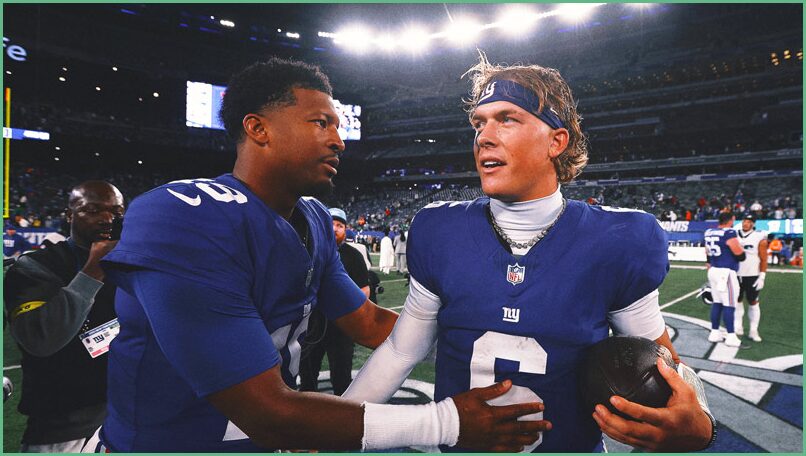
Giants backup Jameis Winston has signaled he wants to be more than a placeholder; he says he’d “love” to help rookie QB Jaxson Dart “turn into the superstar that he is.” This piece looks at what that mentorship might mean for New York, how Winston’s experience could shape Dart’s early development, and why the locker room and coaching staff should welcome veteran guidance.
Winston arrives with a resume full of pro experience and a reputation for leadership when he’s on his game. He’s seen the highs and lows of NFL life and understands how raw talent needs structure to reach its peak. For a young quarterback navigating film study, play calls, and media scrutiny, a steady voice matters more than flashy compliments.
Jaxson Dart steps into a tough-but-exciting environment as a rookie with obvious traits NFL teams chase. He has arm talent, mobility, and a competitive spark that can ignite a franchise if refined. Raw tools are one thing; consistency and decision-making are what separate good prospects from true franchise players.
Having a veteran like Winston around gives Dart a daily example of preparation and process. It’s not just about throwing mechanics or play recognition; it’s about how to handle a losing streak, how to rebound after mistakes, and how to carry yourself in meetings. Those subtle lessons add up to big gains over a season and a career.
Coaches benefit from a clear internal mentor because teaching moments happen in practice and in bus rides, not only in scheduled meetings. Winston can mirror the expectations the coaching staff sets and reinforce them during reps. That alignment shortens the learning curve and keeps messaging consistent for a young QB facing steep expectations.
Locker room chemistry is another reason this pairing matters. Veterans who buy in and help younger players tend to lift the whole group’s professionalism. If Winston truly commits to mentoring, it can create a culture where mistakes are owned, work is prioritized, and accountability is standard—conditions that help any rookie succeed.
There’s also a practical angle: game-time readiness. Dart will need time to acclimate to the speed of NFL defenses, and a veteran presence means he won’t be rushed through learning phases. Winston can demonstrate pre-snap checks, cadence adjustments, and situational awareness that only comes from years of reps in pro schemes.
From a roster-management perspective, this setup gives the Giants flexibility. A prepared rookie who benefits from daily mentorship reduces the pressure to force-feed playing time before he’s ready. It lets coaching decisions focus on competence and timing rather than optics or panic, and that typically leads to better long-term outcomes for quarterbacks and teams.
The real test will be actions, not words. Public declarations are a good start, but trust builds through consistent behavior in practice, meetings, and on the field. If Winston follows through and Dart absorbs the lessons, the Giants could be looking at a smoother transition from promising prospect to established NFL starter.
