
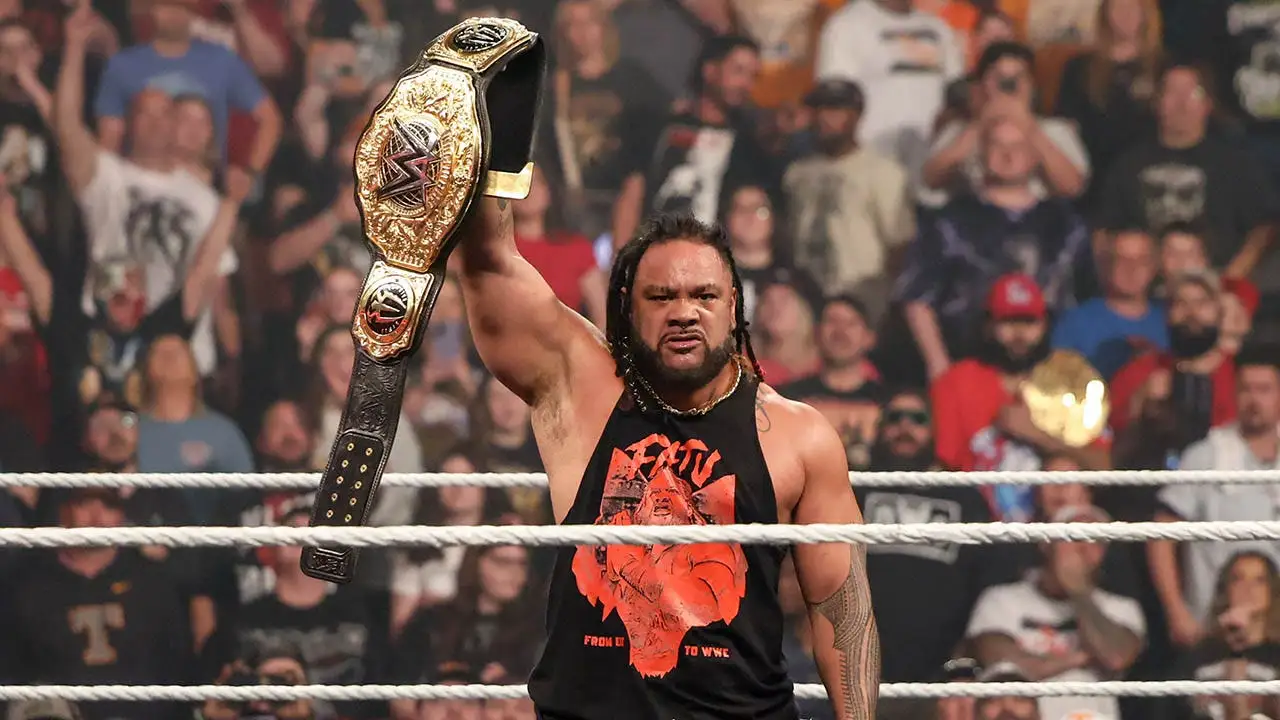
Jacob Fatu refused to acknowledge Roman Reigns on Raw, choosing violence instead and powerbombing the Tribal Chief through the announce table. The moment landed like a detonator for a storyline that was otherwise simmering, leaving the crowd and the show rattled. This piece breaks down what happened, why it matters, and where things might head next.
The segment opened with tension thick enough to cut, as two heavy personalities circled a ring that suddenly felt much smaller. Roman Reigns, established as the Tribal Chief, stood as the measured storm, while Fatu arrived like a weather event that had no interest in protocol. Their clash was less a negotiation and more a collision, underscored by body language and a single brutal spot that erased formalities.
Jacob Fatu has built a reputation on power and unpredictability, and this was textbook Fatu at his most destabilizing. He didn’t exchange words or play to the camera; he used force, sending a clear message that he answers challenges the old-fashioned way. For viewers who favor violence and momentum, the sequence delivered both in spades and put Fatu in the immediate conversation as a top-level threat.
What made the powerbomb through the announce table feel seismic was its placement and timing. Tossing Roman Reigns through the table wasn’t just physical domination, it was symbolic: an interruption to the status quo and a public rejection of the Tribal Chief’s aura. The announcers staggered for words because the action itself spoke louder, and the image of the table collapse will be replayed in highlight reels for the foreseeable future.
Reaction was swift and loud, inside the arena and across social feeds, where fans picked apart every fraction of the sequence. Some praised the brutality and the risk, others questioned the longevity of a feud built around a single dramatic act. Either way, the spotlight settled on both men at once, forcing creative teams and performers to convert heat into sustained storytelling rather than a one-off headline.
For Roman Reigns, the angle presents a rare vulnerability to exploit on-screen and to use in promo work. He has worn the Tribal Chief mantle with dominance, but the image of him driven through a table fractures that near-invincibility for a narrative purpose. How Reigns responds—whether through retaliation, recalibrated confidence, or the involvement of allies—will shape the next chapters and test his command over the locker room’s hierarchy.
Fatu’s challenge now is to turn shock value into credibility. Blowing up a moment gets attention, but attention must translate to believable threat and audience investment. If handled smartly, Fatu can become the outsider who won’t respect coronets or titles, the kind of opponent whose presence forces Reigns to adapt rather than rely on established dominance.
From a booking perspective, options multiply. You can keep things personal with a series of heated singles encounters, escalate toward a stipulation match that keeps both men safe while promising spectacle, or layer in faction dynamics to complicate alliances. Each choice carries risk: overexposure drains surprise, while too long a cold stretch can lose momentum. The goal for creative should be clear beats that escalate intensity and meaning.
Tonight’s action rewired assumptions and opened doors for fresh angles on WWE’s top table. The powerbomb through the announce table was a loud punctuation mark, not a full stop, and how both competitors move forward will determine if this becomes a defining rivalry or a memorable detour. Expect the next few weeks to be about responses, positioning, and the inevitable negotiation between spectacle and sustainable storytelling.
