
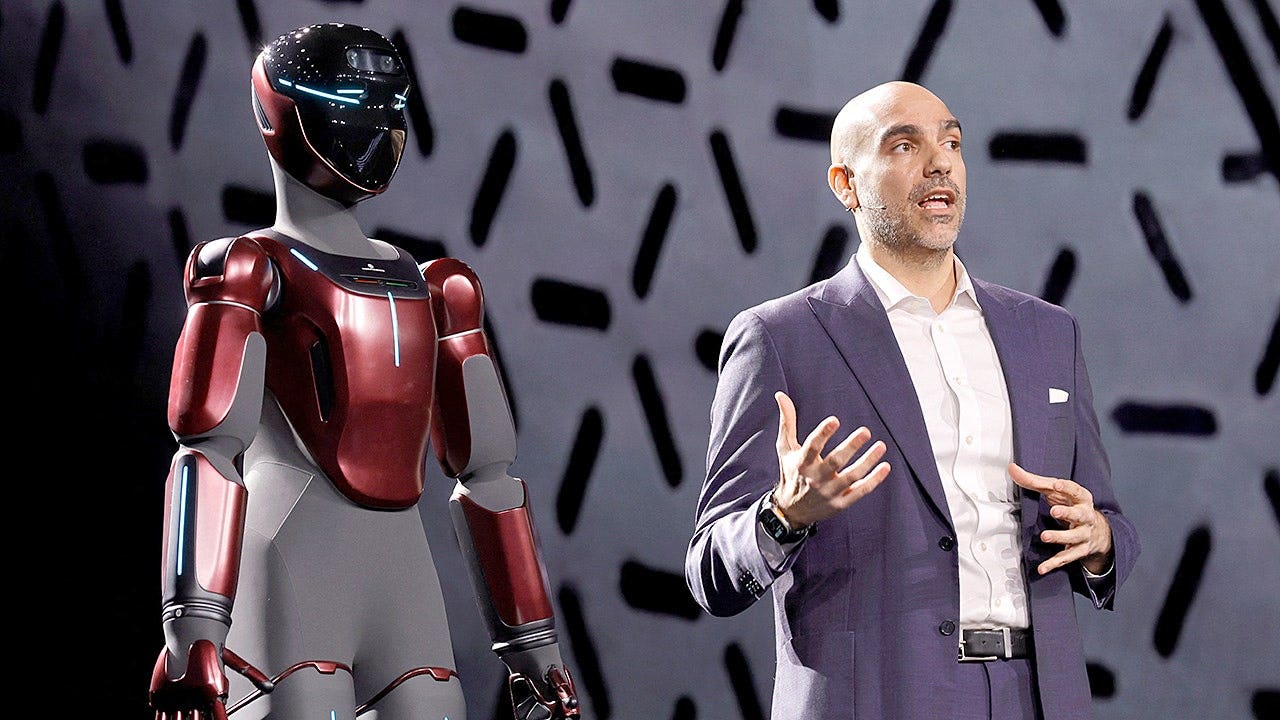
Italian startup Generative Bionics is pushing humanoid robots in a bold new direction with Gene.01, a machine wrapped in sensor-filled skin that can notice people before they actually make contact. Instead of waiting for a bump or collision, the robot is built to pick up nearby movement, touch, temperature, and force across its body. That matters in workplaces where humans and machines have to share tight space without turning every shift into a close-call nightmare.
Gene.01 is designed around the idea that a robot should understand what is happening around it, not just what is directly in front of a camera. Its full-body sensing gives it a kind of early warning system, so it can react when a worker steps too close or reaches into its space. The company says that extra awareness could help reduce accidents, but the big test is whether the software can respond fast enough to make that awareness useful in real industrial conditions.
Traditional factory robots are usually kept behind barriers for a reason. They are powerful, fast, and not exactly forgiving if someone gets in the way. Humanoid robots are different because they are meant to work in environments built for people, which means standing closer to workers, tools, and equipment than older machines ever did.
That is where proximity sensing becomes a big deal. Cameras can help a robot spot someone approaching, but they are not perfect when a person moves out of view or ends up right beside the machine. Sensor-packed skin gives Gene.01 another layer of awareness around its torso and limbs, so it is not relying on sight alone to know when something is nearby.
The sensing skin also changes how the robot can be taught. A worker can physically guide Gene.01 through a motion while the robot records the force and movement involved, which gives it a more hands-on lesson than a video demonstration ever could. That could be especially helpful for tasks where pressure matters, since too little force can make a grip fail and too much can damage the object being handled.
Generative Bionics calls its approach Physical AI, which treats the robot’s body and control system as one connected system instead of separate pieces slapped together later. The company says that lets engineers think about walking stability, strain on the human partner, and movement in a more realistic way. It is a practical idea, especially if these machines are going to do real work instead of just pose for flashy demos.
The team says Gene.01 went from concept to a working platform in just six months, which is a fast turnaround for a machine this complex. It is also being pitched as a scalable base model that can be adjusted for different customers, different tasks, and different work settings. In plain English, the company wants one core robot that can be customized instead of building a brand-new humanoid for every job.
That flexibility could matter in places like manufacturing, logistics, inspection, public safety, and even health care. The first big target, though, is shipyard welding through a partnership with Fincantieri. Shipyards are cramped, harsh, and full of heat, fumes, and heavy equipment, so if a humanoid can prove itself there, it will have earned some serious credibility.
Generative Bionics has also leaned into the developer side by releasing a digital model of Gene.01 for simulation. That lets engineers test software before they ever touch the real machine, which is a smart move if the goal is to build an ecosystem around the robot. Open development tools can pull in researchers, coders, and robotics teams who want a head start on building for the platform.
The company’s backing is not small either. An $81 million seed round gives it room to keep developing Gene.01 and expand production, while partnerships in Europe suggest a long-term plan to control more of the supply chain closer to home. There is still plenty to prove, but the direction is clear: a humanoid robot that is not just strong enough to work, but aware enough to share space with people without making every task feel like a gamble.
