
The IOC has decided to stay out of the Gianni Infantino-Donald Trump red card mess, saying the complaint it received does not belong in its lane. At the center of it all is Folarin Balogun’s disputed dismissal, FIFA’s reversal, and Trump’s claim that he called Infantino to push for a review.
Balogun was sent off in the round of 32 at the World Cup, which would normally have shut him down for the next match. FIFA later suspended the red card, putting him back on the field and keeping the controversy alive instead of letting it fade.
That decision immediately set off arguments about whether the call should have stood in the first place. Belgium reportedly bristled over the outcome, while supporters of the U.S. side saw the reversal as the right correction after a messy moment on the pitch.
The IOC was then asked to step in by a London-based rights group, FairSquare, which filed an ethics complaint against Infantino. But the Olympic body said the issue was not about its own relationship with FIFA or its president, so it would not open a formal probe.
In plain terms, the IOC said the complaint was aimed at FIFA’s internal decisions, its dealings with governments, and how it applies the rules of its sport. Because of that, the ethics commission ruled that the matter falls outside its jurisdiction.
That leaves FIFA, Infantino, and Trump right back in the middle of the spotlight. Trump said he asked for a review because he did not think the play was a foul, and he made clear he was not ordering anyone around.
“All I did was, I asked for a review, because I didn’t think it was a foul,” Trump said at the time. “And again, I’m good at this stuff. I didn’t think it was a foul. I thought it was two great athletes who crashed into each other and got entangled. That was not a guy punching somebody in the face or anything, that would be different.
“I think it’s a terrible… if they wouldn’t allow a top player, maybe the best, maybe among the best on the team, to play, I think it would have had a big stain. I relayed it. I didn’t tell him what to do. I don’t believe he made the decision. I think it was a committee that made the decision, and they made the right decision because, No. 1, it wasn’t a foul, and you want to see a game with your best players.”
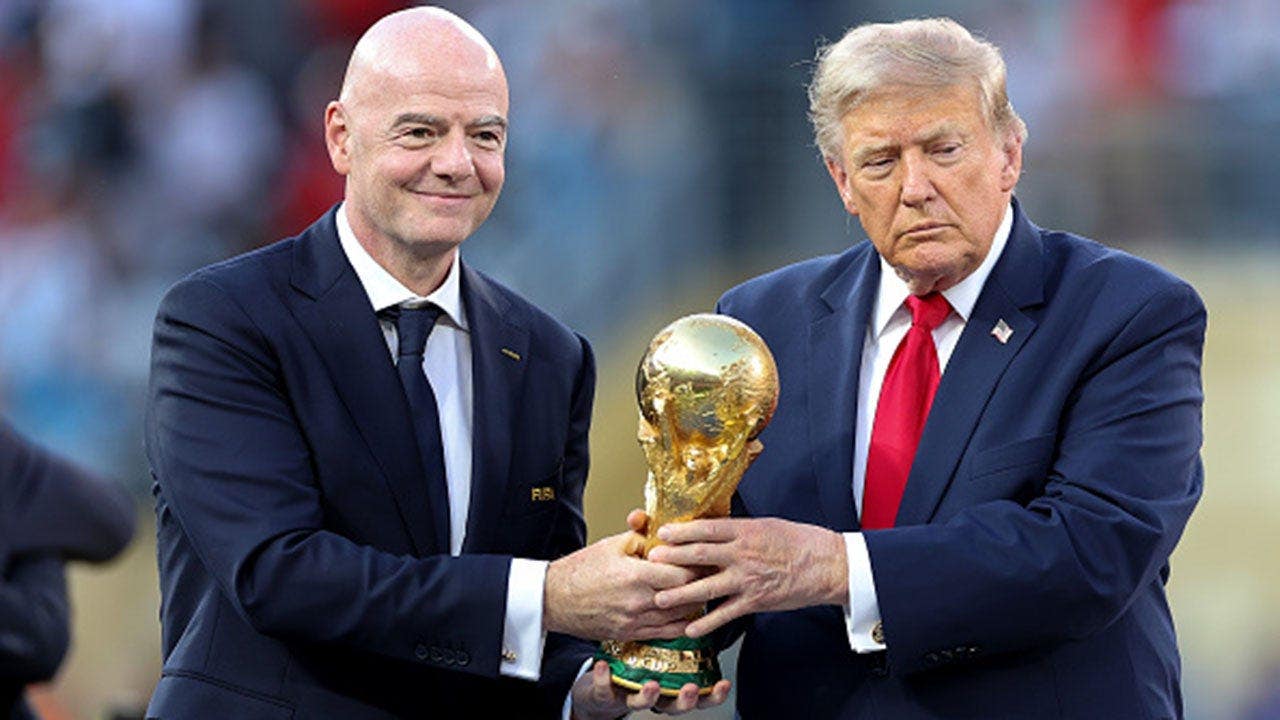
Infantino has been openly friendly toward Trump, and the two have appeared together at public FIFA events in recent years. That relationship has fueled even more chatter every time the World Cup and politics end up crossing paths.
The red card reversal also had a ripple effect inside the U.S. camp. Balogun later admitted the whole episode created “a lot of outside noise,” which is exactly the kind of distraction teams try to avoid when the tournament pressure is already sky-high.
Still, once FIFA made its choice, the focus shifted from the technical foul debate to the bigger question of influence and timing. Critics wanted answers about who was talking to whom, while FIFA maintained that Trump’s input did not shape the final call.
In the end, Balogun played, the U.S. went on to face Belgium, and the result was ugly enough on its own. The Americans fell 4-1, and the off-field drama only made the whole sequence feel louder, sharper, and harder to ignore.
