
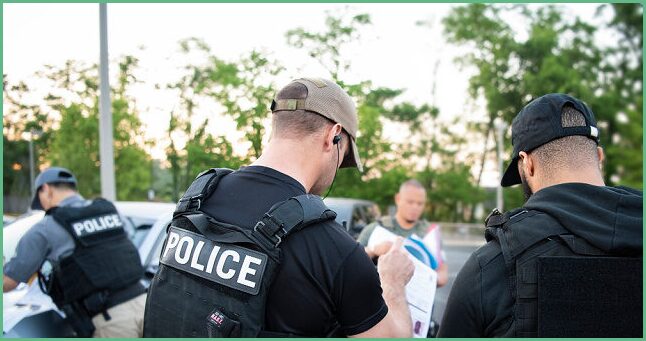
Judge Bans Immigration Arrests in Illinois Courthouses
The chief judge of Illinois’ largest county issued an order barring immigration officers from arresting migrants inside county courthouses without a warrant. Conservatives see this as a risky expansion of judicial power that could hamper federal enforcement and public safety.
Courthouses should be places where people can seek justice without fear. That basic expectation matters whether someone is a citizen, a lawful resident, or undocumented.
Immigration enforcement is a federal responsibility. A local judge limiting federal officers raises questions about federal supremacy and the proper role of county courts.
Warrants are an important safeguard and no one is arguing otherwise. But a categorical ban on courthouse arrests risks creating blind spots where people who pose a public safety risk can avoid custody.
This is not just a legal debate; it has practical consequences for prosecutors, witnesses, and the police who rely on cooperation. If people think court appearances will lead to immigration detention, fewer will show up and cases will suffer.
There are better ways to protect vulnerable people without undercutting enforcement. Narrow rules that shield victims and witnesses during sensitive proceedings make sense.
At the same time, coordination between local courts and federal agents should be baked into policy. Protocols can ensure victims are safe while giving federal officers the ability to act on serious threats with proper cause.
Republicans worry the judge’s order sets a precedent that encourages sanctuary behavior. Local rulings should not become backdoor policies that frustrate national immigration priorities.
This scene also invites litigation and likely appeals to higher courts. Federal authorities can challenge locale-level limits when they conflict with national law.
Lawmakers have a role here too, and Republicans should push for statutes that clearly protect court access while preserving enforcement tools. Clear legislation beats moonshot orders that create uncertainty.
Courts should protect civil rights and ensure access to justice, but they should not erect blanket barriers that make enforcement impossible. Look for conservative legal teams and legislators to mobilize quickly.
The Supremacy Clause gives federal law primacy; when local orders conflict, courts settle it. Expect federal courts to weigh in and possibly overturn local restrictions.
Several cities and counties have floated limits on enforcement at sensitive sites; this fits a larger debate. Republicans see a pattern where local policies sidestep national immigration law.
Requiring warrants for arrests in a place where people routinely assemble creates logistical hurdles for agents who follow up on credible leads. That could slow the response to serious threats and complicate investigations.
State prosecutors depend on witnesses and victims to testify, and any chill on court attendance hurts cases across the board. Conservatives argue that protecting witnesses doesn’t mean handing criminals safe passage.
This order will become ammo in the next election cycle, with candidates arguing over law and order versus local control. Republicans will likely frame it as an example of judicial activism that needs fixing.
Good policy draws lines: protect domestic violence survivors and those seeking emergency relief, while allowing federal action on serious offenders. That balance keeps courts open and keeps public safety intact.
Legal challenges are likely and Republican leaders will call for swift legislative responses at the state and federal level. This controversy is guaranteed to stay in the headlines as courts, politicians, and communities sort it out.
