
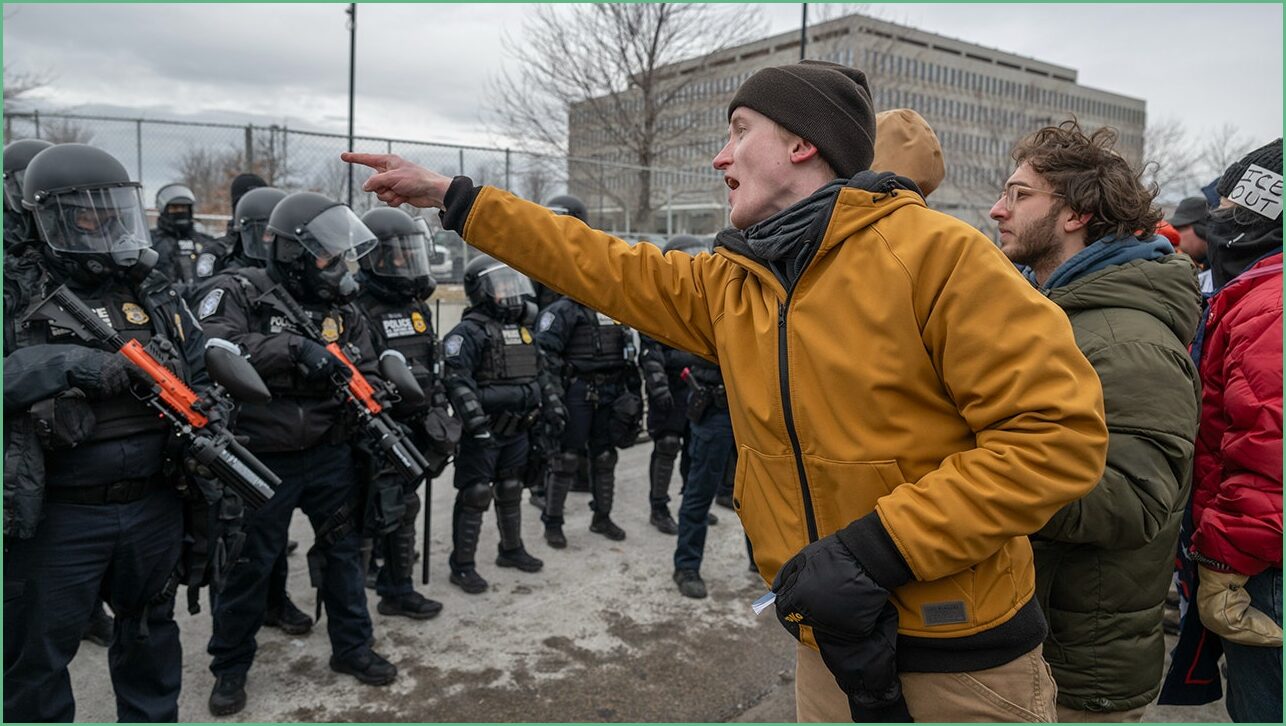
The Minneapolis ICE shootings expose a bitter clash between federal law enforcement and a radicalized left that has been pushing people into confrontations. This piece argues that inflammatory rhetoric, sanctuary politics, and organized interference made violent outcomes more likely while underscoring the constitutional right of federal enforcement to operate. It lays responsibility where political leaders and activist networks encouraged disruption, and it questions the tactics and messaging that turned civilians into front-line protestors.
An ICE agent in Minnesota shot a second person during an operation, and the fallout has focused on whether the officer acted in self-defense. Video shows bystanders stepping into a law enforcement action, blocking vehicles and interfering with officers trying to detain suspects. Those interventions, encouraged by activist groups and local political rhetoric, turned a routine enforcement scene into chaos.
Progressive nonprofits, Democratic officials, and social media influencers have pushed a strategy of physical interference for months, and that strategy produced real and deadly consequences. People who drive into traffic to stop a federal operation or who deliberately place themselves between officers and subjects increase the risk of violence. The result in Minneapolis was two deaths and a city scrambling for answers.
DHS PROBES WHETHER AGENTS KILLED VA NURSE FOLLOWING ACCIDENTAL DISCHARGE DURING MINNEAPOLIS ICE RAID
I am not defending bad tactics by any officer or claiming every decision was correct; bad policing is worth scrutiny. But there is a clear pattern: when citizens are urged to obstruct federal agents, they sometimes get hurt or killed. Political leaders who condone or romanticize that interference share responsibility for the outcome.
Some of the rhetoric from the left has been extreme and inflammatory. Minnesota’s governor called ICE “Donald Trump’s modern-day Gestapo.” Other officials and influencers have used similar language, turning routine enforcement into a moral crusade and encouraging people to “put your body on the line.”
Policies that prevent local cooperation with ICE have practical consequences on the ground. When city and state leaders refuse to coordinate with federal agents, operations proceed with fewer supports and more chances for misunderstandings. Videos of the incidents show no local police present while federal agents were blocked and harassed, which only raises the stakes for everyone involved.
BARACK AND MICHELLE OBAMA SLAM ICE AFTER MINNEAPOLIS SHOOTING, URGE ACCOUNTABILITY
Many large cities and several states have declared themselves sanctuaries, openly resisting federal immigration enforcement. That posture creates legal and operational friction and communicates to activists that obstructing federal actions is politically approved. The result is predictable: more confrontations and more danger for both officers and civilians.
The left’s narrative often treats migrants as purely victims and law enforcement as fascist oppressors, a framing that bears little resemblance to the legal realities. ICE enforces immigration and criminal statutes, and the Constitution’s Supremacy Clause makes federal authority clear when conflicts arise. Whether someone likes the policy or not, ICE actions have a lawful basis.
THE FAR-LEFT NETWORK THAT HELPED PUT ALEX PRETTI IN HARM’S WAY, THEN MADE HIM A MARTYR
Bad information and simplified narratives fuel risky activism. Polling and social media amplify the theme that enforcement equals cruelty, and many activists believe they are rescuing people from injustice. But intervening in an arrest or detention can transform compassion into chaos and expose bystanders to violence.
Beyond politics, there’s psychology at play: people seek purpose, and fighting a perceived fascism offers a clear heroic script. Millennials and others have been handed a moral storyline that casts direct action as noble, even when that action breaks the law or places others in danger. That cultural script played a role in the Minneapolis incidents.
GO BIG, THEN GO SMART: TRUMP, ICE AND THE LAW. HOW TO SKIP THE LEFT’S PR TRAP
The media environment and social platforms intensified polarization and rewarded the most dramatic takes. As outlets chased engagement and social networks reinforced existing views, rhetoric hardened and middle-ground voices grew quieter. The net effect was a political culture where pricking at federal operations became a form of protest rather than a legal debate.
There are policy arguments to be had about how ICE operates and whether tactics could be improved to reduce harm. But those conversations should happen without encouraging citizens to physically interfere. Political actors who stoke confrontation should be held accountable for the foreseeable consequences of their words.
JUDGE BLOCKS TRUMP ADMIN FROM ‘DESTROYING OR ALTERING’ EVIDENCE IN DEADLY MINNEAPOLIS SHOOTING
The immediate need is to get facts, protect due process, and ensure accountability for any misconduct, while also recognizing that reckless calls to obstruct federal agents have real costs. If political leaders want to change enforcement, they can do so through laws and courts rather than incitement. Until then, encouraging people to put themselves between law enforcement and operations remains a dangerous political choice with tragic results.
