
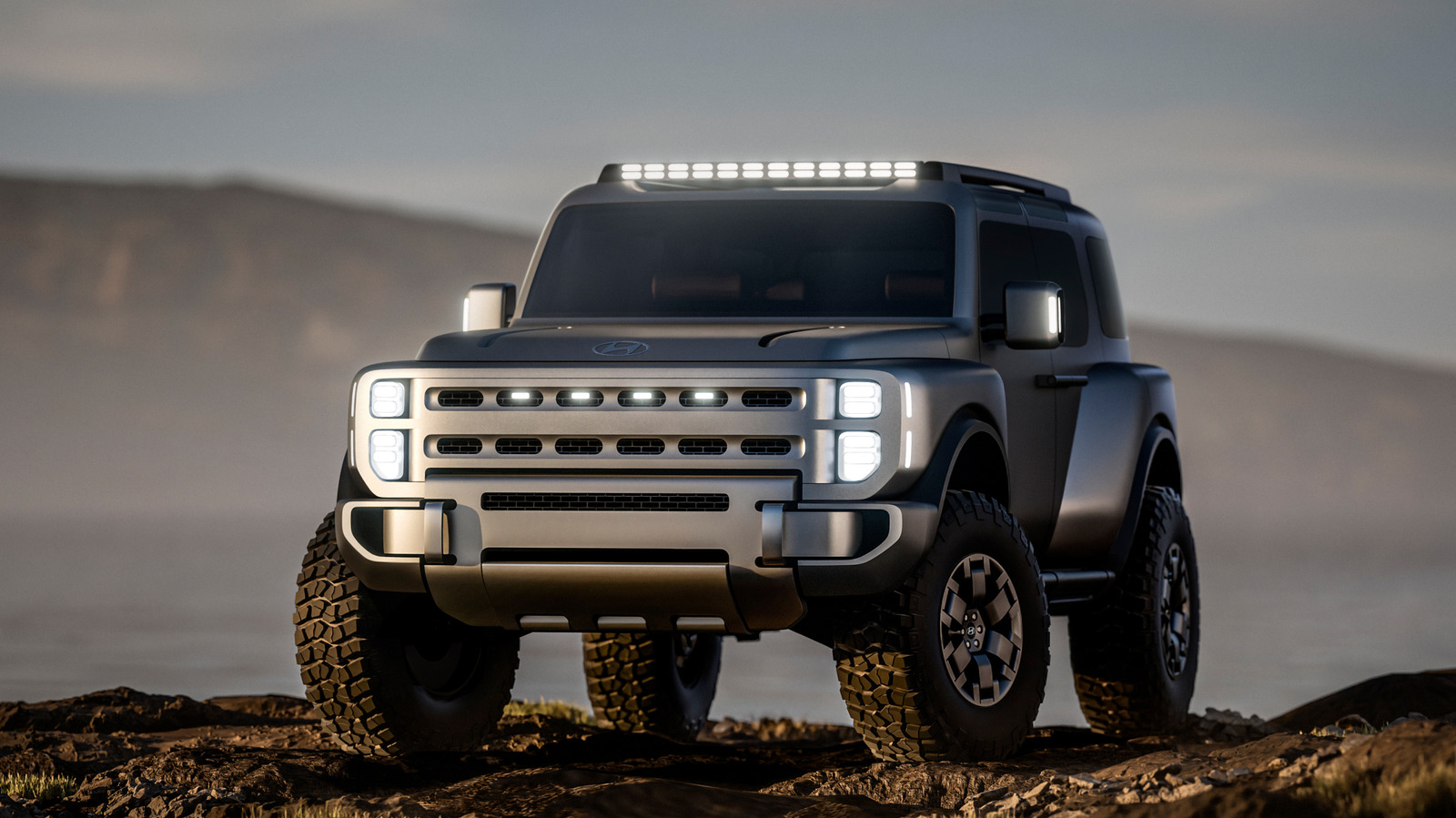
Hyundai has built a reputation around lightweight, carlike unibody construction for the vehicles it assembles in the United States, but a new concept shown at the 2026 New York International Auto Show breaks that mold. The automaker unveiled a machine that steps away from unibody architecture and hints at a different future direction. This article explores why that matters for the brand, U.S. manufacturing, and shoppers who care about capability as much as comfort.
For years, Hyundai’s U.S.-built lineup has leaned on unibody design, which blends the frame and body into a single structure. That choice favors ride quality, fuel efficiency, and passenger comfort, and it fits the company’s focus on efficient crossovers and sedans. Unibody construction has been a practical backbone for Hyundai as it broadened into EVs and premium trims without alienating mainstream buyers.
The concept Hyundai revealed in New York is notable because it is not a unibody vehicle. Instead, it presents a more rugged architecture that looks engineered for toughness, towing, and off-road work. That shift grabs attention because it suggests Hyundai is willing to chase segments where the market prizes brute strength and durability over nimble handling.
Body-on-frame vehicles, the kind the concept seems to favor, separate the cabin from a distinct chassis. That setup can handle heavier loads, resist twisting in rough terrain, and simplify repairs after hard use. For buyers who need capability—like hauling, towing, or serious off-pavement driving—that structural approach is often preferred and has proven its worth for decades in the truck market.
Why would Hyundai show a non-unibody concept now? Part of it is appetite: consumers still buy trucks and large SUVs in big numbers, and automakers chase profit margins by offering capable models that command premium prices. A concept that abandons unibody tells dealers and customers Hyundai is exploring a foothold in those higher-margin, capability-driven areas.
There are manufacturing consequences to consider, too. U.S. plants that specialize in unibody assembly would face new tooling and training requirements to build body-on-frame models at scale. That could mean new investments or distinct production lines dedicated to trucks and heavy SUVs, and it might influence where Hyundai chooses to place future facilities and which factories receive upgrades.
From a product standpoint, a body-on-frame approach opens different engineering possibilities, including stronger towing ratings, improved chassis longevity under load, and easier adaptability for different body styles. It also lets Hyundai experiment with traditional powertrains and hybrid systems tuned for torque and endurance rather than only efficiency and packaging simplicity.
At the same time, Hyundai will need to balance the trade-offs. Body-on-frame vehicles typically weigh more, which can hurt fuel economy and emissions unless engineers find clever ways to cut mass or optimize drivetrains. Buyers who value refined road manners and tight handling might still prefer the company’s unibody crossovers, so Hyundai would be juggling two audiences rather than abandoning one.
The New York concept makes one thing clear: Hyundai isn’t ruling out a broader palette of architectures as it grows. Whether that leads to a production truck, a rugged SUV, or a limited-run halo model remains to be seen, but the move signals flexibility and ambition. For shoppers and industry watchers, it means Hyundai’s future lineup could include vehicles that wear a different kind of steel beneath the skin.
