
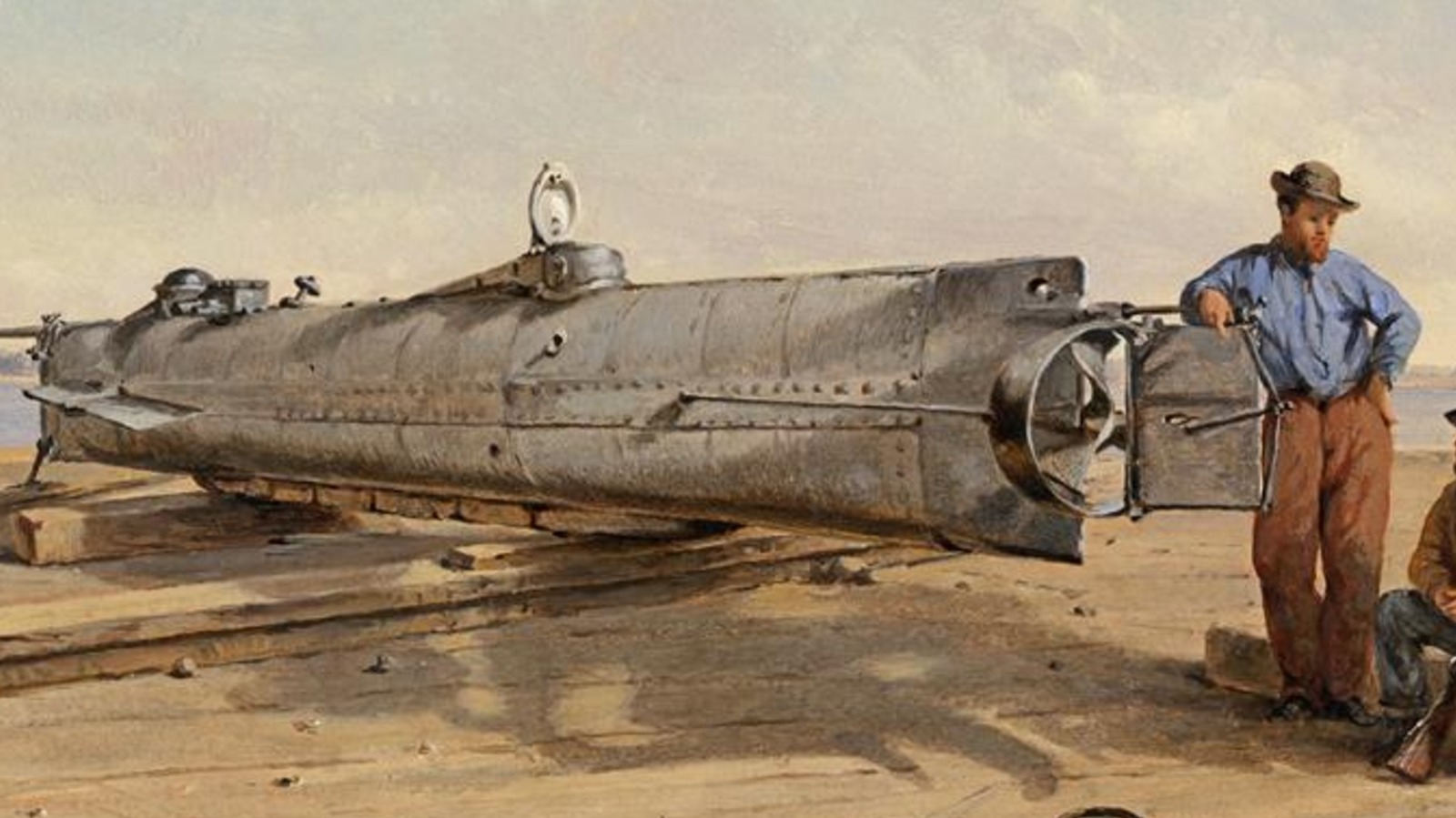
The H.L. Hunley was a Confederate submarine that changed naval warfare and left behind one of the most gripping mysteries in maritime history. This article traces the vessel’s design, the sudden loss of its crew, the long search that ended over a century later, and how modern science has tried to piece together what happened beneath the waves.
Built in secrecy and driven by bold ideas, the Hunley was one of the first combat submarines to strike a ship in wartime. Its mission was simple but dangerous: break the Union blockade by delivering an explosive charge against an enemy vessel and escape under cover of night. The craft’s cramped interior and experimental technology meant every patrol pushed human limits and mechanical tolerance.
The night the Hunley disappeared turned a daring experiment into an enduring tragedy. After it sank, the story of the submarine and its eight-man crew vanished from public consciousness, leaving questions rather than answers. For 130 years the timeline, the moment of loss, and the crew’s final fate were all speculation and folklore.
The wreck was located in the late 20th century and recovered in 2000, bringing the lost crew back into the light and opening a new chapter in investigation. Inside the hull, researchers found human remains and a remarkable collection of artifacts frozen in time. Those material clues became the starting point for a painstaking scientific effort to reconstruct the final minutes on board.
Modern forensic tools have been brought to bear on the Hunley like a detective squad for the sea, combining archaeology, pathology, and engineering. CT scans, metallurgical testing, and environmental analysis helped researchers understand damage patterns and the submarine’s last maneuvers. Genetic testing and careful bone analysis offered glimpses into who these men were and how they might have died, even if many human details remain private and complex.
Several plausible theories explain the sinking and none has been accepted without debate, which is telling in itself about the case’s complexity. One possibility is that the submarine was too close when the spar torpedo detonated and the blast damaged the hull or stunned the crew. Another idea is that mechanical failure, loss of air, or entanglement dragged the boat down—each theory fits some pieces of evidence and conflicts with others.
Whatever the cause, the recovery project turned into a careful exercise in respect and preservation rather than spectacle. Conservationists battled salt, corrosion, and fragile human remains to stabilize artifacts and learn from them. Every tool, from microscopes to controlled desalination baths, revealed tiny stories about life on board and conditions inside a 19th-century submarine.
The Hunley story resonates because it sits at the intersection of innovation, sacrifice, and unanswered questions. It shows how ambitious wartime invention can outpace safety and how a single mission can become emblematic of broader human costs. The stripped-down, claustrophobic environment the crew operated in also makes it easier to imagine the terror and courage involved when something went wrong.
Even now, the Hunley continues to teach engineers, historians, and the public about naval development and archaeological ethics. Museums and labs display conserved pieces and interpretive exhibits to place the submarine in the larger sweep of history. Researchers still publish studies testing new ideas about the sinking, keeping the conversation alive and the science improving.
What remains clear is that the Hunley mattered then and matters now: as a technical milestone, as a human tragedy, and as a case study in how modern science can reopen old mysteries. The submarine’s recovery answered some questions and deepened others, ensuring the vessel and the men who served on her will remain subjects of study and reflection for years to come.
