
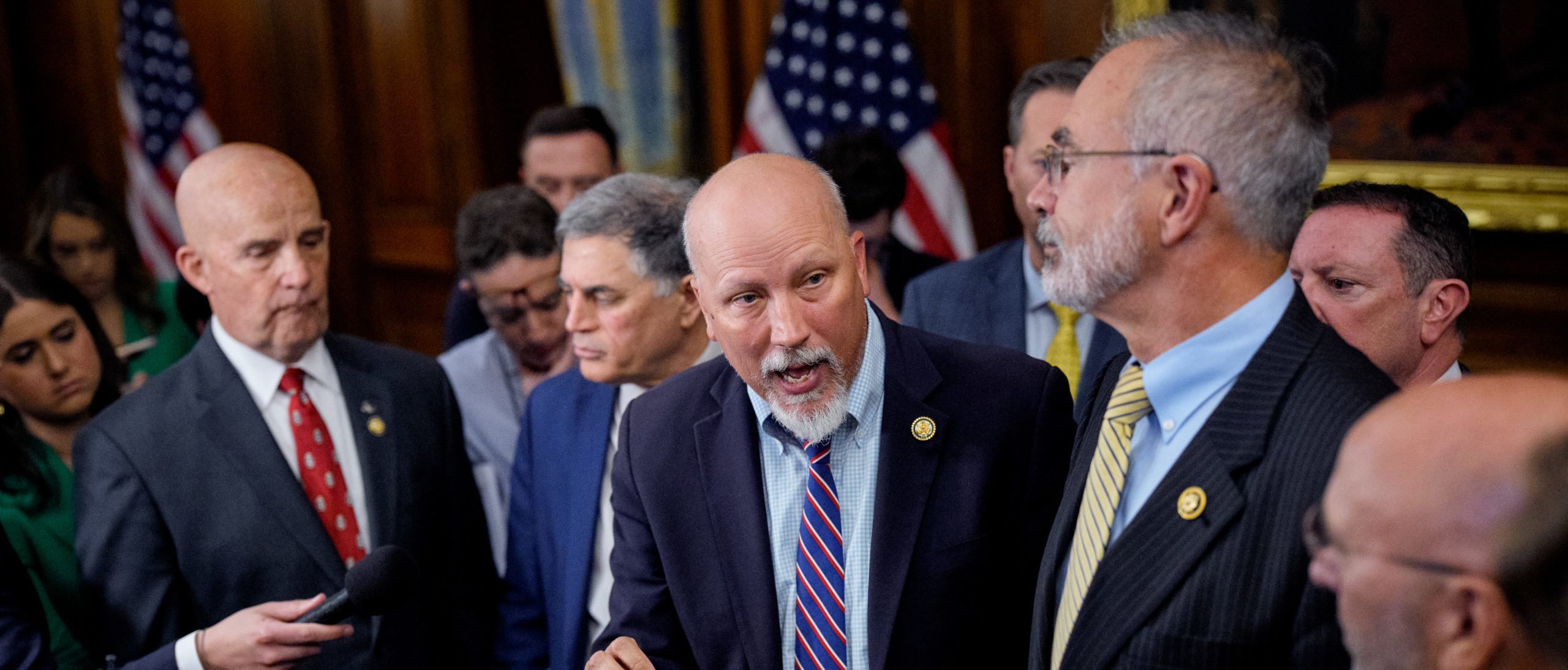
The House Freedom Caucus (HFC) is standing firm against potential Senate alterations to the House-approved “one big, beautiful” bill. Senate Majority Leader John Thune is guiding President Donald Trump’s tax and spending proposal through the Senate, aiming to align with the July 4 deadline. The HFC, having secured significant spending reductions in the House version, warned Senate Republicans that undoing these “victories” would be unacceptable.
“We want to be crystal clear,” the HFC stated on social media, “if the Senate attempts to water down, strip out, or walk back the hard-fought spending reductions and IRA Green New Scam rollbacks achieved in this legislation, we will not accept it.” This declaration underscores the importance of maintaining the $1.6 trillion in spending cuts over the next decade. Any changes by the Senate could threaten the bill’s passage in the House once more.
Republican Texas Rep. Chip Roy, a key HFC figure, emphasized the necessity of preserving the House’s reforms to the Biden-era Inflation Reduction Act’s energy subsidies. “I voted for this bill for one reason,” Roy asserted, highlighting the House’s decision to end approximately 60% of the climate law’s green energy tax credits. He stressed to the Senate, “you backslide one inch on those IRA subsidies and I’m voting against this bill.”
Roy’s passionate speech drew attention to the detrimental impact of the subsidies on America’s energy sector. “Those godforsaken subsidies are killing our energy, killing our grid, making us weaker, destroying our landscape, undermining our freedom,” Roy continued. His message was clear: any Senate alterations to the Inflation Reduction Act would lose his support.
Roy’s pointed remarks specifically targeted Republican North Carolina Sen. Thom Tillis, who has been a vocal advocate for retaining some of the IRA’s tax credits. Tillis has expressed reservations about completely phasing out the IRA’s green energy incentives, showing a divide within the Republican ranks. This internal conflict highlights the complex dynamics at play as the bill moves through the legislative process.
Meanwhile, a group of 13 moderate House Republicans, led by Virginia Rep. Jen Kiggans, urged Senate GOP leaders to consider easing the IRA phaseout schedules. They argued that maintaining industry certainty and safeguarding billions in investments and energy jobs were crucial. This plea from moderates reflects the differing priorities within the party.
Republican New York Rep. Nick LaLota also drew a line in the sand regarding the state and local tax (SALT) deduction cap. LaLota played a key role in increasing the SALT cap in the House version, which primarily benefits high-income households in Democratic-leaning states. Senate Republicans, however, have shown little interest in maintaining this provision.
“There’s not one Republican in the United States Senate who gives a shit about SALT,” Republican North Dakota Sen. Kevin Cramer bluntly stated. LaLota responded by making his position clear: “If the Senate waters it [$40,000 SALT cap] down by a dollar, I’m a no on the OBBB.” His stance adds another layer of complexity to the negotiations.
While a complete draft of the Senate-amended bill is still pending, some GOP senators are proposing even greater spending cuts. Their goal is to identify $2 trillion or more in savings over the next decade. This aggressive approach could reshape the legislative landscape and influence the bill’s final form.
The ongoing discussions reflect the broader ideological debates within the Republican Party. Balancing fiscal responsibility with strategic investments remains a contentious issue. As the Senate deliberates, the future of the bill hangs in the balance, with both sides digging in their heels.
The stakes are high, and the political maneuvering continues. Every decision and compromise will be scrutinized by lawmakers and the public alike. The outcome will have significant implications for the nation’s economic and energy policies.
The House Freedom Caucus’s unwavering stance serves as a reminder of the complexities of governance. Navigating the diverse priorities within the party poses a formidable challenge for leaders. The coming weeks will test the resolve and unity of the Republican Party.
As the legislative process unfolds, the focus remains on securing conservative victories. The pursuit of a balanced, effective policy remains the guiding principle for many lawmakers. The path forward is uncertain, but the commitment to conservative values endures.

1 Comment
Remove gross over spending in this bill that adds trillions to the National Debt!