
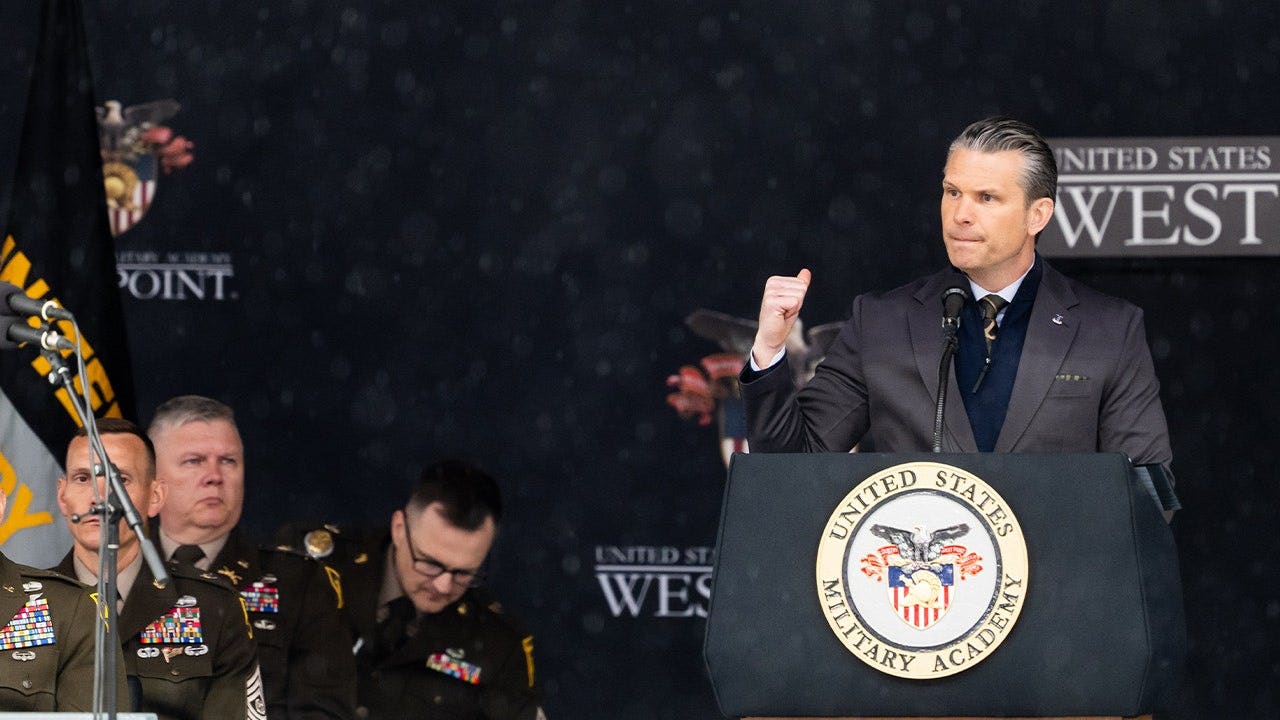
Pete Hegseth’s West Point remarks hit a raw nerve about standards, military readiness, and the creeping influence of DEI across institutions that protect American lives. I was on West Point grounds myself and saw firsthand the worry among officers who watch traditions and toughness get eroded. This piece follows Hegseth’s warning and argues plainly that merit, not identity politics, must decide who holds the reins of safety and defense.
Secretary of War Pete Hegseth did not mince words at the academy, and he picked a fight worth picking. “The battlefield does not grade on a curve, and you can’t throw your pronouns at the enemy. Combat is the ultimate test, and our best Americans must ace it.” That line alone should make every American who values strength and survival sit up and take notice.
Hegseth called out what he labeled “woke and weak leaders” who aimed to turn West Point into a “woke Princeton.” That critique stings because West Point should be the last place we experiment with theories that undermine fighting effectiveness. The point is simple: training for war is not a social experiment, it is life and death preparation.
He went further, pointing to a shift inside the academy that many alumni and officers find deeply troubling. “They embraced the DEI craze and tried to introduce diversity and inclusion studies. They hired professors who advocated for anti-American ideologies right here in these halls…” Those words paint a picture of an institution bending to fashionable ideology at the expense of mission focus.
I had my own West Point moment back in July 2022 when I was on the grounds to discuss a book about the Founders. A senior officer pulled me aside with tears and a plea, saying standards and traditions were being watered down and that the academy was drifting left. That conversation stuck with me because it confirmed the worry is real, felt inside the place charged with producing our future leaders.
I’ve met Hegseth on those grounds and elsewhere, and I can attest he cares deeply about the military and this country. His speech wasn’t rhetorical chest-thumping; it was an urgent call to rescue the armed forces from policies that risk readiness. When someone who served and earned his stripes sounds the alarm, voters and lawmakers should listen.
His list of symptoms is familiar outside the academy, too. “Many of you, even in your short time in uniform have endured what I call the slow slide of the U.S. Army. You’ve seen standards lowered, you’ve seen an obsession with race and gender, you’ve seen the watering down of discipline, codes weakened and traditions tossed aside in the name of political correctness, statues taken down, paintings placed in the basement…” Those lines are a warning to every institution that must be competent when stakes are high.
The erosion Hegseth describes is not confined to the Army. We see the same dangerous drift in police and fire departments, in health care, aviation, air traffic control, 911 centers, and utilities. When bureaucratic checklists and identity quotas replace experience and ability, public safety suffers. That is not theoretical; it is practical common sense.
I do not buy the idea that identity should be a hiring metric for jobs that literally hold lives in their hands. “Identity Politics” should not decide who pilots our planes, who responds to a house fire, or who treats a critical patient. Competence wins lives; experiments with personnel criteria lose them.
This is not about excluding people, it is about insisting on the right qualifications for dangerous jobs. We need the best available talent doing the hardest, most consequential work for every citizen’s sake. Democrats who favor expanding DEI into frontline professions are playing with fire while pretending to be compassionate.
Hegseth’s West Point speech should be taken as a template for fixing the problem: reassert mission-first standards, eliminate ideological training that distracts from core duties, and restore discipline and accountability. If the institutions that protect us are to be trusted, they must be led and staffed by people selected for merit and proven ability. That simple change keeps Americans safer and honors the service of those willing to stand in harm’s way.
