
• Big money is flowing into workplace robots
• Robots are learning from human workers, not just code
• Eno is aimed at real industrial jobs first
• Simulation and wearable data are speeding up training
• The big questions are safety, reliability, and job impact
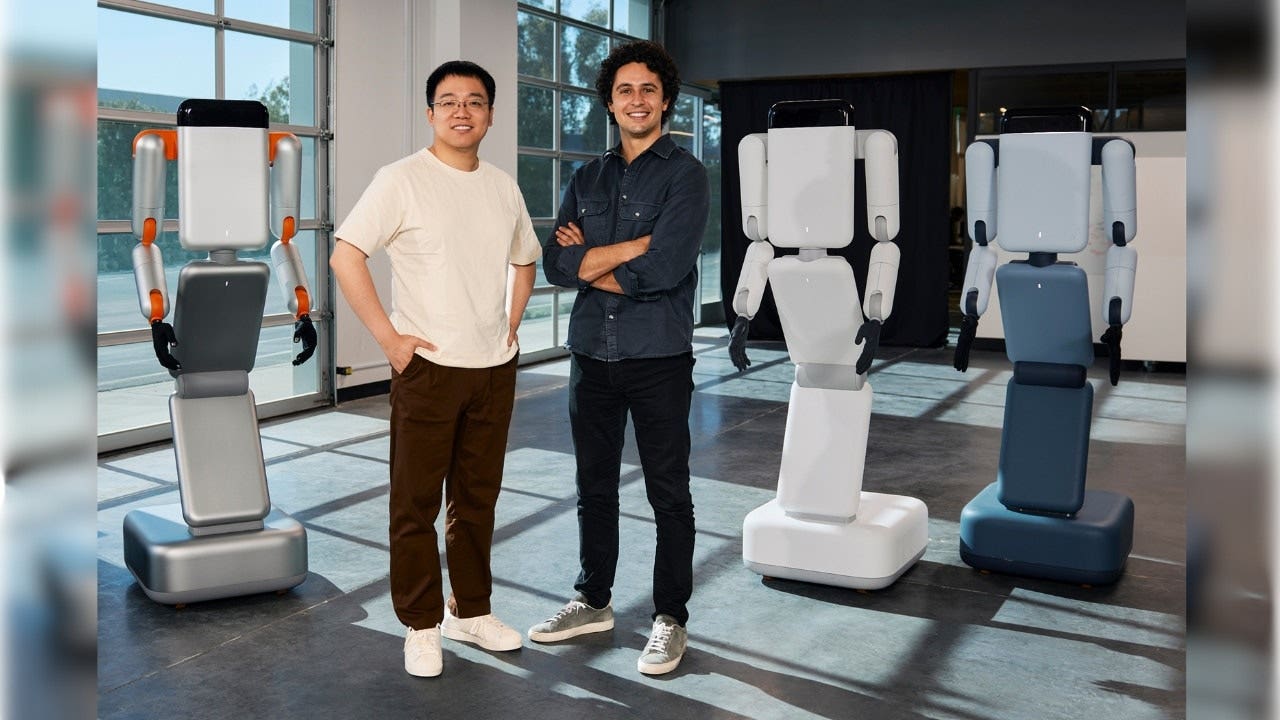
Robots are getting a lot closer to the shop floor, and Genesis AI is pushing that idea with serious money behind it. The company just raised $500 million in a round that values it at $3.5 billion, giving its plans for a general-purpose robot named Eno a major boost. The pitch is simple but bold: teach machines physical work well enough that they can step into real workplaces and keep up.
What makes this effort stand out is the way the robots learn. Instead of hand-coding every movement, Genesis uses wearables and real-world demonstrations to capture how people actually do their jobs. Workers put on electronic gloves, and those gloves record hand motions and pressure so the robot can study the task the way a person performs it.
That learning process goes beyond gloves alone. The company also uses head-mounted cameras to see tasks from the worker’s point of view, and it pulls in videos of people doing physical jobs. All of that feeds GENE, Genesis AI’s foundation model, which acts like the robot’s brain and helps it turn observations into action.
Genesis says that approach lets Eno learn complex skills without needing a human to spell out each step in advance. The company has also built a strong simulation environment called Genesis World, where robots can practice over and over in a virtual setting. That matters because a robot can repeat a motion far faster in simulation than a worker can on a real production line.
The funding round brought in a heavy-hitting list of backers, including Premji Invest, Khosla Ventures, Eclipse, NVIDIA, AMD Ventures, Samsung Next and Zoom. Former Google CEO Eric Schmidt, Zoom CEO Eric Yuan and Yahoo co-founder Jerry Yang are also among the investors. That kind of support suggests the robotics industry is no longer treated like a moonshot, but like a market that could become very real, very fast.
Genesis wants the money to grow its training pipeline, improve its AI systems and expand production of Eno. The company is also hiring more researchers and robotics engineers as it pushes toward deployments in customer sites. According to Genesis, the long-term goal is not a robot that repeats one job forever, but one that can adapt as work changes around it.
So what can these robots do today? Genesis says its technology has already handled tasks like preparing meals, working with lab equipment, assembling wire harnesses and even manipulating a Rubik’s Cube. Those demonstrations have been shown on a test robot so far, with the company planning to move those abilities into Eno as development continues.
The first commercial use cases are supposed to show up in industrial settings. Genesis says it began proof-of-concept work and customer pilots in 2026, and it is aiming for site deployments in 2027, starting with manufacturing, logistics and laboratories. The company has also formed a partnership with LG CNS to evaluate where the robots could fit into factory and logistics operations.
That rollout raises the obvious question: what happens when workers help train the machines that may later take over some of the same tasks? Genesis says participation is voluntary, with employees opting in and consenting before data collection begins. The company also says it does not capture personally identifying information and that it owns the training data gathered through its gloves and cameras.
There is still a big gap between a polished demo and a dependable workplace system. Busy environments are messy, machines shift, objects end up in the wrong place, and people move unpredictably, which means a robot has to stay safe while still being useful. Genesis knows that reliability in the real world is the real test, not just looking impressive on a stage or in a controlled lab.
For now, Eno feels like a preview of a workplace that is changing fast. The promise is obvious: less repetitive strain, more automation, and a new kind of machine that can learn by watching. The tension is just as obvious, because once a robot learns the job well enough, the conversation shifts from what it can do to who gets left doing less of it.
