
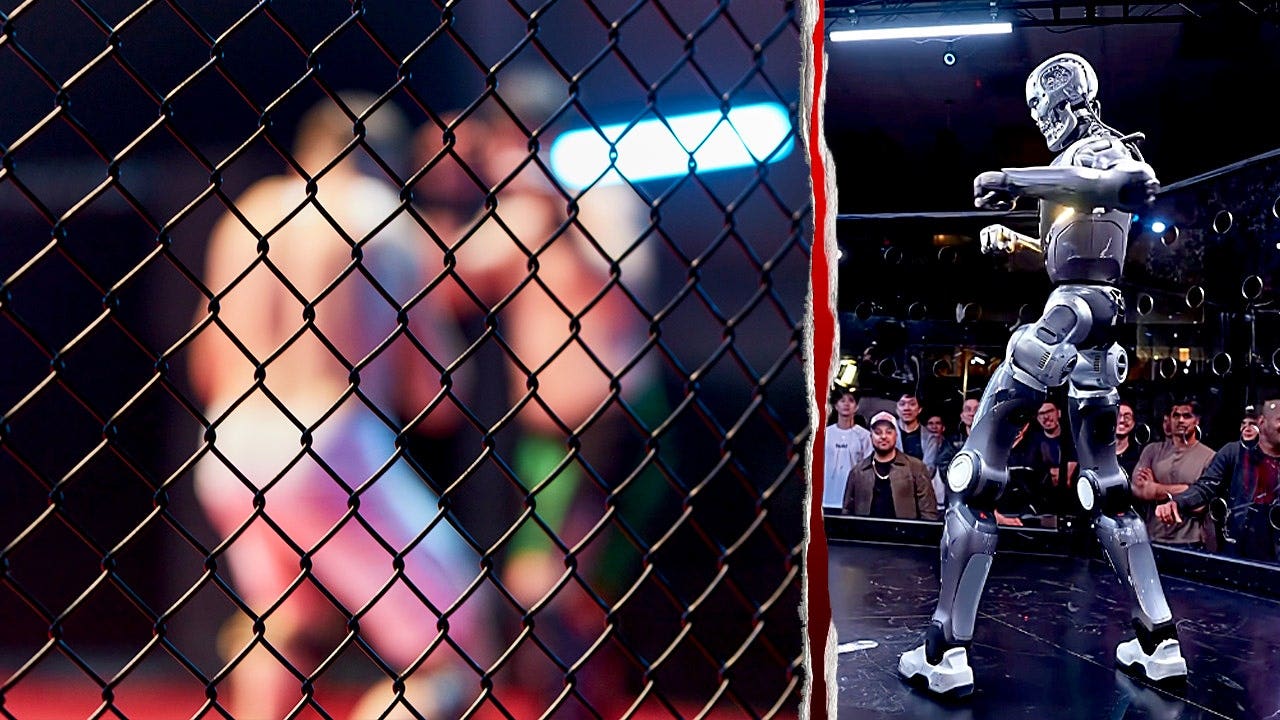
Human-versus-humanoid robot combat is turning into a full-blown spectacle, and one San Francisco cage match pushed that trend into overdrive. Content creator Frankie LaPenna stepped into the ring with a remote-controlled humanoid robot, and the clips spread fast because the whole thing looked equal parts stunt, demo, and sci-fi chaos. Behind the viral punches and kicks was a bigger story about how far humanoid robotics has come, how much of it still depends on human control, and why these machines are starting to feel a lot more real.
REK, a robotics entertainment company, staged the event and lined LaPenna up against three robots, including two full-size EngineAI T800 units. The fight was billed as the first human-versus-humanoid robot cage match, and that alone was enough to grab attention. One of the T800 bouts produced the most talked-about footage, with LaPenna throwing punches, the robot firing back with strikes and kicks, and one brutal-looking hit sending him across the cage.
The machine’s design helped fuel the reaction, too. The modified T800s were built to look intimidating, with a head shape and glowing red eyes that lean hard into the classic Terminator vibe. REK says the modified versions used in the event stand about 6 feet tall, while the standard EngineAI T800 is listed at roughly 5 feet 8 inches and between 165 and 187 pounds depending on the version. In a cage, that is a lot of metal, balance, and momentum packed into a very small space.
What makes the whole thing more interesting is that the robot was not acting on its own. REK’s tech partner Reflex Arc says a human pilot controlled the humanoid in real time using VR gear or a gamepad, while AI handled balance and trained movements. That means the robot was following commands, not independently choosing how to attack LaPenna. Even so, the result still looked unsettlingly powerful because the machine could stay upright, absorb contact, and turn those inputs into real fighting motion.
LaPenna reportedly faced three robots over the course of the event, starting with a smaller Unitree G1 before moving on to the T800s. REK says its modified T800 machines can kick with up to 850 pounds of force, which helps explain why the action looked so aggressive. According to REK CEO Cix Liv, LaPenna was knocked down during one of the bouts, then recovered, knocked the robot off balance, and eventually ended the fight with the robot’s head coming off.
The physical toll was real enough that safety gear became part of the story. Liv said LaPenna originally wanted to fight without protective equipment, but REK required him to wear it. He entered the cage in motorcycle-style gear and gloves, and later injured his hand while punching one of the robots. Even with a human on the other side of the controls, the match still involved hard impacts against a heavy machine built to move with serious force.
REK is clearly betting that this kind of thing can be more than a one-off viral clip. The company has been developing live robot fights and also uses a simulator that lets players practice before piloting the real machines. Reflex Arc says the simulator championship generated 3,670 matches, with winners flown to San Francisco to handle the actual robots at a later event. That setup gives the whole thing a video-game feel, except the consequences are much more physical when a person and a humanoid robot are trading blows inside a cage.
Robot combat itself is hardly new, but the scale and polish keep advancing. In 2025, four Unitree G1 humanoids fought in a boxing-style tournament in China, also under human control, and other robots have been seen playing soccer, rallying on tennis courts, and showing off kicks strong enough to dent walls. REK’s version takes that progression somewhere louder and stranger, because now a person is standing in the same enclosure and feeling the machine’s strength up close.
Strip away the viral packaging, and there is a pretty striking robotics showcase underneath it. The bigger takeaway is not just that humanoids can throw punches, but that they can stay balanced, recover from hits, and move with enough precision to make live combat possible in the first place. That mix of remote control, AI support, and raw physical capability is exactly why this kind of robot keeps pulling attention, and why the next cage match is likely already lurking somewhere on the calendar.
