
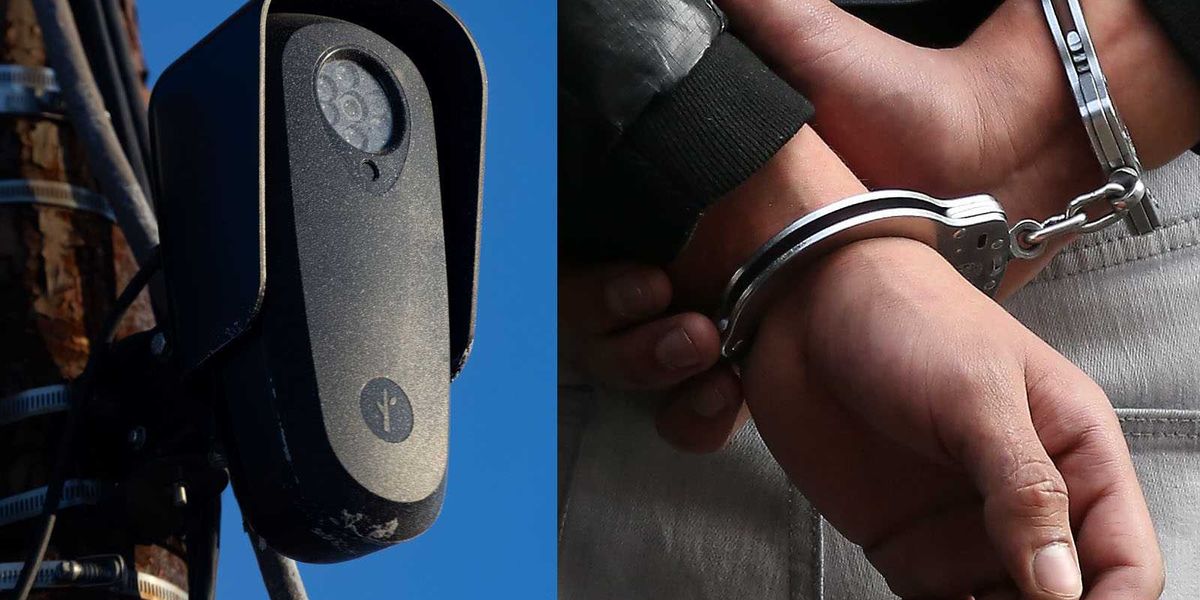
Five police officers are now out of a job and facing charges after a serious abuse of the Flock surveillance system came to light, putting police conduct, public trust, and privacy concerns right back in the spotlight. The case has hit a nerve because it mixes powerful technology with the kind of bad judgment that can wreck confidence in law enforcement fast. It also raises a simple question people keep asking when these systems go wrong: who is actually watching the watchers?
The Flock system is designed to help law enforcement track vehicles by using license plate reader technology across connected camera networks. In the right hands, it can be a useful tool for finding stolen cars, locating suspects, or responding to emergencies more quickly. But when officers stretch that power beyond its intended purpose, the line between public safety and surveillance starts to blur in a big way.
That is exactly why this case has drawn so much attention. The officers were allegedly not just using the system carelessly, but abusing it in a way that triggered both firings and criminal charges. Once that happens, the story stops being about a piece of equipment and starts becoming a much bigger issue about accountability inside police departments.
For a lot of people, privacy rights are already under pressure in a world packed with cameras, data collection, and constant digital tracking. License plate readers can create detailed movement records, and that kind of information is not trivial when it can be searched, shared, or misused. When officers are accused of crossing the line, it fuels the fear that ordinary citizens are being monitored more closely than they ever realize.
At the same time, supporters of these systems say they should not be blamed for human abuse. Their argument is that tools like Flock are only as good as the rules surrounding them and the people enforcing those rules. That may be true, but incidents like this make it painfully clear that strong safeguards are not optional, because trust once damaged is hard to win back.
This is not the kind of story that stays neatly inside one department either. When police misconduct involves surveillance, it spills into broader debates about politics, public safety, and whether law enforcement has been given too much unchecked power. Republicans and conservatives often push for strong policing, but they also expect accountability, especially when taxpayers are footing the bill for technology that can be turned into a weapon against the public.
There is also a practical side to all of this. Departments across the country are adopting advanced monitoring tools faster than many communities can understand them, which leaves citizens relying on promises instead of solid transparency. If officers can allegedly misuse a system like this without immediate consequences, people naturally wonder how many other quiet abuses never make it into the open.
That tension is what makes the Flock controversy so sticky. On one hand, Americans want police to solve crimes and move quickly when danger is real. On the other hand, they do not want a dragnet culture where data gathered for protection gets twisted into something far more invasive.
The firings and charges show that the fallout can be real when misconduct is exposed, but they also highlight the bigger problem of prevention. Once a surveillance tool is in place, departments have to prove they can control it, audit it, and punish abuse without hesitation. If they cannot do that, public confidence drops, and the whole idea of using these systems for legitimate law enforcement starts to look shaky.
What makes the issue especially explosive is how quickly technology now moves ahead of policy. A system built for tracking cars can become a flashpoint over civil liberties, police discipline, and government overreach all at once. And as more communities look at whether to expand these programs, the pressure will keep building for clearer rules, tighter oversight, and less room for officers to treat surveillance like a toy instead of a responsibility.

1 Comment
For 666 Police state abuse