
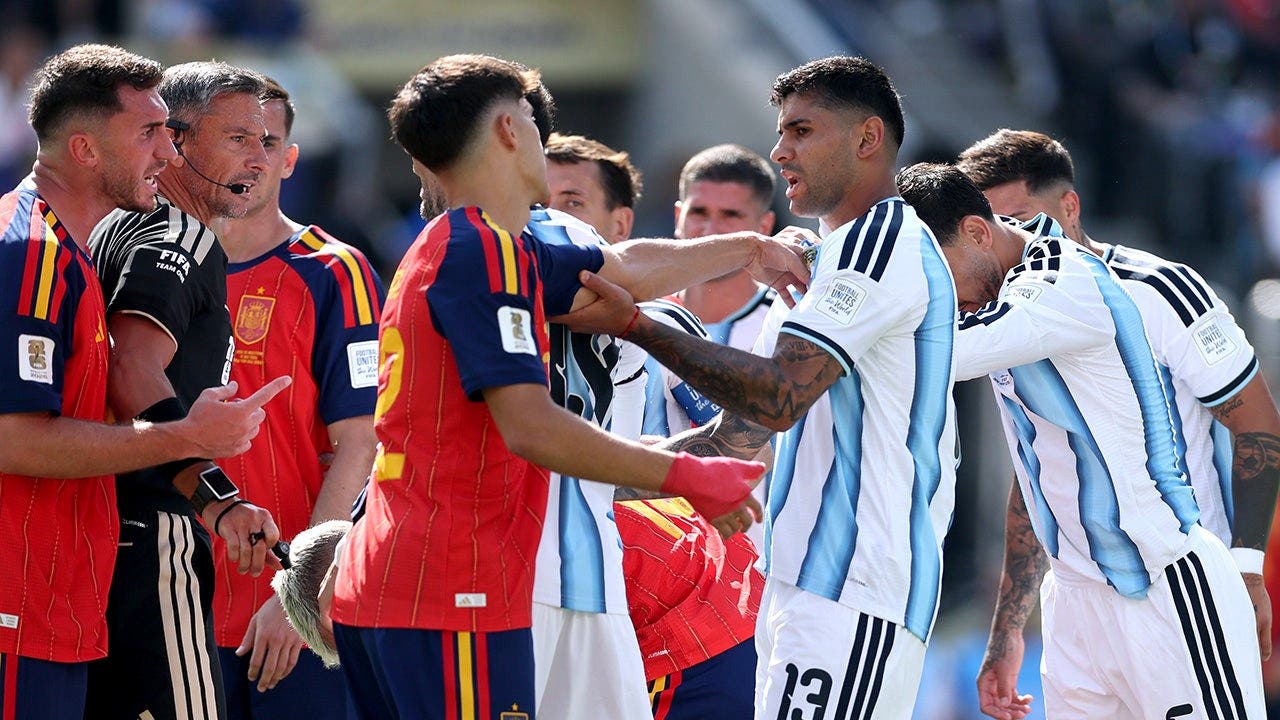
FIFA is now digging into the ugly aftermath of Spain’s World Cup final win over Argentina, after tempers boiled over and the celebration turned into a full-blown shoving match. The chaos centered on a few heated moments, with red and yellow cards already in the mix and more discipline potentially on the way.
Spain beat Argentina in the 2026 World Cup Final at New York/New Jersey Stadium, but the final whistle did not settle anything. Instead, players from both sides got tangled up in a messy on-field confrontation that quickly drew attention from match officials and FIFA.
One of the most talked-about moments involved Argentina’s Leandro Paredes, who appeared to grab Spain’s Eric García by the throat. That flashpoint helped trigger a wider scrum, with players pushing, tripping, and crowding each other in a scene that looked more like a street fight than a world title match.
FIFA responded by opening a formal investigation into potential breaches of its disciplinary rules. In its statement, the organization said, “Following an assessment of the relevant match reports for the FIFA World Cup final between Spain and Argentina, and in line with article 36 of the FIFA Disciplinary Code (FDC), the FIFA Disciplinary Committee has appointed a Disciplinary and Ethics Prosecutor to investigate potential breaches of the FDC with regard to the post-match incidents,” a statement from the governing organization read.
Paredes was already in the spotlight before the final whistle, since he picked up a yellow card for a rough tackle after coming on in the second half. Once the match ended, he was shown a red card and sent off, making him one of the central figures in the whole mess.
The tension did not stop there. Argentina head coach Lionel Scaloni was seen being restrained while shouting toward someone, and Nicolás Otamendi exchanged words with Spanish players, including their captain, before things were pulled apart. There was also a reported moment when Argentina assistant coach Roberto Ayala approached Spain’s Dani Olmo and appeared to punch him on the chin before they were separated.
Scaloni tried to keep his remarks measured after the loss. “We are gracious in victory, and we must be so in defeat,” he said, “We accept the loss; we gave everything. We were stretched thin coming into this, but giving it your all, like they did today, sets a great example for our people and our country.
“You lose, and you have to pick yourself up again.”
Even with that tone from the coach, plenty of people were not impressed by the scenes that followed the final. Former player and broadcaster Joe Hart was blunt in his criticism, pointing to Lionel Messi as the one Argentine player who handled the moment with class by shaking hands with Spanish opponents.
“There was one man on the pitch who did have class and that was Lionel Messi, who shook hands with every one of those Spanish players,” he said, “The game’s done. They could have absolutely no complaints about what happened today. Disgusting behavior.”
That kind of reaction is exactly why FIFA is treating the situation seriously. Post-match incidents at a World Cup final are not just embarrassing, they can lead to more than public backlash, and the disciplinary process can bring suspensions, fines, or further review depending on what officials conclude.
As for what comes next, Paredes’ conduct is the clearest place for FIFA to start, since the alleged throat grab is the kind of act that usually gets attention fast. Nahuel Molina and Ayala are also expected to be part of the review, and the governing body now has a messy finish to sort through after a game that should have been remembered for Spain’s victory alone.
