This piece looks at how a father shapes a daughter’s sense of love and faith, using one family’s story to show how steady presence matters more than perfection. It traces the way a dad becomes the first example of Godlike faithfulness, recalls a life marked by illness but not absence, and speaks directly to fathers about the everyday chance to build worth and trust. The aim is to challenge dads to show up, to be the living standard their daughters will use to understand love and God.
Every daughter discovers love first at home, often in the simplest moments: the way a man stays, the way he listens, the way he makes small sacrifices without fanfare. Those gestures write themselves into a child’s memory long before any sermon or scripture does. Fathers have a quiet, enormous power to shape what their daughters expect and accept from the world.
Long before a little girl hears about a steady, faithful God in a church, she has a human frame of reference for that idea. If a father is present and reliable, she learns what dependable love looks like; if he is distant, that gap becomes part of her map for trust. That early pattern shadows relationships, choices, and faith for decades.
That steady, faithful presence inspired something in me that his illness could not take from him.
Being a dad is heavy work, not because of dramatic moments but because the ordinary ones count more than the headlines. Fairy tales hand girls images of flawless heroes, but a real father can be better than fiction by being consistent and honest. Showing up, repairing what’s broken, listening when she stumbles—those are the lessons that last.
A father can be the living standard: the example a daughter reaches for when she hears, “God is your Father.” When her idea of fatherhood is healthy, her image of God is steadier too. For many women, the first picture of divine love is drawn in the space between a father’s arms and his actions.
My dad, Norm Haverkos, lived with multiple sclerosis for more than forty years. By the time I was in school he couldn’t walk without falling, and eventually he could not walk at all. Still, he chose presence over retreat every single day, and that choice shaped how I saw worth and care.
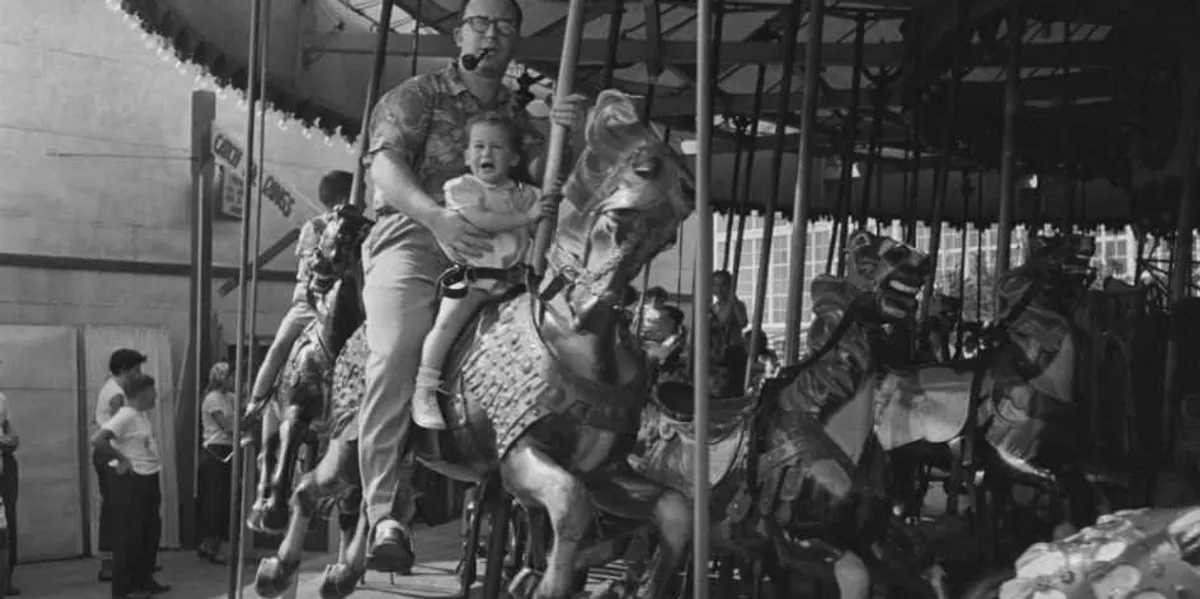
I followed him around simply to be near him; my sister called me “Dad’s darling” and I was proud of it. Confined to a wheelchair, he didn’t check out—he found ways to join us in the garage to refinish an old piece, to sit in the stands at games, and to be beside us in seasons that were confusing and small. His limitations never became an excuse to be absent.
He led our family with tenderness rather than force, showing that faithfulness is not the same as flawless strength. His style proved that leadership can be about refusal to abandon rather than displays of power. That steady presence helped point me toward a faith that holds when circumstances don’t.
The responsibility fathers carry is real, but it is not a demand for perfection. You don’t have to have every answer or be emotionally complete to give your child a frame for love that lasts. Grace allows for fresh starts: to return, to try again, to choose presence even when it’s hard.
The effect of a faithful dad multiplies in ways he will seldom see; a single life of steady care shapes countless futures. Your daughter watches the way you treat people, how you handle strain, and whether you stand when things get messy. Be the kind of man she can’t help but follow around. Be the kind of man who makes her a darling, not of her father only, but of her Father in heaven.