
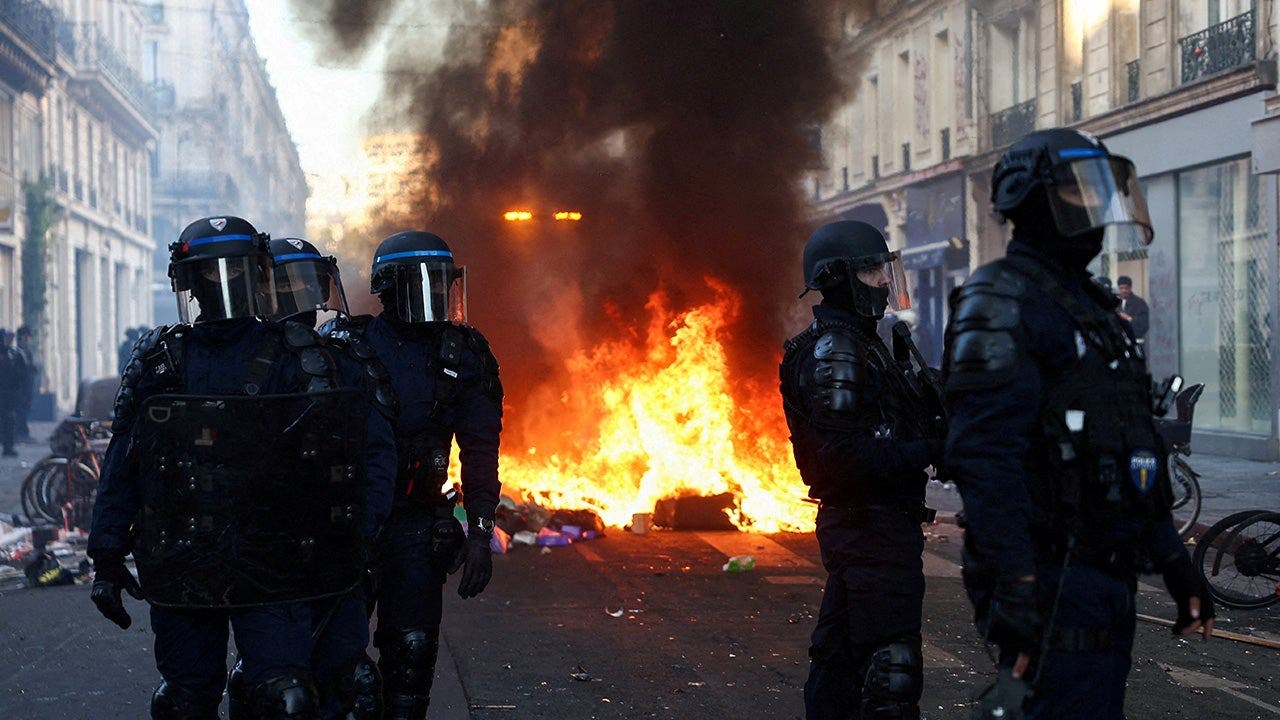
Europe’s street unrest is not just about one country or one bad week. It’s a loud warning that rising costs, weak growth, heavy bureaucracy, and shaky confidence are colliding at the same time, while France’s crisis has become the most visible flashpoint.
Across the continent, people are pushing back against stagnant wages, expensive housing, fading public services, and governments that seem stuck. The deeper problem is that too many economies protect old systems instead of opening the door to new growth, new jobs, and new ideas.
France sits at the center of the storm, where protests have turned rough in the streets and anger has spilled into public life. But the mood is broader than France, because the same frustration is showing up in cities where students, workers, and families feel squeezed and ignored.
Europe still has talent, smart people, and strong institutions. What it keeps lacking is an economy flexible enough to let all that talent actually produce something bigger, faster, and more competitive.
The complaints are familiar: too many rules, too little freedom to hire and fire, capital that moves too slowly, and public decision-making that crawls. That mix makes it hard for businesses to grow, hard for workers to move up, and hard for governments to keep making generous promises without eventually running into the wall.
That gap matters because Europe has spent decades building a model that promises security first and asks questions later. People were told the system could deliver comfort, fairness, and stability, but when growth weakens and trust fades, those promises start sounding thinner by the day.
There’s also a military side to the story that often gets overlooked. For years, the United States carried much of the security burden, which gave many European governments room to spend more on pensions, health care, and social benefits than on defense.
That arrangement helped keep the whole system afloat, but it also made hard choices easier to avoid. If someone else is helping pay for the shield, it’s tempting to spend your own money on everything else and pretend the bill will never change.
Now the bill is showing up anyway. NATO allies are being pushed to do more for their own defense, and that arrives right when many European economies are already straining to support the spending they’ve promised at home.
At the same time, the protests expose something even bigger than budgets. When people believe their leaders are protecting outdated arrangements instead of creating fresh opportunity, anger can build fast and spill into the streets before politicians fully grasp what’s happened.
Europe does not lack education, ambition, or world-class companies. It often lacks the kind of environment where risk is rewarded, innovation moves quickly, and entrepreneurs can turn an idea into a real business without getting trapped in layers of red tape.
That’s why so many bright minds and ambitious companies look across the Atlantic when they want to scale. The United States still offers a faster, rougher, more open system where failure is possible, but so is a big comeback.
America is not free of its own problems. It has its share of inequality, public anger, and political dysfunction, and plenty of people feel boxed in by housing costs, weak institutions, or the sense that the ladder is getting harder to climb.
Even so, the American system still runs on reinvention. New companies rise, old assumptions collapse, and whole industries can be reshaped by people who begin with little more than a good idea, grit, and a willingness to take a swing.
That difference matters because prosperity is not only about how much wealth already exists. It is about whether the next person with talent and drive has a real shot to build something useful, profitable, and lasting.
Equality of outcome has a nice ring to it, but economies do not stay healthy by flattening ambition. The better test is whether opportunity stays open, competition stays alive, and success remains possible for people who are not already connected or comfortable.
Europe’s unrest is a reminder that political promises get dangerous when they outrun the economy behind them. America should pay attention, not to copy the mess, but to keep its own system from hardening into the same kind of rigid, predictable trap.
That means keeping markets open, cutting barriers that choke growth, and resisting the urge to solve every problem with more rules and more control. It also means making sure the next generation still believes the future can be bigger than the present, because once that confidence breaks, the noise in the streets is only the beginning.
