
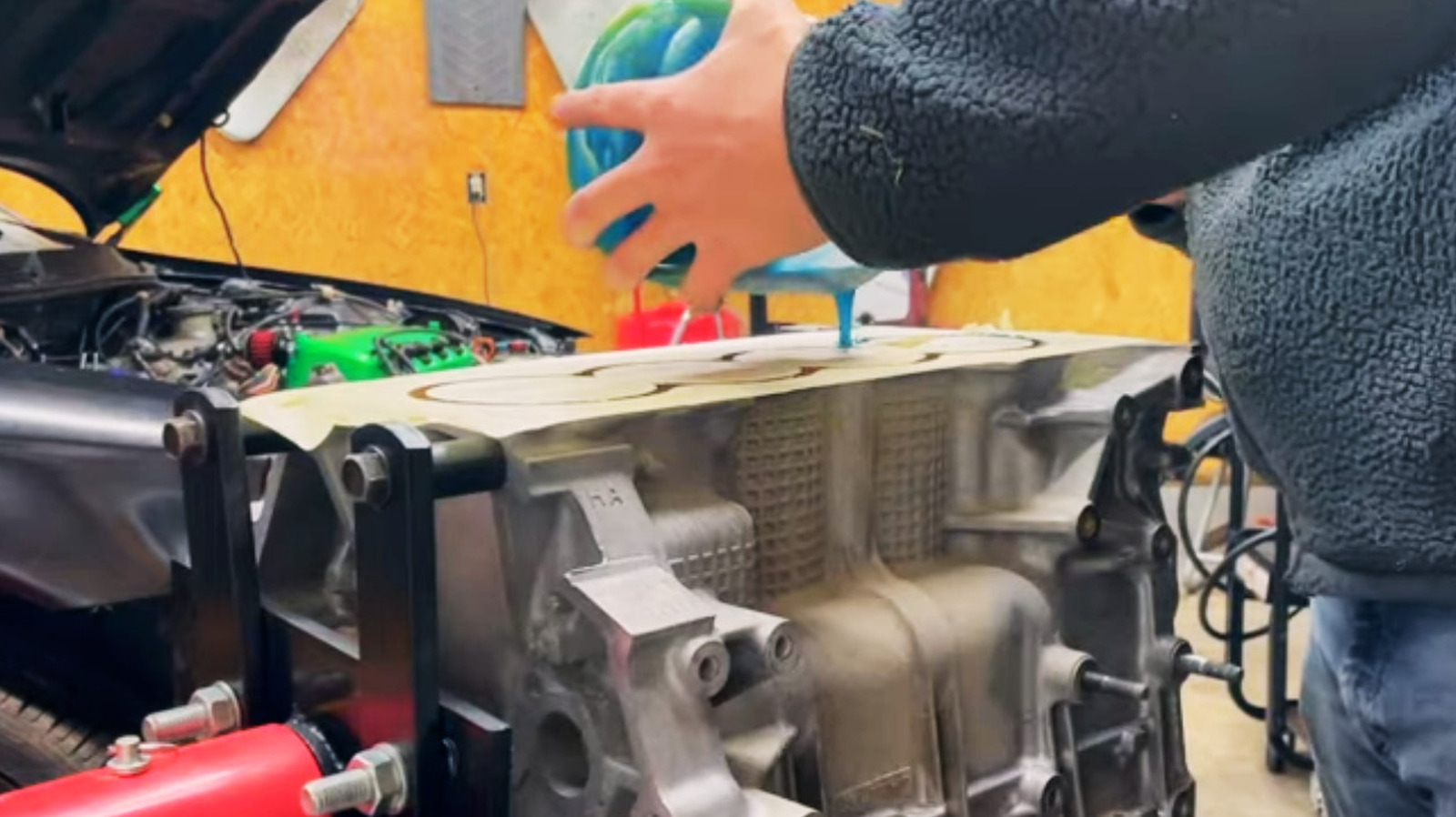
Epoxy can be a surprisingly useful tool when addressing small engine block problems, but it is not a cure-all. This article explains when epoxy makes sense, how to prepare and apply it, what limits you should respect, and which repairs should be left to welding or replacement. Read on for a practical look at epoxy as a temporary or limited permanent repair option for engine blocks.
Not all epoxies are created equal, and their temperature and strength limits are the big things to watch. Ordinary two-part epoxies often handle moderate heat and chemical exposure, while specialized metal-repair compounds are formulated to survive higher temperatures and pressure. Knowing the thermal rating and the manufacturer’s specs will tell you whether a product is suited for coolant passages, external leaks, or just cosmetic fixes.
Surface preparation is the single most important step for a reliable epoxy repair. Remove rust, scale, oil, and loose metal by wire-brushing, sanding, or machining to sound metal, then degrease thoroughly so the epoxy bonds. Roughening the surface improves adhesion, and clamping or bracing parts to hold a gap closed while the epoxy cures will improve mechanical strength and longevity.
Where epoxy shines is in sealing hairline cracks, pinhole coolant leaks, or repairing small corrosion pits that are not bearing high pressure. Metal-filled epoxies like those with steel powder can restore some structural feel and transmit load better than plain resin. For stripped or damaged threads, a properly applied epoxy can hold a helicoil or act as a temporary threadlocker in low-stress applications.
There are clear limits you cannot ignore: epoxy is generally a poor choice for high-stress structural cracks in load-bearing areas, for head gasket surfaces, or for repairs that must withstand combustion pressure. Freeze plugs and through-cracks in pressurized coolant passages can dislodge an epoxy plug under shock or thermal cycling. If a crack communicates with combustion chambers, welding, metal stitching, or replacing the block is the correct route.
Application technique affects the outcome almost as much as product choice. Mix exactly per directions, apply at the recommended temperature, and give the full cure time before testing the engine. Sand and shape the cured patch as needed, and avoid aggressive solvents or high-temperature exposures beyond the epoxy’s rating during the initial cure window.
Expect epoxy repairs to be, at best, a durable temporary solution unless you use a product specifically rated for long-term engine duty and follow meticulous prep and application. Many mechanics treat epoxy fixes as a stopgap to get a vehicle home or to buy time while sourcing a replacement part. If a repair is mission-critical, budget for a permanent fix; epoxy can buy time but does not guarantee indefinite performance in severe conditions.
When epoxy is not appropriate, consider proper mechanical repairs: welding cast iron, brazing aluminum, or using professional metal stitching techniques restore strength in ways adhesives cannot. Replacement of the block or professional machine-shop work, while more expensive up front, avoids repeated failures and the risk of a catastrophic breakdown. Always weigh the cost and risk: short-term savings from epoxy can become long-term expense if the repair fails under load.
Practical tips that matter: choose a product labeled for engines or coolant systems when possible, follow temperature and cure specs, avoid using epoxy on mating surfaces for head gaskets, and keep an eye on repaired areas for leaks after the first few heat cycles. Use epoxy as part of a thoughtful repair plan rather than a band-aid impulse, and when in doubt consult a machinist or experienced mechanic for an assessment. A well-executed epoxy repair can solve a minor problem cleanly, but understand its limits and plan for a permanent solution where necessary.
