
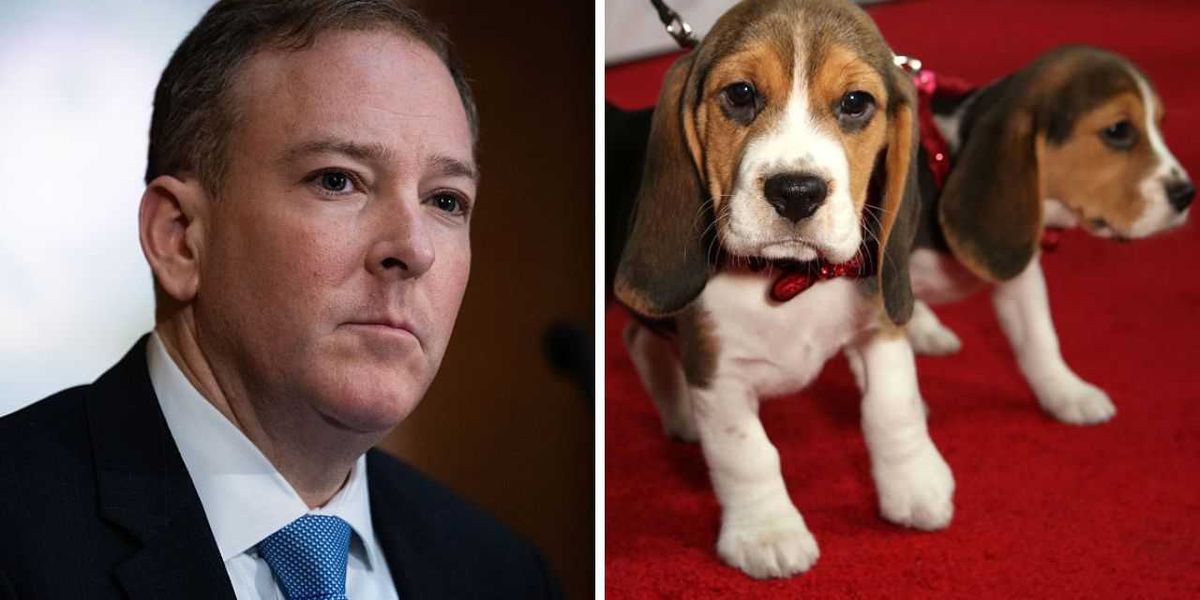
EPA officials moved this week to expand modern, nonanimal testing methods and revive a Trump-era push to phase out mammalian experiments by 2035, a change billed as faster and more human-relevant science. The shift follows decades of controversy over government-funded tests on dogs and other mammals, a fight that helped make alternative testing a political priority. This article walks through what the agency announced, why advocates applauded it, and where the tougher battles remain in Congress and the labs themselves.
The ugly backstory matters because public outrage drove the change. In 2021 watchdog reporting exposed gruesome beagle experiments in federally funded labs, and that scandal hardened bipartisan pressure to find better ways. Conservatives argued then, and now, that taxpayers should not pay for needless cruelty when superior scientific tools are available.
Under the Trump administration, policymakers set a clear goal: end mammalian testing by 2035. The EPA announced it is adding 13 new approach methods to a growing list of NAMs, or new approach methods, intended to reduce or replace tests on rabbits, mice, rats, and dogs. The agency framed this as a return to a trajectory first set years ago and stalled under opposing leadership.
The agency explained the shift in blunt scientific terms: “Modern NAMs, including human cell models and advanced computer-based methods, help EPA identify hazards and exposures faster and often with results that are more relevant to people, not laboratory animals.” That language signals a real move toward human-focused tools rather than old animal models that often fail to predict human outcomes. It also answers a common taxpayer complaint about wasted money and poor predictive value.
EPA officials noted practical wins as well: these methods can cut review times, trim costs, and open opportunities for private labs and startups to develop smarter assays. Faster, cheaper, and more relevant testing is not just a moral win for animal advocates; it is a market opportunity for innovators and a potential way to reduce regulatory drag on industry. The agency said the expansion “opens the door for innovators to bring the next generation of tools to the table.”
Among the newly approved methods are an eye-hazard test built from reconstructed human cells, a 3D human tissue model for phototoxicity assessments, and combined in-chemico and in-vitro approaches to gauge skin sensitization risk and potency. Those examples point to a trend: using human biology models and computational data to replace whole-animal protocols. Regulators hope that stitching together these methods will yield both hazard identification and a quantitative point-of-departure for risk decisions.
This is the first NAMs list expansion since 2021, and the EPA also rolled out a simplified pathway for industry and researchers to nominate additional methods for pesticide and chemical assessments. That streamlined path is meant to accelerate adoption of cutting-edge science rather than forcing applicants into expensive, outdated test batteries. The change is intended to be both procedural and practical.
Agency officials were explicit about the political context: under the Biden administration, earlier phase-out deadlines were abandoned. “Today’s actions get that progress back on track,” the agency declared. For Republicans who pushed the original goal, this looks like restoring policy continuity and keeping a public promise to eliminate needless animal suffering funded by taxpayers.
The EPA pointed to measurable steps already taken, including a lab animal adoption program launched in April 2025 and specific evaluations that avoided tests on roughly 1,600 mice and rats by using alternative approaches. “When the Trump administration makes a commitment, we deliver. With today’s announcement, we’re accelerating the shift to modern, gold-standard science — without the use of animal testing — by using new, innovative methods to review chemicals,” EPA Administrator Lee Zeldin stated. Those actions are being presented as proof that policy changes can translate into real reductions in animal tests.
Advocates who exposed abusive experiments praised the move and said it vindicates their campaign to stop taxpayer-funded cruelty. “Earlier this year, White Coat Waste proudly joined EPA Administrator Lee Zeldin to restore the historic Trump-era plan to phase out animal testing by 2035 after we exposed how the Biden administration quietly scrapped it behind closed doors,” one leader said, and he pushed lawmakers to eliminate rules that still require certain animal tests. He was blunt about the stakes: “Taxpayers shouldn’t be forced to bankroll big-government bureaucrats who mandate beagle torture, butcher bunnies, force animals to inhale firearm emissions in bizarre gun-control experiments, or make animals eat lard and breathe smog,” he continued, and he closed with: ‘The solution is simple: Stop the money. Stop the madness!’
The fight now moves to Congress and the labs where practices are embedded in regulatory culture. With votes coming and funding decisions on the table, the expanded NAMs list is a milestone, not an endpoint, and conservative leaders will press to lock in the science and defund mandates that keep old tests alive. Watch for committees and appropriators to decide whether policy follows the promise or slides back into costly, outdated routines.
https://x.com/WhiteCoatWaste/status/2057456656355602720?s=20
