
Abdul El-Sayed is back in the spotlight after resurfaced audio put his long-running criticism of football front and center. The Michigan Senate candidate has been heard questioning whether the game can really be called ethical, even though he once led his high school team and still talks about sports as a formative part of his life.
In a 2023 podcast appearance, El-Sayed raised familiar concerns about football’s physical toll, especially the risk of chronic traumatic encephalopathy, or CTE. He also tied the sport to broader cultural arguments about violence and masculinity, asking out loud what would need to change before football could be considered both safe and ethical.
“What is it about this brutal sport that keeps us coming back?” El-Sayed is heard saying. “Is there a version of football that’s actually ethical and safe? What would need to change?”
Those comments did not come out of nowhere. El-Sayed has pressed the same line before, including a recent video in which he argued that the cost of attending NFL games is part of a much bigger problem, turning something that is supposed to unite people into an experience that too often separates them by class.
He made that case by pointing to ticket prices, concessions, and the burden on families trying to follow a sport that markets itself as a shared American ritual. He also noted that many stadiums receive taxpayer support, even as fans keep seeing higher and higher prices at the gate.
The tone of his 2021 writing was even sharper. At the time, he said that “the toxic masculinity at the heart of America’s most popular sport — and men’s sports culture more generally — is way deeper than a few emails or a Jay-Z turnaround.”
That view sits awkwardly next to the fact that El-Sayed grew up playing football and was captain of his high school team. He has described sports as his “lifeline,” which makes his criticism more striking because it comes from someone who knows the locker-room world from the inside.
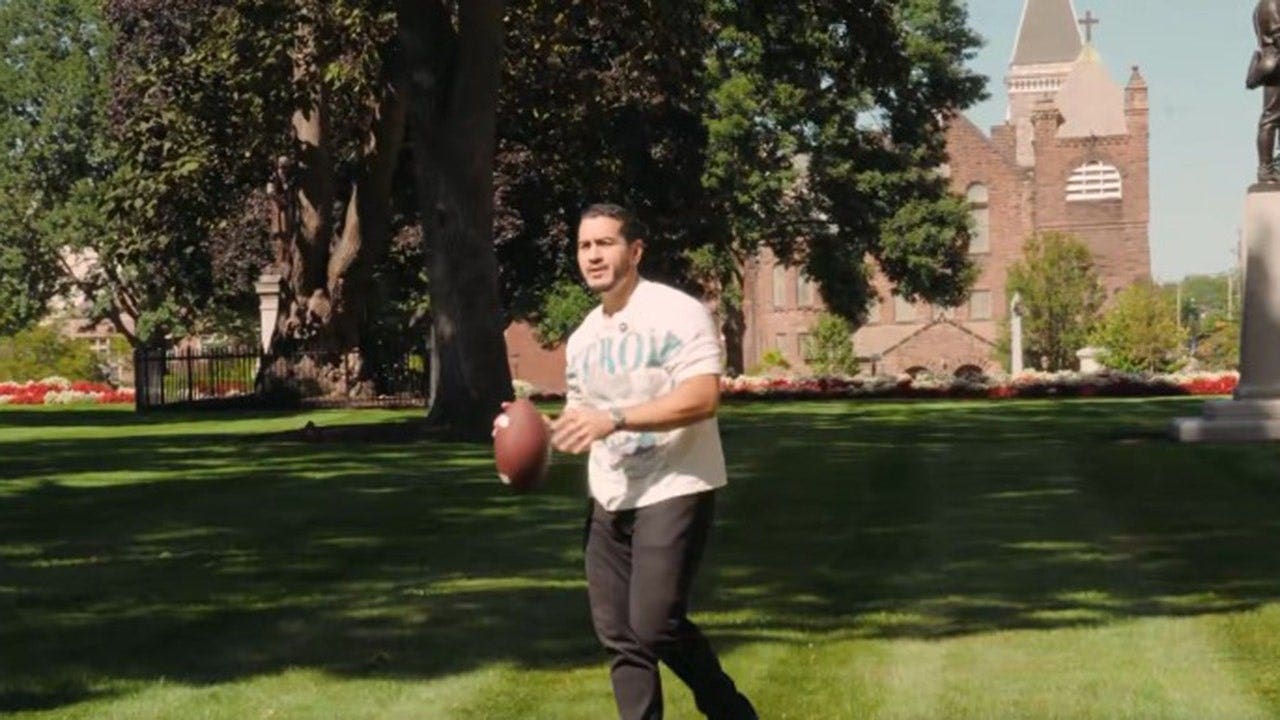
He has also been willing to talk about the sport while showing himself handling a football, including in campaign material where he threw and caught passes while making the case that the game has become too expensive for ordinary fans. The imagery only sharpened the contrast between his personal background and his public skepticism.
The resurfaced remarks arrive as El-Sayed keeps trying to balance criticism of sports culture with a broader appeal to male voters. He has defended masculinity in public and pushed back on Democrats he believes talk down to men, while also posting fitness-related content to build a tougher, more relatable image.
That mix has made him a complicated figure for opponents and supporters alike. One side sees a Democrat eager to question a beloved tradition, while the other sees a candidate trying to talk honestly about injury, money, and the pressure baked into modern sports culture.
At the center of it all is a debate that keeps following football wherever it goes. The sport still draws huge crowds and enormous loyalty, but the arguments around safety, cost, and the culture surrounding it are not going away anytime soon.
