
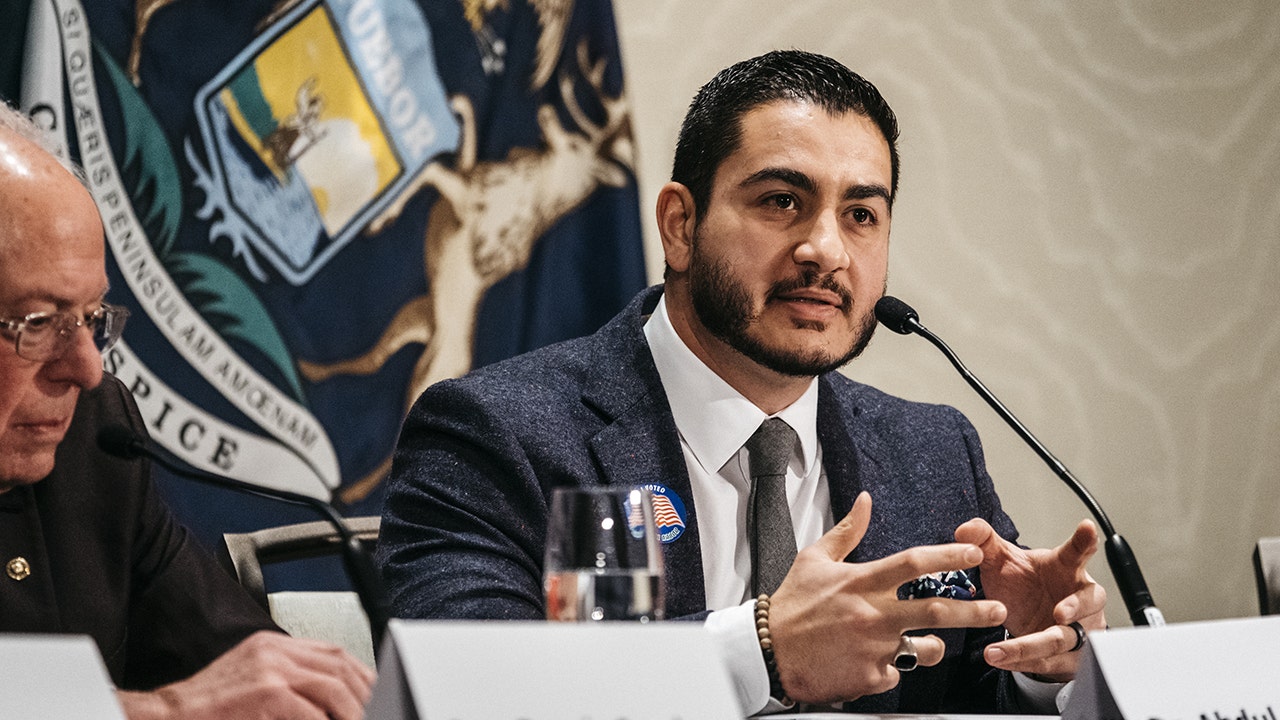
Abdul El-Sayed is making a very clear pitch: when it comes to artificial intelligence, he wants the government involved in a much bigger way than the usual Democrat talking points suggest. The Michigan Senate nominee said he would go “take it a step further” than Bernie Sanders’ public ownership idea, then laid out a vision built around public control, oversight, and political power over a major industry that is racing ahead fast.
That comment landed in the middle of a larger fight inside the Democratic Party over how openly the left should talk about socialism. Some Democrats have tried to soften the language, while more radical voices keep saying the quiet part out loud. El-Sayed’s remarks cut straight through that spin and showed exactly where he stands on the question of who should steer the AI world.
During a June 12 appearance on the left-wing “Head in the Office” podcast, El-Sayed was asked whether he supported public ownership models for large AI companies, including the kind Sanders has floated. His answer was blunt. He said he wanted to “actually take it a step further,” and then added that he believed “we need some system of public control.”
He did not spell out a full government takeover of private AI firms, but he kept circling the same idea. El-Sayed talked about public representation on corporate boards and the possibility of a public oversight body, arguing that the industry is too important to leave alone. In his telling, AI is not just another business sector, but a force that could carry “existential” risk.
“I want to actually take it a step further. I agree that we need public ownership, but I also agree that we need some system of public control. What is the point of democracy if it’s not to protect us from existential risk? And, right now, there is no regulation,” El-Sayed said when asked about public ownership and public control of major AI companies, with the podcast host citing proposals from Sanders.
That kind of language sounds familiar to anyone who has watched the modern left drift deeper into economic control and central planning. El-Sayed framed the issue as democracy versus danger, but the real question is whether a bunch of politicians and appointees should be reaching deeper into private industry just because they do not like how fast it is moving. Once that door opens, it rarely stops at one sector.
He kept pressing the point, saying, “I just think it’s really important for us to be thinking what is democratic control over this industry? What does it look like?” That sounds neat on a podcast, but in practical terms it means more bureaucracy, more political gatekeeping, and less freedom for companies trying to build the next generation of technology. When Washington starts talking about “control,” businesses and consumers usually end up paying the price.
El-Sayed later described what public control could look like, including public seats on company boards or an official oversight body watching over the industry. He also argued that AI companies wield too much influence in Washington and claimed they are trying to push democracy aside. “Democracy is supposed to fix these problems, and, right now, they’re trying to slip democracy, and we cannot allow that,” he said. “And, so, we need leaders who both understand the technological risk and are not bought off by the AI industry itself. It is mission critical right now for our future.”
The rhetoric fits neatly into the broader socialist playbook, where private success is treated as a problem and government power is sold as the fix. El-Sayed’s comments also arrive as Democrats keep trying to distance themselves from the louder corners of the movement, even as those corners keep speaking for themselves. The tension is obvious, and it keeps getting harder for party leaders to pretend it is not there.
That tension showed up again when senior Democrats pushed back on the idea that young socialists want to “seize the means of production,” even as some of the movement’s most visible figures have used exactly that kind of language. Mamdani said during a 2021 Young Democratic Socialists of America conference that one of the movement’s firmly held beliefs was the “end goal of seizing the means of production,” while acknowledging it was not yet broadly popular. El-Sayed’s comments now sit right beside that broader conversation, and they show how far the left is willing to go when the topic turns to power, profit, and who gets to control America’s biggest industries.
