
The Department of Homeland Security is reportedly digging into a nonprofit tied to Zohran Mamdani after questions surfaced about donor money and its possible path to a sanctioned Palestinian group. The case centers on a U.K.-based organization with a massive funding pool and a loud anti-Israel mission, which has put its finances and political network under a bright federal spotlight.
The group at the center of the report is known as PFF, a foundation described as having roughly a $100 million war chest. According to the reporting, federal authorities are looking at whether donor funds may have been steered toward Al-Haq, a Palestinian organization sanctioned by the United States.
That alone is enough to raise eyebrows, but the story gets messier fast. Sources quoted in the report described the outfit as a “new fund” created by Arabs across the United States, the United Kingdom, and Australia to push back against Israel, giving the group a clear ideological edge.
Another name keeps popping up in the background: Bassema Yousef. She is described as the key figure in the fundraising effort, a New York-born Democrat donor who now lives in London and has long been connected to Mamdani’s orbit.
Her public posts reportedly leave little room for doubt about where she stands. The report says her social media has included repeated anti-Israel attacks, including claims that Israel is committing “war crimes with U.S. tax dollars,” language that shows just how heated this fight has become.
The financing side is what makes the whole thing even more intense. Sources told the Post that Yousef helped build PFF with backing from two wealthy donors, Austin-based investing executive Basil Qunibi and Palestinian-Australian motorsports figure Yasser Shahin.
Shahin’s role is not just rumor, at least according to the report. Corporate filings in the U.K. reportedly confirm his support for PFF, and the IRS has also acknowledged that the organization has a nonprofit arm based in Delaware.
PFF has also tried to present itself as something bigger and cleaner than the controversy around it. Its own description calls it a “strategic foundation” that partners with organizations able to deliver results that fit its objectives.
The group also says, “PFF and its partners are unequivocally committed to justice, peace, inclusion and non-violence,” which stands in sharp contrast to the angry rhetoric surrounding the investigation. That kind of statement is the sort of thing nonprofits lean on when they know the public is watching closely.
At the same time, the federal angle keeps the pressure on. The DHS has not openly confirmed specifics, and a spokesperson told the Post that HSI does not discuss the existence or status of investigations, sources, or possible enforcement steps.
That silence does not exactly calm anyone down. In cases like this, even the hint of a probe can be enough to trigger more scrutiny from regulators, donors, and political opponents who are already looking for weak spots.
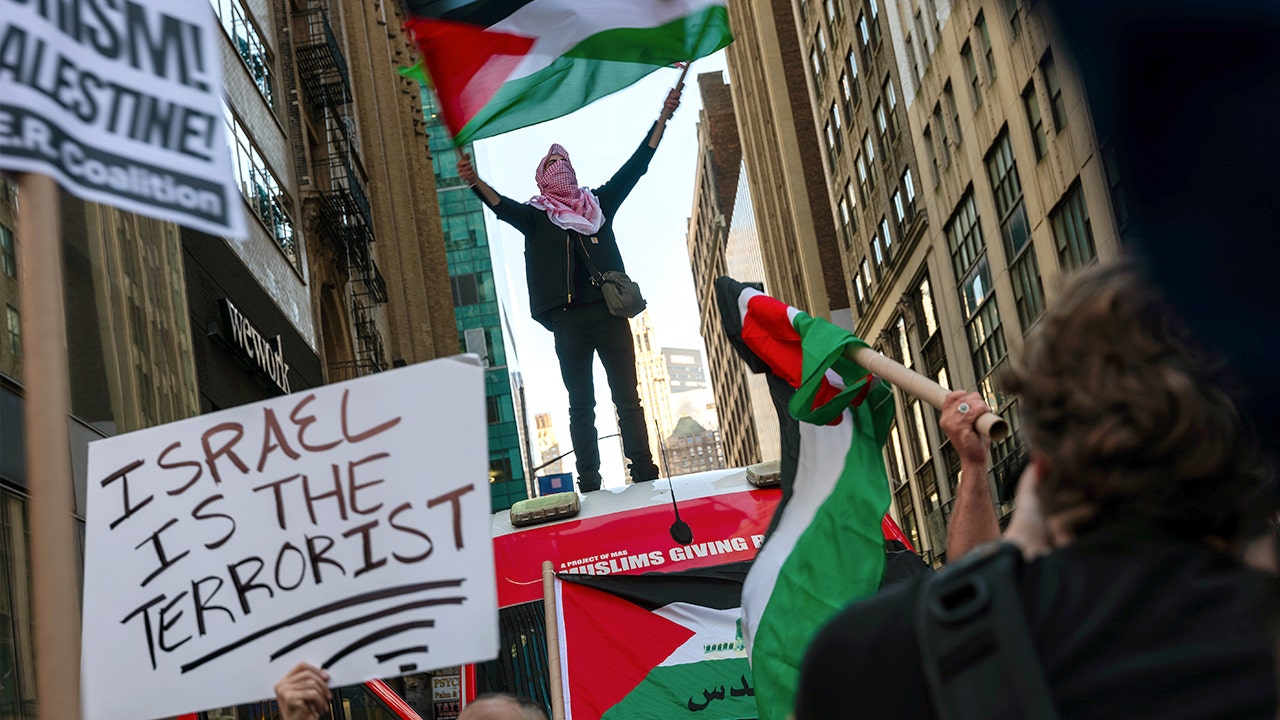
The bigger backdrop is the explosion of anti-Israel activism in New York and beyond. Supporters of Palestine have been highly visible in street protests and political organizing, and that has made the money trails behind these movements a major target for investigators and watchdogs alike.
The reported probe also does not mean anyone has been charged with a crime. Still, when a nonprofit tied to a prominent political circle is accused of possibly funneling money toward a sanctioned group, the questions do not fade quietly.
For Mamdani, the story adds another round of unwelcome attention to a political environment already loaded with tension. For PFF and the people around it, the coming days could bring more scrutiny over who gave, who knew, and where the money was really headed.

1 Comment
shutdown NGO then