
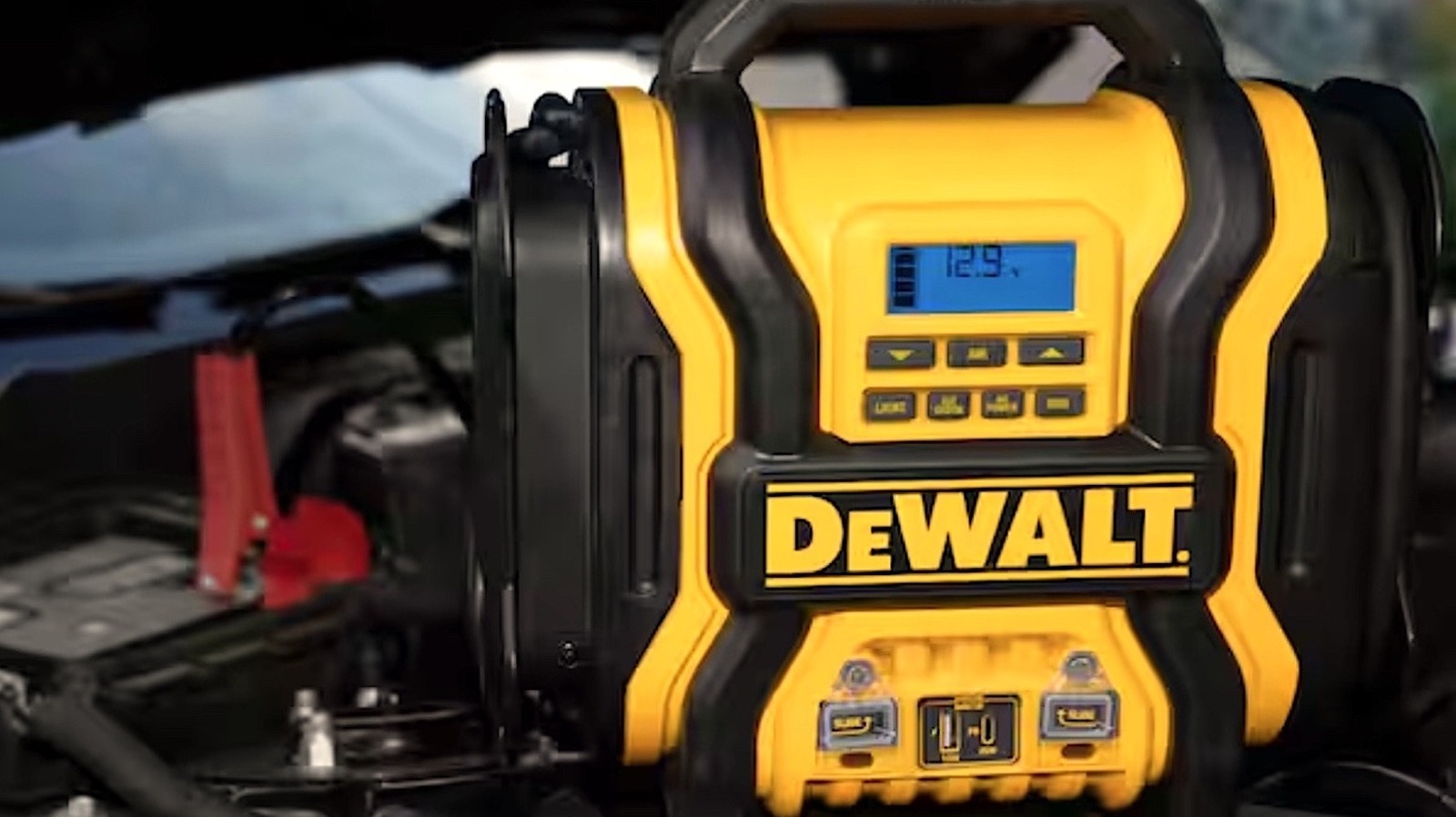
DeWalt jump box starters have become a handy backup for drivers who do not want a dead battery to wreck the whole day. They sit in a sweet spot between convenience and peace of mind, with enough punch to get a vehicle moving without needing a second car nearby. The price varies by model, and so does the time it takes to bring one back to full charge.
At the lower end, DeWalt’s 1,600 Peak Amp portable jump starter is listed at $169.99. A version bundled with a 140-watt inverter pushes that price up to $214, which is a bigger buy but also adds more utility for people who want extra power options in the mix.
The 2,000 Peak Amp jump kit lands at $209, putting it close to the middle of the pack. For buyers wanting more muscle, the 2,500 Peak Amp lithium jump starter is listed at $219, so the jump in price is not dramatic even though the feature set and output climb a bit higher. That makes the lineup feel pretty straightforward: more capability, slightly more money, not a wild leap.
Charging time is where things get a little more interesting. DeWalt notes that these units should be charged for 24 to 40 hours right out of the box, even if they arrive with some power already in the tank. That initial charge matters because these tools are meant to be ready when trouble hits, not after a scramble and a lot of crossed fingers.
After that first charge, DeWalt says the units should be topped off every 30 days or so, even if they have not been used. That helps keep battery drain from sneaking up over time, which is exactly the kind of annoyance that turns a backup tool into dead weight. A jump starter is only useful when it is actually charged, and sitting untouched for months can chip away at that readiness.
For the 1,600 and 2,000 Peak Amp models, reports point to a full recharge in about 2 to 4 hours. The lithium-ion 2,500 Peak Amp version is said to need around 3 hours to reach full charge, which is pretty reasonable for a device that can save a stranded driver from a rough afternoon. Still, real-world charging can shift depending on how drained the unit is and how it is powered up.
That is why DeWalt recommends using the cord that comes in the box. Other charging methods may work, but they can stretch the wait longer than expected, and nobody wants to gamble with a half-charged unit when the battery is already giving up the ghost. It is one of those small habits that pays off when the pressure is on.
There is also a practical difference between how quickly these jump starters can help a car and how long they themselves need to recover. A vehicle can usually get a boost in minutes, but the jump box may need hours before it is ready for the next emergency. That tradeoff is exactly what makes it smart to check the charge from time to time instead of assuming the tool will be ready whenever needed.
For drivers choosing between them, the real question is how much capability is worth paying for up front and how often the unit will be used. A compact jump starter can be a quiet little lifesaver in the trunk, while a higher-output model adds a little more breathing room for bigger needs. Either way, the key is keeping it charged, because the best jump starter in the world is not much help if it is sitting there empty.
