
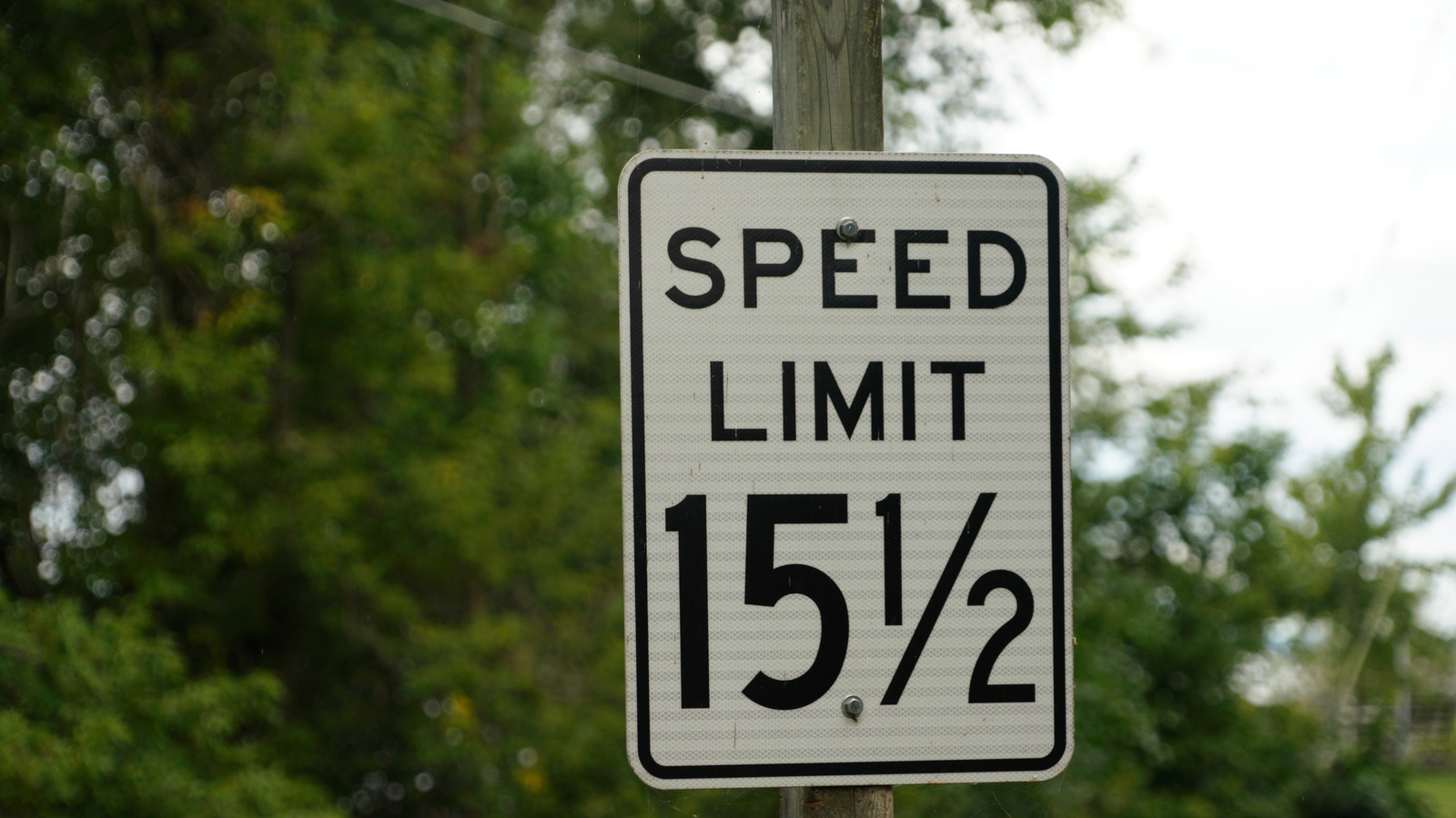
Speed limit signs usually mean what they say, but sometimes you’ll see a fraction on a sign and wonder why. This article breaks down the common reasons behind fractional speed postings, what they signal to drivers, and how enforcement typically treats them.
One common cause of a fractional number on a speed sign is the conversion between metric and imperial systems. Engineers sometimes calculate a limit in kilometers per hour and convert it to miles per hour, or vice versa, and the exact conversion doesn’t land on a whole number. Rather than round early in the planning stage, some agencies end up posting the precise value, which can show up as a fraction on the final sign.
Another explanation is engineering precision from traffic studies. Traffic engineers measure stopping sight distances, curve radii, grade, and other factors to determine a safe speed. Those calculations can produce a specific value the engineer believes is safest, and if local policy allows, that precise figure can appear on signs instead of a rounded number.
Occasionally a fraction comes from legacy or nonstandard signs that slipped through quality control. Municipal sign shops and private manufacturers sometimes use templates or templates that produce odd-looking numbers, and maintenance cycles don’t always catch every anomaly. What looks like a deliberate fraction may simply be a leftover from an outdated design or a production quirk.
Variable and electronic speed signs add another layer. Digital signs that change speeds for school hours, congestion, or weather can display decimal values when their control software calculates a specific setpoint. Those devices give agencies the flexibility to dial in speeds more finely than fixed metal signs, and the display can show that precision if programmed to do so.
Legal and enforcement realities matter too. Even where a fractional limit is posted, police and courts often treat the value pragmatically. Enforcement typically rounds or interprets the number in the context of safety and standard practice, so a ticketing officer is more likely to cite a driver for exceeding the intent of the limit than to rely on a half-mile-per-hour difference as a strict violation.
There can also be strategic reasons behind unusual numbers. A slightly unconventional figure can catch a driver’s eye precisely because it’s odd, prompting attention and compliance. In other cases, engineers use nonstandard values to prevent drivers from assuming a “nice round” safe speed and instead encourage closer attention to road conditions.
If you see a fractional speed sign, the practical move is to treat it as the posted limit and adjust your driving accordingly. The safest approach is to match the flow of traffic while staying within posted limits and scanning for hazards. When in doubt, err on the side of caution rather than trying to exploit a perceived rounding quirk.
Local policy varies, so if a fraction on a sign really bothers you or seems wrong, the straightforward fix is to contact the municipality’s public works or traffic engineering department. They can explain whether the sign reflects a deliberate engineering decision, a conversion artifact, or a production mistake, and they can correct or clarify it if necessary.
At the end of the day, fractions on speed signs are usually less about trickery and more about precision, conversion, or oversight. They reveal how technical and detailed traffic control can be, even for something as familiar as a speed limit, and they remind drivers that posted numbers come from study and policy rather than pure habit.
