
Glenn Beck argues that sky-high home prices are not some natural inevitability but the result of policy choices, cultural shifts, and misplaced priorities; he points to fraud, restrictive land rules, rising expectations, and immigration-driven demand as the main forces making ownership feel out of reach for many Americans.
Plenty of people say housing is unaffordable and shrug it off as the new normal, but Beck pushes back hard. He insists the problem is layered, not mystical: fraud in government programs, heavy-handed regulation, and social changes have all played a part. That combination has turned buying a starter home into a distant dream for a lot of young families.
He calls fraud a key piece of the puzzle. “We have to fix the fraud,” he urges. “The latest numbers from the GAO, the Government Accounting Office, is that they estimate that our government loses between $233 billion and $521 billion every year based on fraud between 2018 through 2022.” Those are not small margins; they are money that could be put toward fixing real problems.
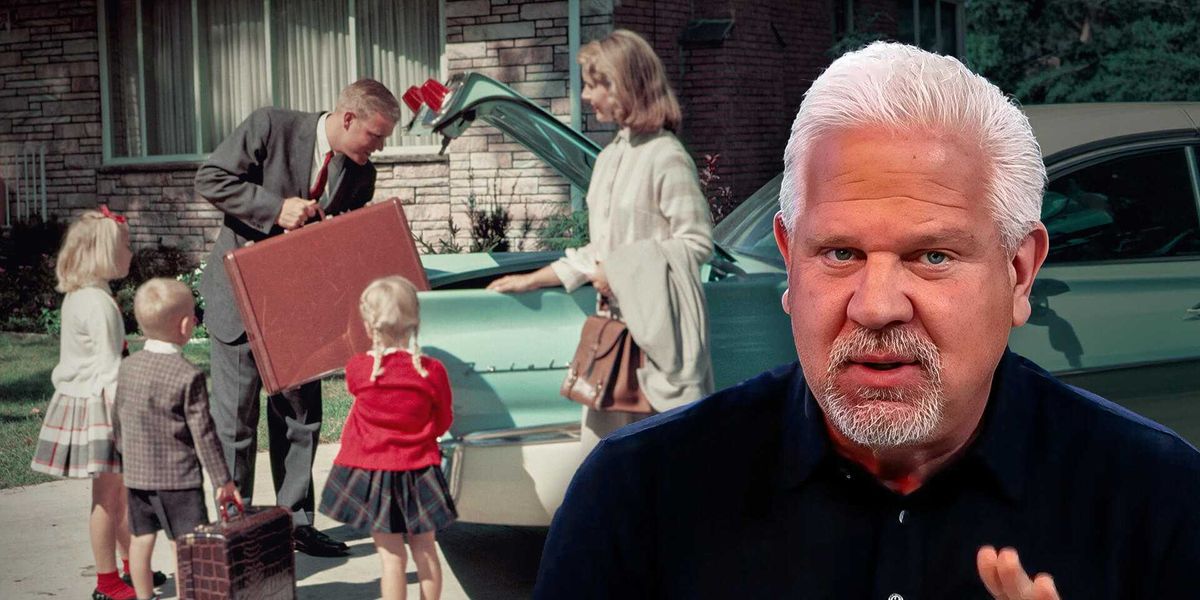
The conversation quickly moves from theft to expectations. In the postwar era, living small was normal, practical, and empowering for new families. “the golden era of America,” says Glenn — the average size home for a family of four was “983 square feet.” Today, it’s “2,500 square feet.”
He challenges the cultural demand for ever-larger living spaces. “If I told you you could afford a modest home of that size (under 1,000 square feet) and raise your family in it, would you take it?” he asks. That question is meant to force a choice: chase status or reclaim attainable living and financial freedom.
Then he turns to land and the rules that govern it. “Why is land so expensive?” Glenn asks. “Because our government made it that way” through “zoning laws, permits, restrictions, [and] endless layers of EPA approval.” Those bottlenecks don’t just slow projects; they jack up the cost of every lot available to developers and buyers.
“We didn’t run out of land. We restricted the access to the land,” he emphasizes. When red tape replaces common sense, supply shrinks and prices climb, and the result is a system that favors restriction over growth. Add booming immigration into the mix and you have spike after spike in demand without the supply to match it.
Beck points out America has solved this before by unleashing building energy, not stifling it. After WWII the need was enormous and the response was fast: “Homes were built in days, not months — days,” says Glenn, noting that “the GI Bill,” “the interstate highway system [opening] up the land that had never been reachable before,” and “the government [getting] out of the way” are what allowed this to happen. Quick construction and access to land stabilized prices then.
He wants readers to focus on the right metric. “This is why the most important number is not the price of a home. It is the ratio between a home price and income,” he explains. “In 1960, the average cost was two times the average annual income. Today it’s over five times.” That gulf is the single clearest signal that something structural, not incidental, is broken.
That gap, he says, separates real opportunity from exclusion. “That’s the difference between opportunity and exclusion; that’s the difference between a young family starting a life and one stuck renting indefinitely.” When policy prioritizes preservation of a status quo over creating pathways to ownership, a whole generation gets shut out.
Beck argues the cultural shift is as important as the policy one. He says the country has traded growth for restraint and people for abstractions. “the country believed that growth was good, expansion was good, opportunity was something that you created, not something that you rationed,” says Glenn, “and somewhere along the way, that whole mindset of America changed.”
His warning is blunt and directional. “We didn’t lose the land. We didn’t lose the resources. We’ve lost the will. And until that changes, this doesn’t get fixed,” he warns. The solution he stresses is straightforward: get government out of the way, build aggressively, and restore a culture that values work, family, and the chance to own a piece of the country.
Beyond policy, Beck circles back to mindset and values as a personal remedy. He reminds listeners that the dream isn’t about square footage or status but about freedom and opportunity, and he presses people to choose priorities that promote real happiness. “Let’s remember what it means to actually be happy,” he pleads.
