
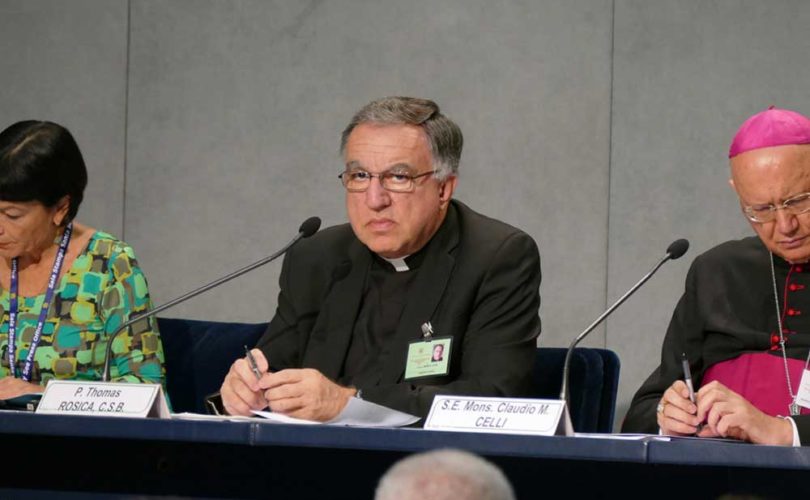
The Ontario Court of Appeal has upheld an order requiring the Congregation of St. Basil to pay $14,000 in legal costs tied to a civil lawsuit that alleges Fr. Thomas Rosica “made unwanted physical contact” with a young priest in 2002. The ruling confirms a lower court’s decision on costs and keeps attention on the legal responsibilities of religious institutions when accusations surface. This piece outlines the key facts, the parties involved, and the immediate legal outcome.
The case centers on a complaint brought in civil court alleging misconduct from an incident in 2002, with the plaintiff claiming Fr. Thomas Rosica “made unwanted physical contact.” That central allegation is the foundation of the proceeding and the reason legal costs were incurred by the Congregation of St. Basil. The Court of Appeal’s recent decision did not overturn the original costs award, which now stands at $14,000.
The payment order falls on the Congregation of St. Basil rather than on Fr. Rosica personally, reflecting how institutions can be held responsible for legal expenses linked to allegations involving their members. Courts often weigh whether an institution should cover costs based on its relationship to the accused and its role in the litigation. In this instance, the appellate court found sufficient grounds to maintain the costs decision against the congregation.
Legal costs in civil suits can cover a range of expenditures, including filings, counsel fees, and procedural expenses that arise as a case moves through the courts. The $14,000 figure represents a judicial judgment about what was reasonable for this dispute at the stage in which the award was made. While not a finding on the merits of the underlying allegation, a costs award signals a judicial view about how the parties conducted the litigation.
The alleged incident dates back to 2002, and the passage of time adds complexity to any legal contest: memories fade, records can be sparse, and witnesses may no longer be readily available. Courts must balance those evidentiary hurdles with a plaintiff’s right to seek redress. The appellate ruling focused narrowly on the procedural question of costs rather than passing judgment on the factual truth of the claim itself.
The Congregation now faces the practical task of meeting the costs award unless it pursues further legal options. Appellate decisions that uphold lower-court orders can sometimes be taken to a higher court, but that requires permission and often hinges on legal principles rather than a simple disagreement with outcomes. Whatever route is chosen, the immediate consequence is that the $14,000 award remains enforceable under current rulings.
For institutions named in litigation, this outcome underscores the potential financial and reputational stakes tied to how they respond to allegations made by or against members. Even where an individual is the subject of a claim, organizations can be drawn into the costs and procedural fallout. The appellate court’s decision highlights that responsibility may extend beyond the person accused.
The legal process in matters involving religious figures and institutions tends to draw public interest because of the expectations the community places on its leaders. Courts proceed through established civil procedures while striving to keep focus on evidence and legal standards. This ruling on costs is a reminder that procedural rulings can carry significant weight even when they do not resolve the substantive controversy.
At this stage the record shows a confirmed costs award and an ongoing legal matter rooted in an allegation from 2002 that Fr. Thomas Rosica “made unwanted physical contact” with a young priest. The appellate decision closes one chapter by upholding the financial order, while other legal and institutional responses may follow depending on next steps by the parties. The case remains an example of how procedural outcomes and long-standing allegations intersect in civil court.
