
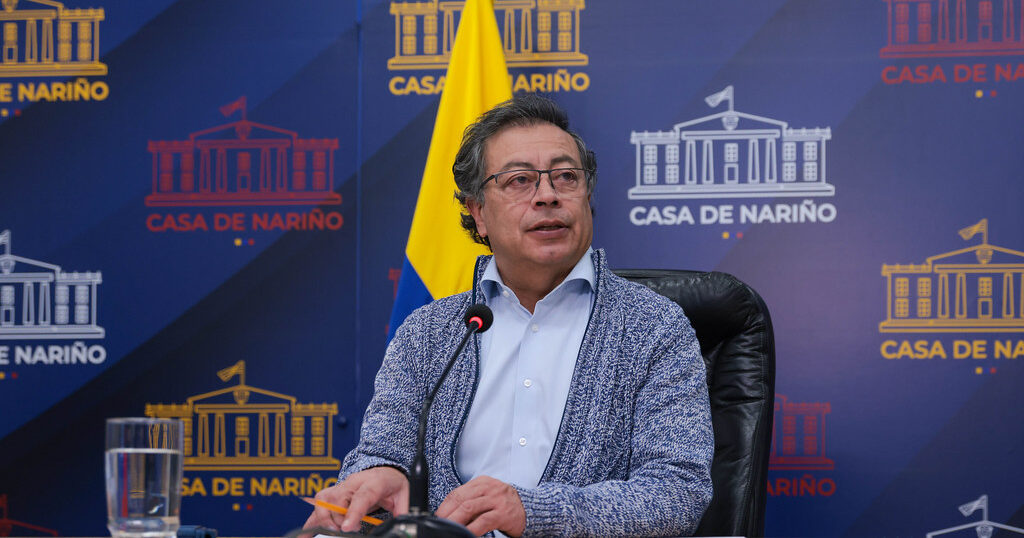
Colombian President Gustavo Petro recently took a bold step by halting a deportation flight from the United States. Known for his background as a former Marxist guerilla and his outspoken criticism of Donald Trump, Petro confirmed his decision on the X platform.
In his statement, Petro emphasized that “a migrant is not a criminal and must be treated with the dignity that every human being deserves.” He further elaborated on his stance by asserting, “That is why I ordered the return of US military planes carrying Colombian migrants.”
Petro’s move came alongside a video showing Brazilian deportees being flown out of the United States, highlighting his concern over the treatment of migrants. He stated, “I cannot force migrants to remain in a country that does not want them.”
However, he was firm in his requirement that if they are returned, it should be done “with dignity and respect – for both them and our nation.” He insisted that the return of Colombian citizens should occur via civilian planes, avoiding any criminal-like treatment. His message was clear: “Colombia deserves respect.”
The President did not acknowledge in his statements that many of the deportees had entered the U.S. illegally, and some had committed additional crimes. This omission has sparked discussions about the complexities of illegal immigration and the rights of deportees.
In response to Petro’s decision, an official disclosed to The Daily Wire that the U.S. Embassy in Colombia plans to retaliate by closing its visa section. This move is a direct consequence of Petro’s refusal to accept the two flights of Colombian deportees.
These flights had previously received approval at the highest levels of government, highlighting the diplomatic tension between the two nations.
According to reports from Reuters, Colombian authorities denied landing clearance for the two U.S. military aircraft, each carrying approximately 80 migrants. These planes had already departed from California when the clearance was revoked, underscoring the unexpected nature of Petro’s decision.
This announcement by Petro follows a similar incident involving Mexico, which also blocked a flight carrying illegal aliens. The diplomatic landscape in the region appears to be shifting, with countries like Colombia and Mexico taking assertive stances on the treatment of their citizens abroad.
Just last month, Petro had issued a stark warning about the potential consequences of Trump’s threats regarding the Panama Canal. He threatened to send “millions” of migrants toward the U.S. border. Petro expressed unwavering support for Panama, stating, “Until the last consequences I will be on the side of Panama and the defense of its sovereignty.”
Petro’s message was clear: If the U.S. government seeks to negotiate, it must do so “face to face, and for the benefit of our people.” However, he made it clear that “dignity will never be negotiated.” His strong rhetoric underscored the importance of mutual respect and understanding in international relations.
The Colombian President’s actions and words reflect his commitment to defending the rights and dignity of migrants. His insistence on treating deportees with respect resonates with his broader political ideology. Petro’s stance has garnered both support and criticism, as debates on immigration policies continue to unfold.
The situation remains tense as international relations are tested by these diplomatic maneuvers. Petro’s firm resolve in protecting the dignity of his compatriots is a testament to his leadership style and political beliefs. As the world watches, the unfolding developments will likely impact future negotiations and diplomatic engagements in the region.
In the broader context, Petro’s actions highlight a growing trend among some nations to assert their sovereignty in managing the treatment of their citizens abroad.
This shift may influence how countries address immigration issues and negotiate international agreements. While the discourse continues, Petro’s stance remains a significant point of discussion in global politics.
