
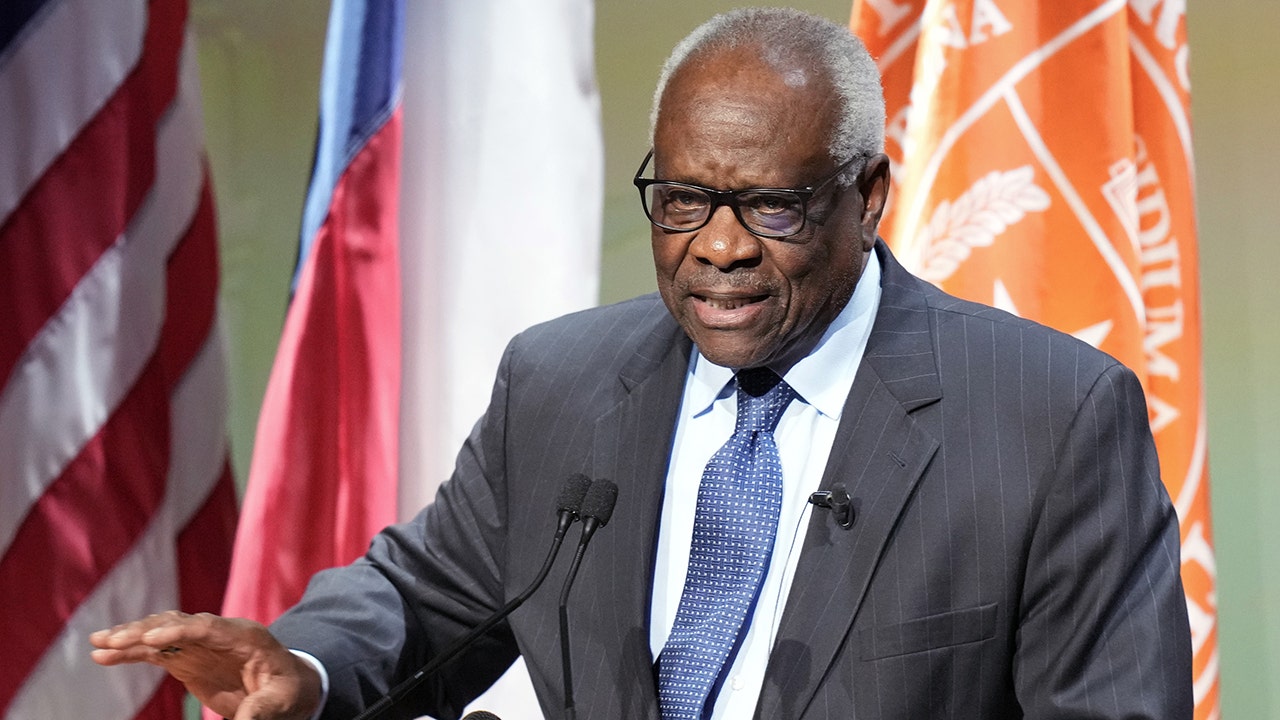
Clarence Thomas took aim at the idea that race should come with a preset political script, and he did it with the kind of blunt language that tends to stop a room cold. In a rare conversation with Ted Cruz, the Supreme Court justice tied that pressure to old segregation-era thinking and argued that individual judgment matters more than anyone’s expectations about skin color.
Thomas said people once tried to box Black Americans into narrow demands, repeating a phrase he heard growing up: “stay Black and die.” He used it as a way to describe how some people act as if race should automatically dictate belief, attitude, and politics, as though identity alone can hand down a verdict on how someone is supposed to think.
His point was simple but sharp. When others assume a Black conservative is somehow betraying his race, Thomas sees that as a different version of the same controlling mindset that once told people where they could go and what they could do. He made clear that he never accepted that kind of pressure, and he treated the whole notion like an invitation he had no interest in taking.
That stance is rooted in a life shaped by segregation and hardship. Thomas grew up in rural Georgia in poverty, first in a small shack in Pin Point and later in Savannah with his grandparents, and he has spoken often about the values that came out of that experience, including discipline, independence, and personal responsibility.
He also pointed to the way his thinking changed over time. At the College of the Holy Cross, Thomas was drawn to left-wing Black nationalism, admired Malcolm X, and helped launch the school’s Black Student Union, but a violent protest in Cambridge pushed him in a different direction and left him questioning the politics he had once embraced.
That shift matters because Thomas has never sounded interested in playing to expectations. He described how shame over that episode forced him to rethink activism, self-reliance, and the idea that identity should lock anyone into a fixed ideological lane.
To make his case, Thomas drew a direct line between racial stereotyping and the kind of exclusion associated with segregated public spaces. He used the Savannah Public Library as his example, asking whether it would have been acceptable for him to be allowed inside but denied access to certain floors, stacks, or books just because of his race.
The comparison landed hard because it widened the argument beyond politics. In Thomas’s telling, the problem is not just who gets included, but who gets told what they are allowed to believe, read, or question, and that kind of mental gatekeeping can feel just as suffocating as a locked door.
His comments also fit a long-running pattern in which Thomas resists the label others try to pin on him. Critics have often treated his views as a contradiction because they do not match the assumptions they hold about Black voters or Black public figures, but Thomas has repeatedly pushed back against that whole framework.
That pushback has made him one of the most watched and most argued-over figures on the court. Whether he is talking about race, liberty, or the cost of following the crowd, Thomas tends to cut through the polite language and put the tension right on the table, which is exactly what made this conversation hit so hard.
